
By Shahryar Rahmani · Meta Trading Club
Are prop firms worth it? For a trader with a proven process and no capital, yes — they’re a cheap way to scale. For everyone else, they’re usually an expensive way to pay for a lesson you could learn on a small account. The honest answer depends almost entirely on one thing, and it isn’t the firm.
Are prop firms worth it?
A prop firm is worth it when it lets you scale an edge you already have with limited downside. It’s not worth it when you’re hoping the funded account itself will make you profitable. That’s the whole decision in one sentence — but the reasons are worth unpacking, because the marketing is designed to blur them.
The value isn’t the capital. It’s the leverage on a skill you can already execute. No skill, no leverage — just fees.
Got a quick question? Our Prop Firm FAQ answers 19 common questions on funded accounts, drawdown rules, payouts and taxes.
The real math: what you pay vs what you get
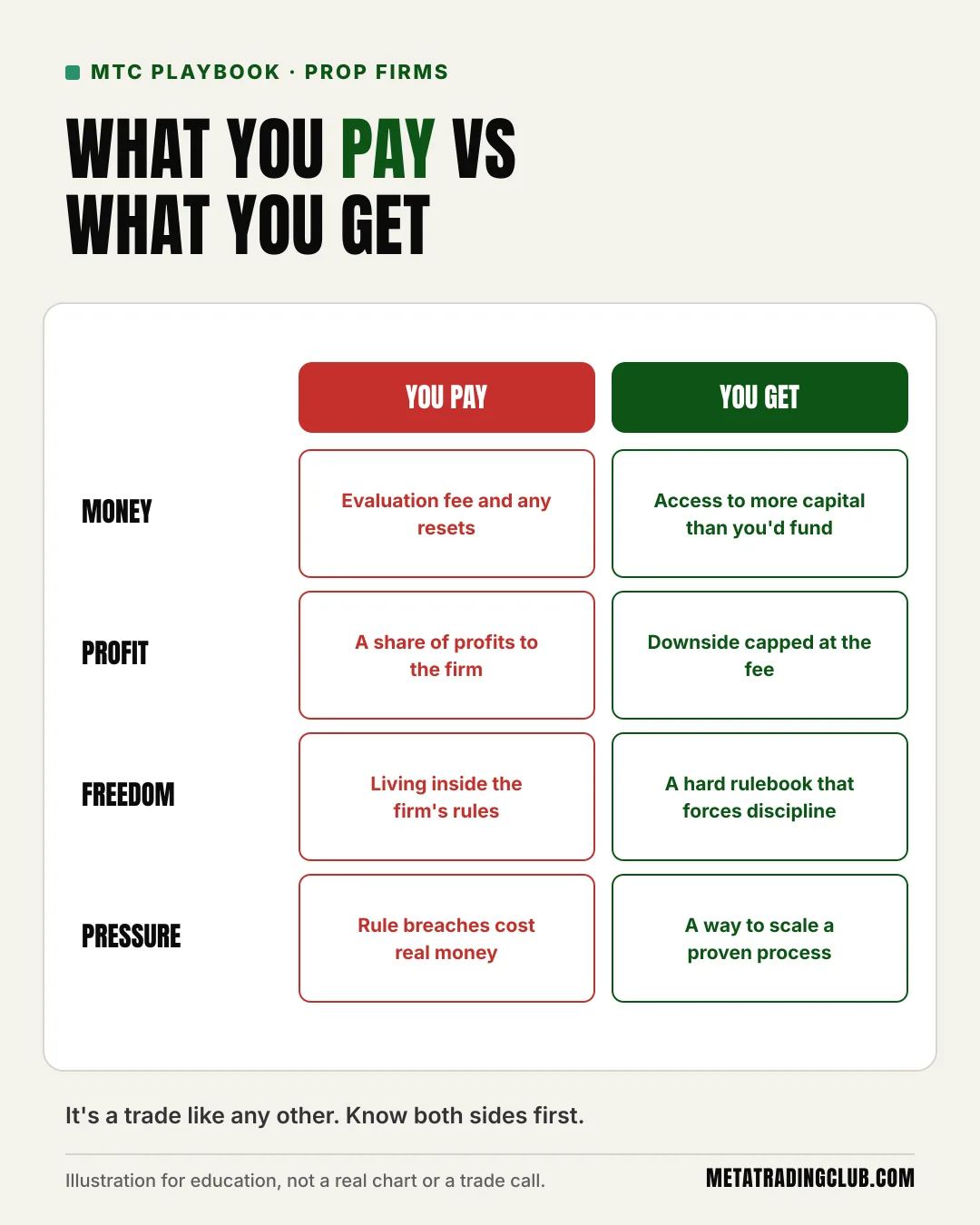
Strip away the pitch and it’s a straightforward trade. Here’s what’s actually on each side of the ledger.
Who prop firms are actually worth it for
Prop firms are worth it for traders who already trade a defined setup with consistent risk management and simply lack capital. They’re also a fit for disciplined traders who want an external rulebook, and for smaller US accounts that have been held back by the pattern day trader minimum, which the SEC approved removing in April 2026. In each case, the funded account is scaling something that already works.
Who should skip prop firms for now
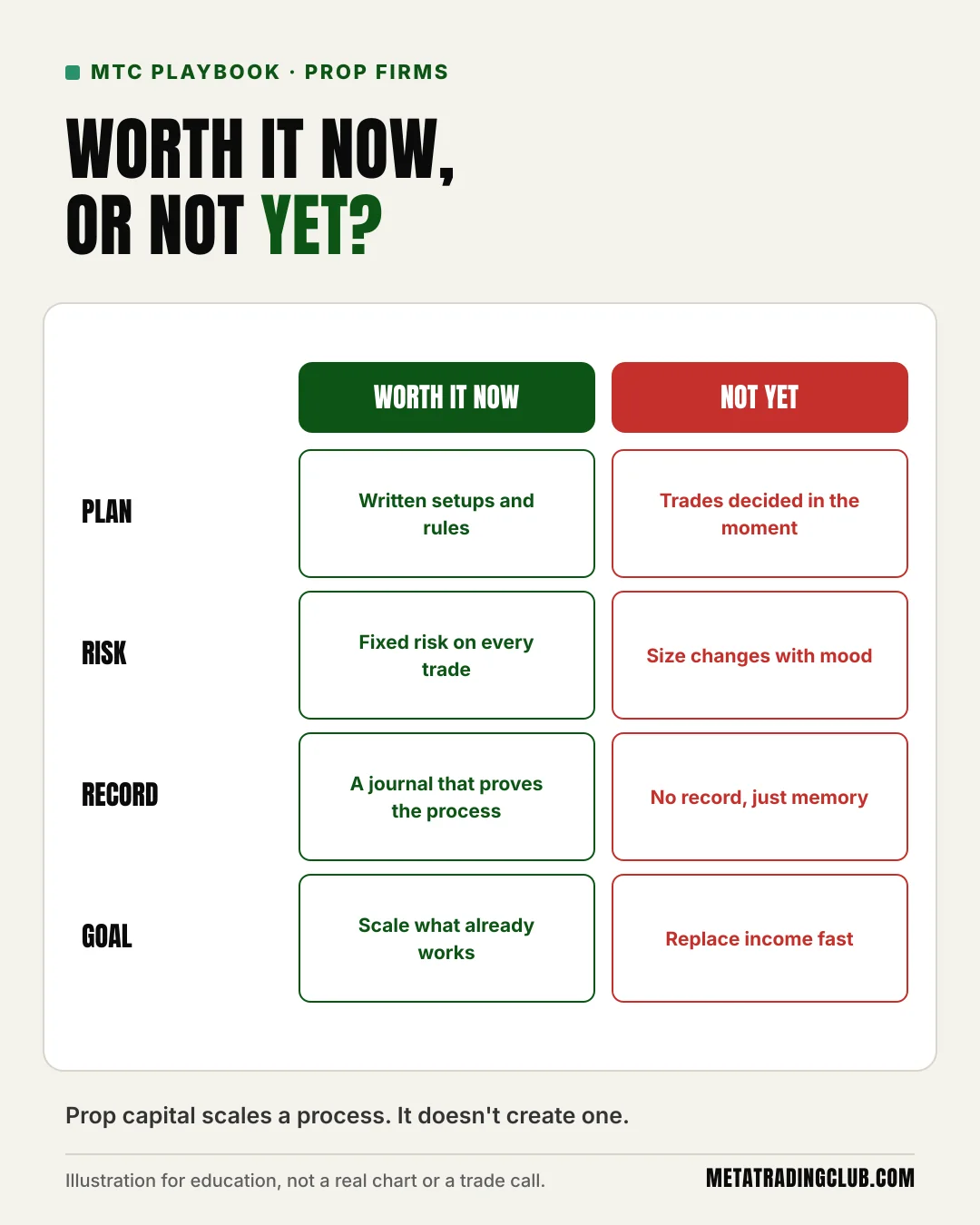
If you’re still switching strategies, sizing by feel, or trading to “make it back,” a prop firm isn’t worth it yet. You’ll likely fail the evaluation, reset, and repeat — paying fees to learn what a small personal or simulated account teaches for free. Build the process first, then the funded account becomes worth it almost automatically.
The hidden cost nobody prices in
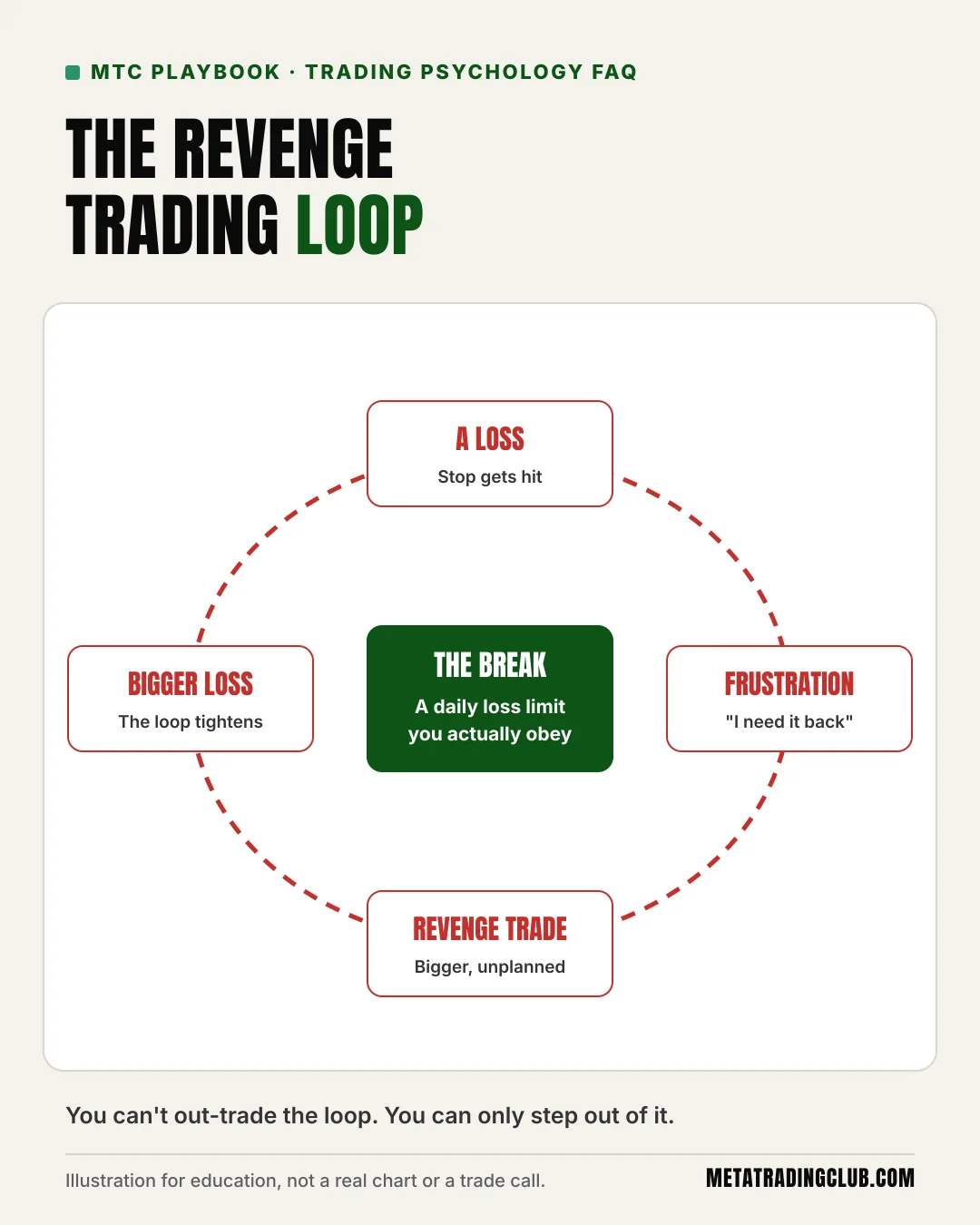
The obvious cost is the fee. The hidden cost is the reset cycle: pass, get funded, over-trade because the pressure changed, breach a rule, buy another evaluation. Each loop drains money and confidence. Firms make real revenue from traders who keep re-buying, so the incentive to fix your process sits entirely with you.
A prop firm is a tool, not a trading system. Without your own process, a funded account just lets you lose someone else’s money faster — and lose your own fees doing it. Whether prop firms are worth it comes down to whether you bring an edge to the account or expect the account to be the edge.
A worked example: fees vs funding your own account
Say a trader wants to control a $50,000 account. Funding it personally means putting $50,000 of real capital at risk. A prop evaluation for a similar size might cost a fee in the low hundreds. If that trader has an edge, the math is obvious — a few hundred dollars for capped downside beats risking fifty thousand. If they don’t, the same trader will likely burn through several evaluation fees chasing a pass, and those resets add up quietly until they’ve spent more than a small personal account would have cost to learn on.
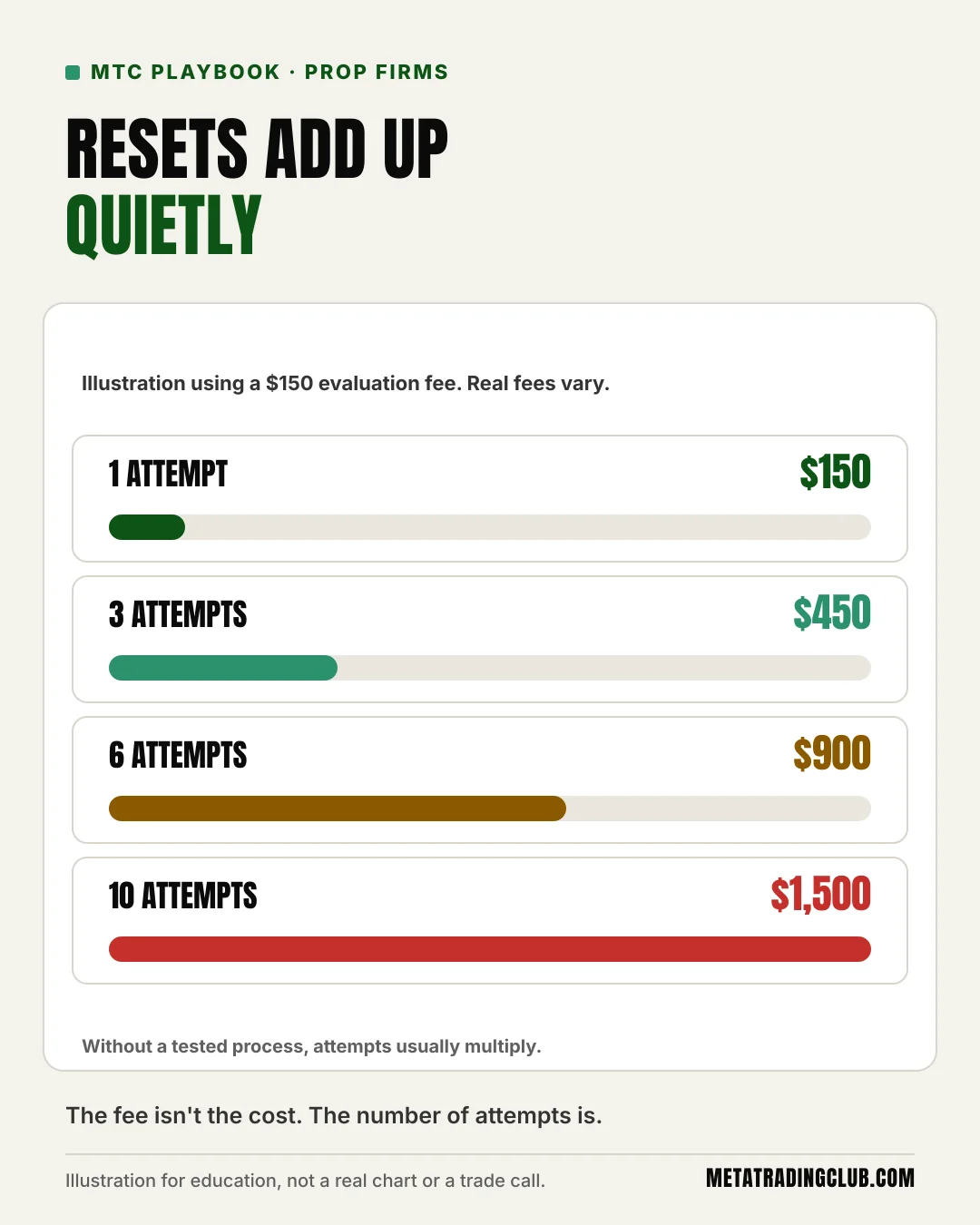
So the fee alone never answers “are prop firms worth it.” The answer is set by your pass rate, and your pass rate is set by your process.
How to actually make a prop firm worth it
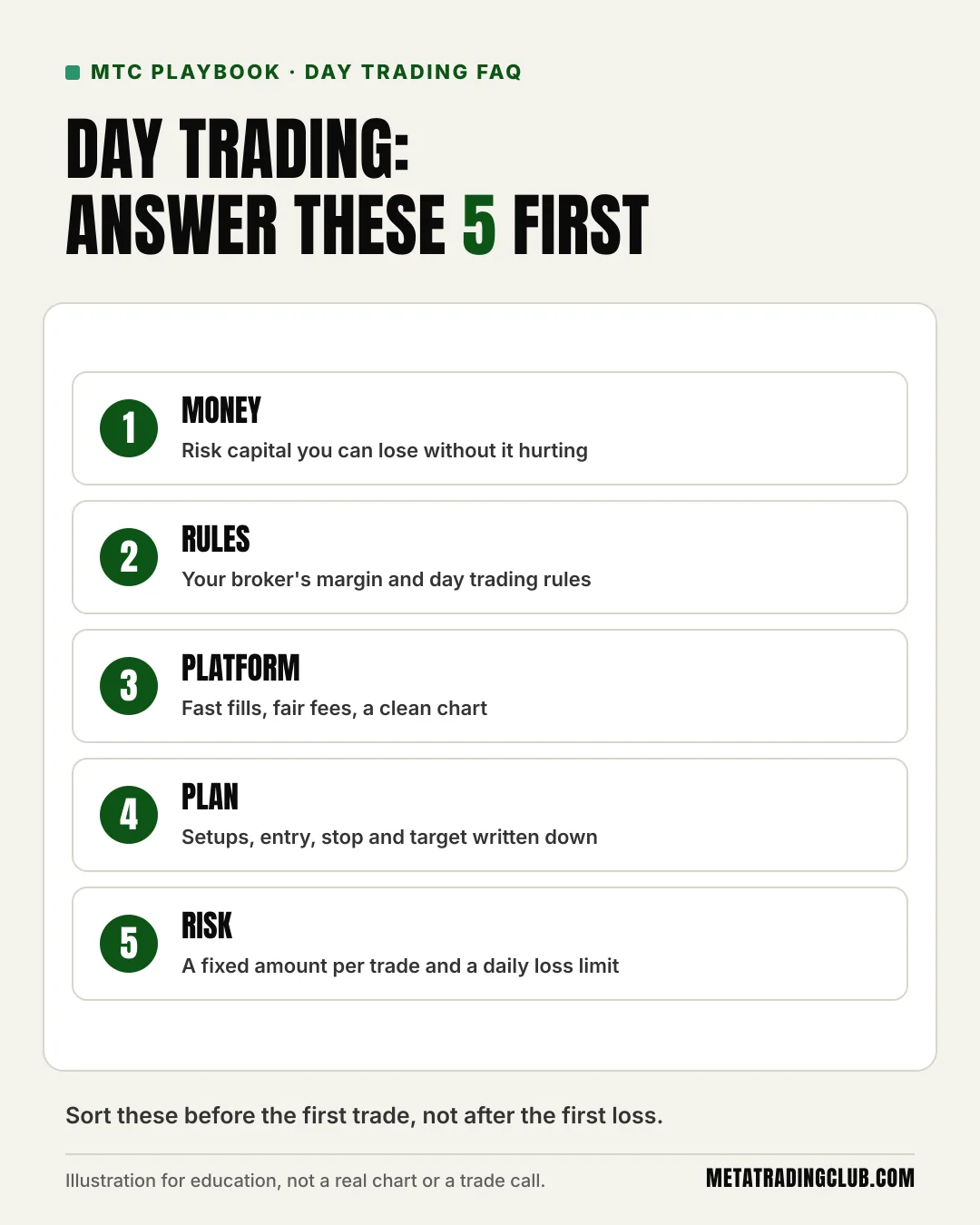
Make it worth it in this order. First, build a defined setup you can execute the same way every time. Second, prove it on a small or simulated account until your risk is boringly consistent. Third, pick a firm whose drawdown and daily-loss rules fit your style. Only then does the evaluation fee become an investment with a positive expected return instead of a hopeful bet.
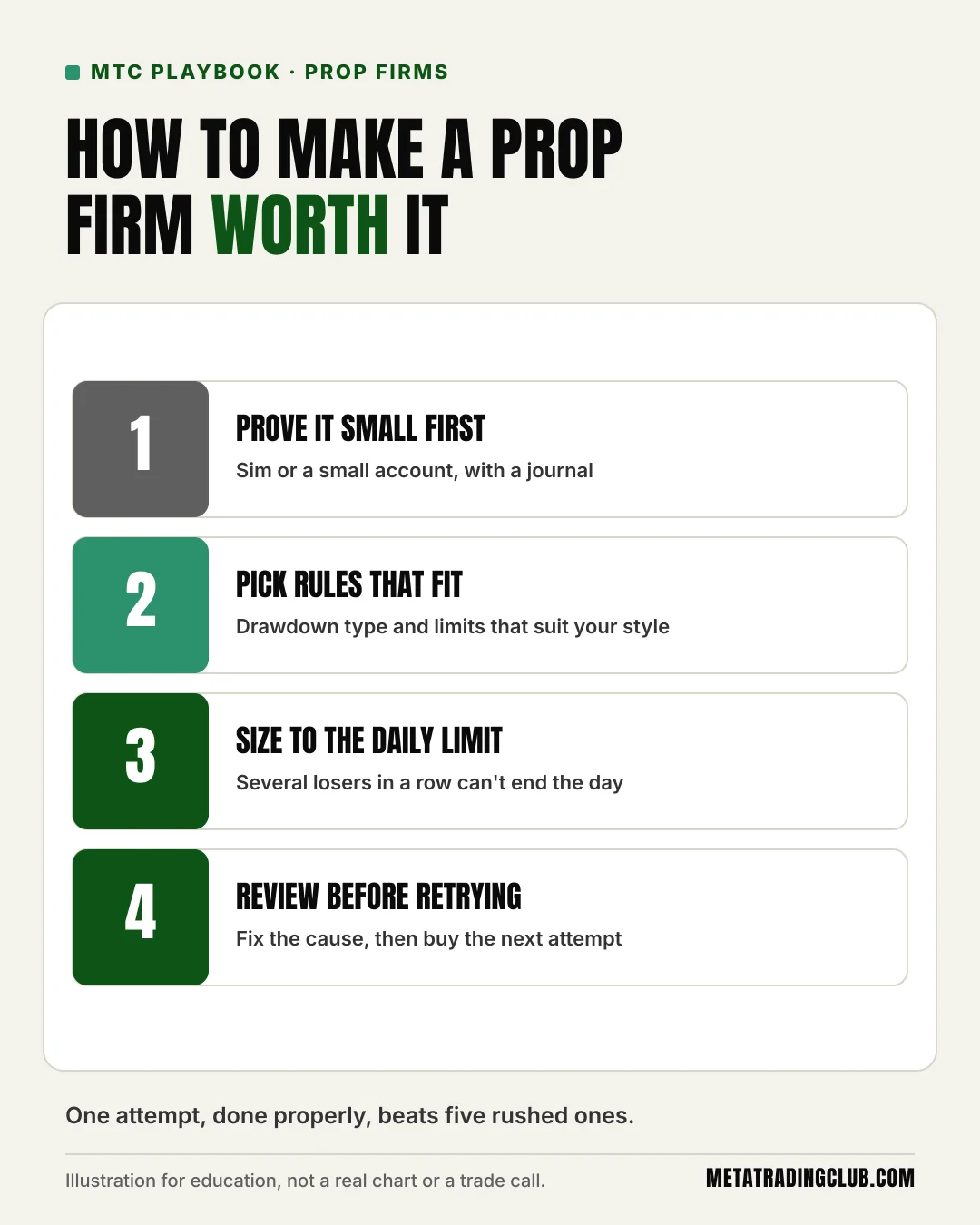
Traders who follow that order tend to pass on the first or second try and stay funded. Traders who skip it tend to fund the firm’s revenue instead. The difference isn’t talent — it’s sequence.