By Shahryar Rahmani · Meta Trading Club
A funded futures account lets you trade contracts like the E-mini S&P or crude oil using a prop firm’s capital instead of your own margin. Futures dominate the funded-account world for a reason — but the leverage that makes them attractive is also what ends most accounts early. Here’s how they really work.
What is a funded futures account?
A funded futures account is a proprietary trading account where you trade futures contracts on the firm’s capital after passing an evaluation. You pay a fee, prove you can hit a profit target inside the firm’s drawdown and daily-loss rules, and then trade their money for a share of the profits.
The mechanics mirror any other funded account. What changes is the instrument: futures are leveraged contracts with fixed tick values, which makes risk per trade both precise and unforgiving.
Got a quick question? Our Prop Firm FAQ answers 19 common questions on funded accounts, drawdown rules, payouts and taxes.
Why futures dominate the funded account world
Most prop firms built around active traders focus on futures, and there are practical reasons. Futures markets are centralized and transparent, they trade nearly around the clock, and each contract has a standardized tick value that makes risk easy to define. That precision is exactly what a firm wants when it’s enforcing hard drawdown limits.
For the trader, futures were never subject to the US pattern day trader rule that held back small stock accounts, which is one reason so many smaller traders started here.
How a funded futures account works, step by step
The path is the same three stages as any funded program, with futures-specific limits layered on top.
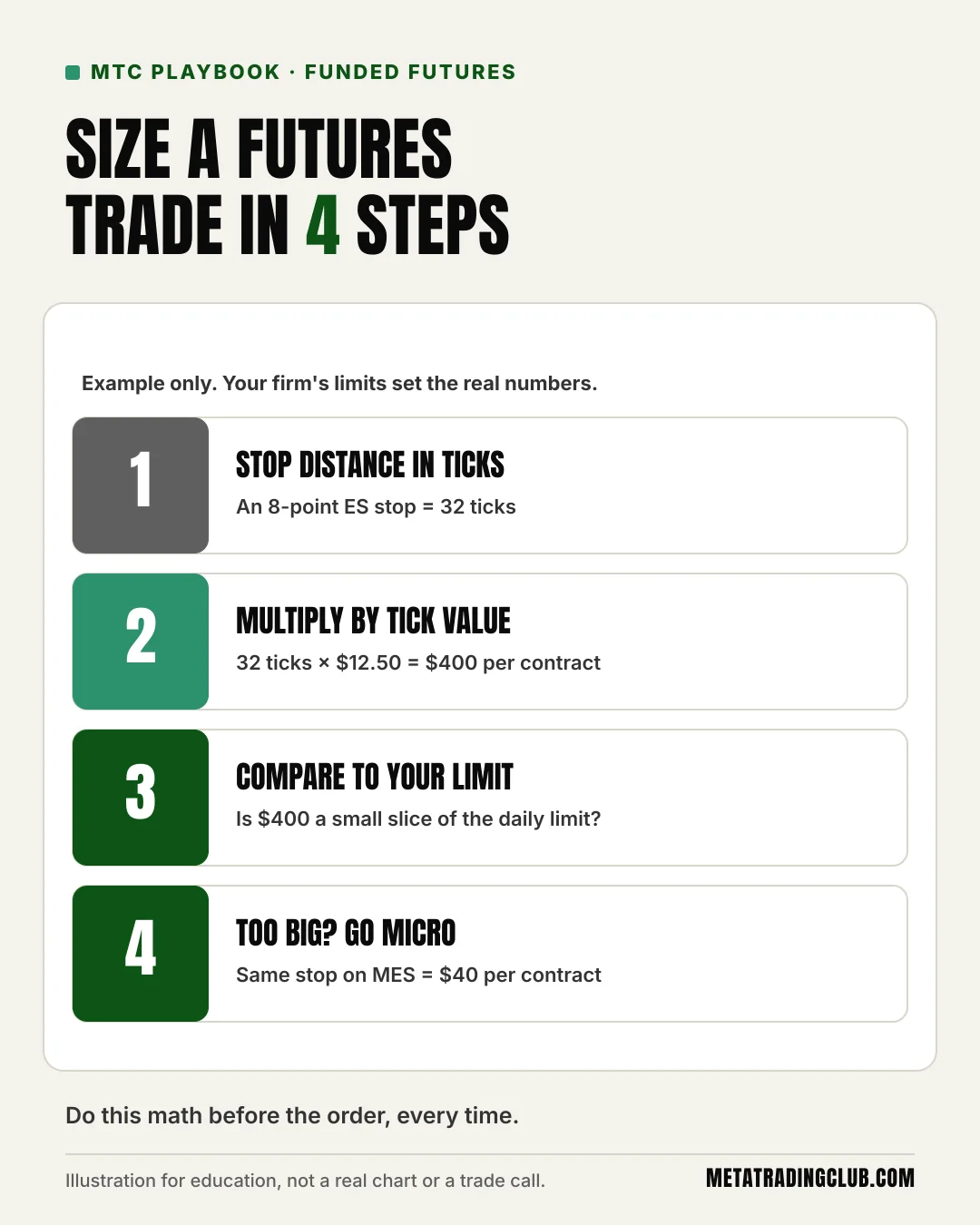
- Evaluation. Trade a simulated futures account to a profit target without breaching the daily loss limit or trailing drawdown.
- Contract limits. The firm caps how many contracts you can trade based on account size — respect it or you breach.
- Funded stage. Trade the firm’s capital under the same rules; discipline matters more here, not less.
- Payout. Withdraw your profit share on the firm’s schedule.
Contract sizing and tick risk: the part beginners miss
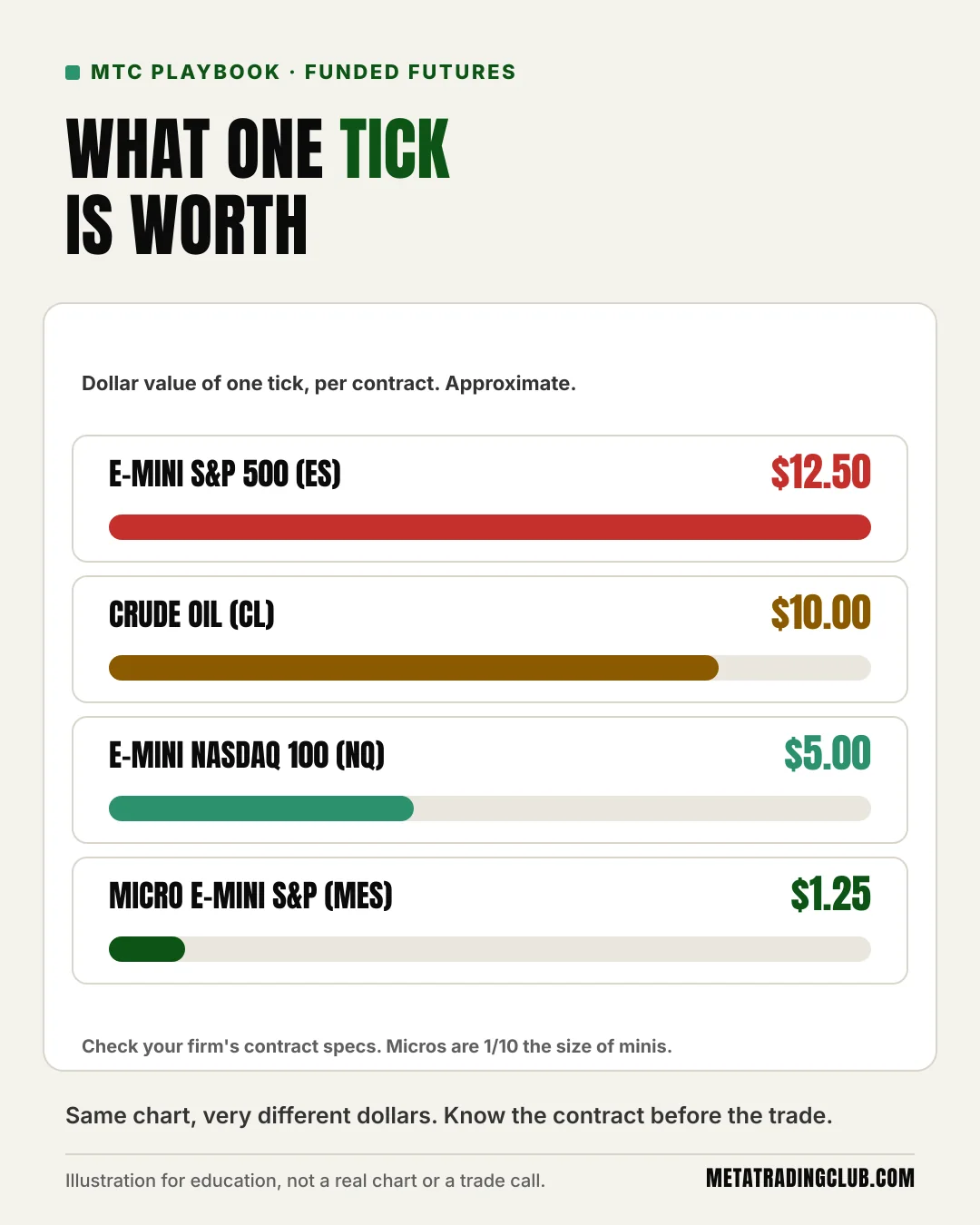
Futures move in ticks, and each tick has a dollar value. Miscount your size and a “small” stop becomes a rule breach. Here are common index and commodity contracts and roughly what a single tick is worth per contract.
Common ways traders blow a funded futures account
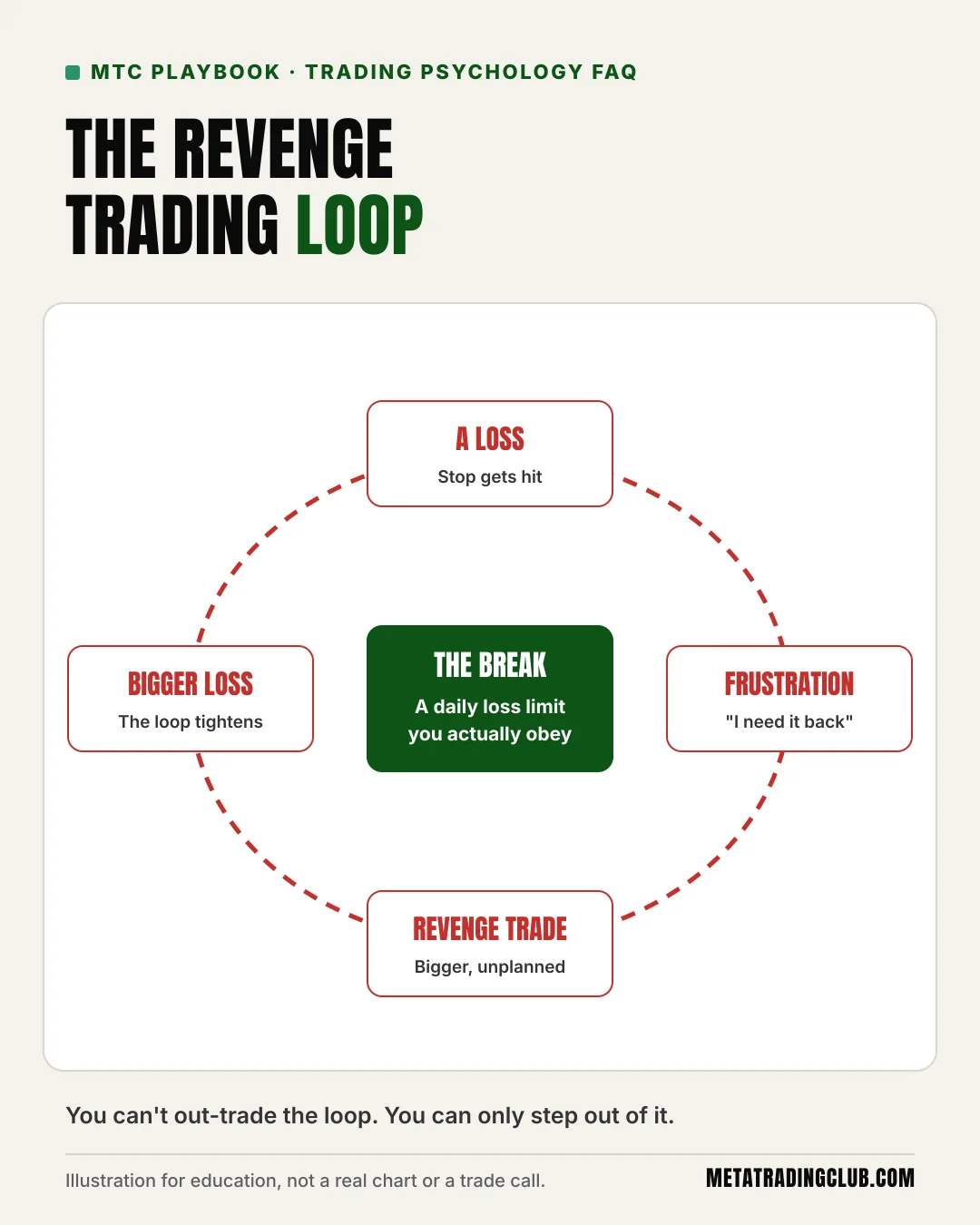
The usual failure isn’t a bad market read. It’s oversizing after a couple of wins, adding contracts to “make back” a loss, and trading through the daily loss limit. The trailing drawdown then locks the account on an ordinary give-back.
A funded futures account is a tool, not a trading system. The leverage amplifies whatever process you bring. If the process is a defined setup with fixed risk, leverage works for you. If it’s guesswork, leverage just ends the account faster.
Funded futures account vs funded stock account
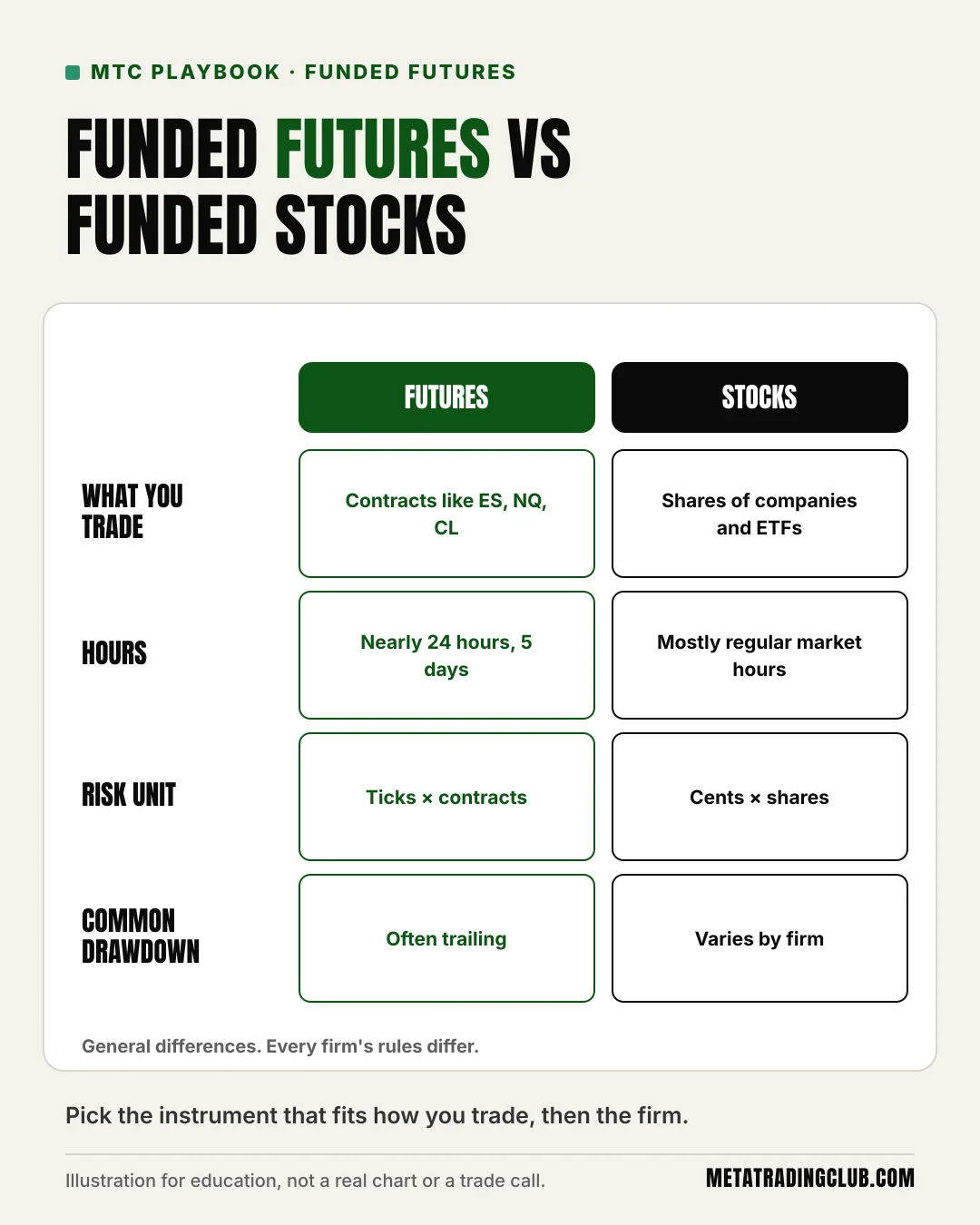
The core difference is the instrument and how risk is measured. A funded futures account deals in leveraged contracts with fixed tick values and near 24-hour access, which suits active intraday traders. Funded stock accounts trade shares, are bound to regular market hours, and, until recently, carried the pattern day trader constraint on the retail side (the SEC approved removing its $25,000 minimum in April 2026). Futures programs also tend to use trailing drawdown, so give-backs matter more. Pick the instrument you already understand — a funded account is the wrong place to learn a new market.
How much can you make with a funded futures account?
Your take-home depends on account size, profit split, and consistency — not on how many contracts you can jam into a trade. A trader who pulls a steady weekly return trading two or three micros will out-earn one who swings for the fences and resets every month. The compounding comes from staying funded, and staying funded comes from respecting the drawdown. Boring is the point.
Red flags in a funded futures program
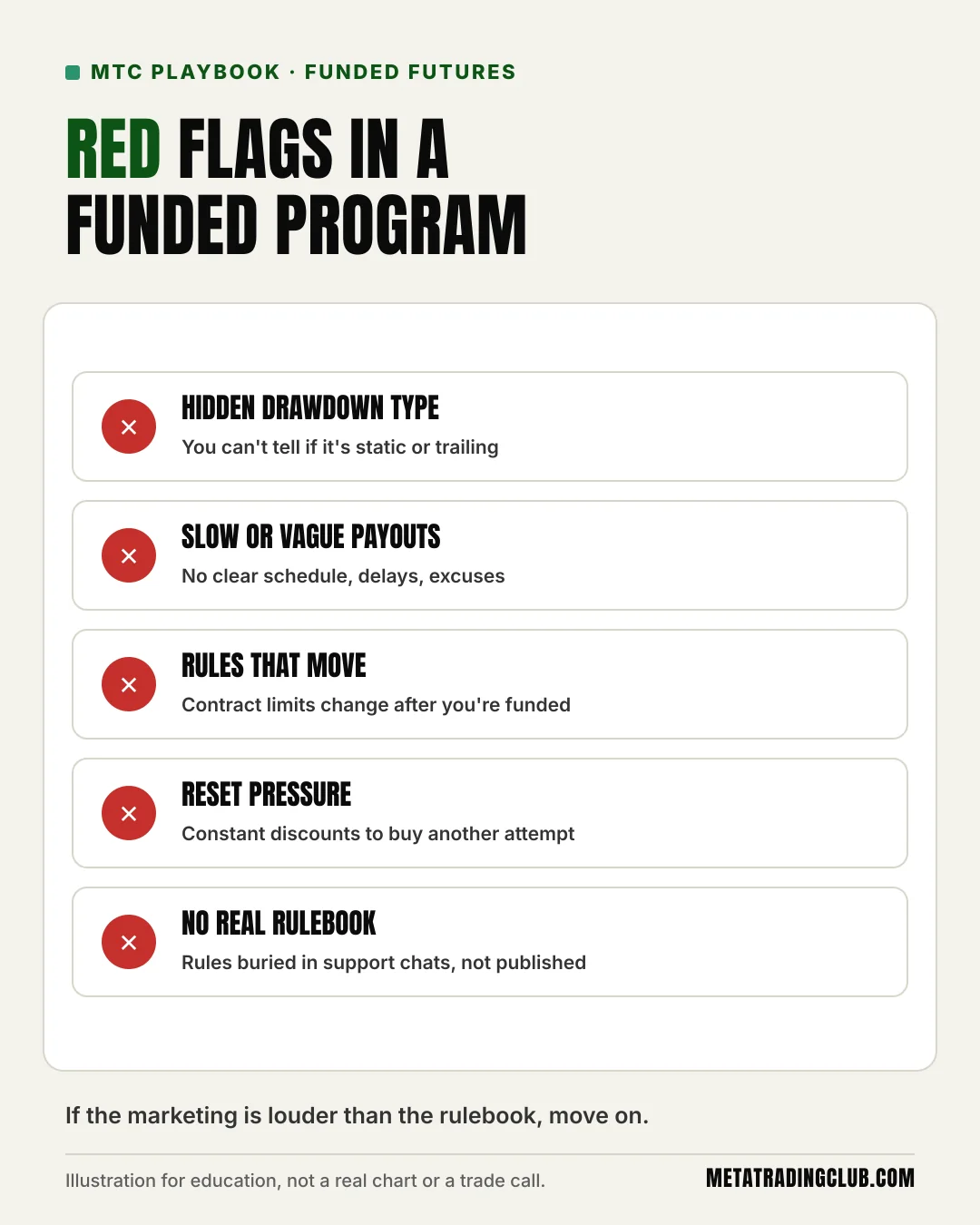
Watch for programs that obscure the drawdown type, delay payouts, or change contract limits after you fund. A legitimate firm publishes its risk rules and payout schedule clearly. If the marketing is louder than the rulebook, treat that as your answer and move on.