
The best stocks to start trading options aren’t the ones with the biggest moves — they’re the ones with the deepest, tightest markets. Get this one choice right and everything else about learning options gets easier.
Most beginners pick their first option on the wrong stock. They chase a hot small-cap because the chart looks exciting, then wonder why their fill is terrible, the spread eats half their edge, and the position swings 40% on no news. The best stocks to start trading options solve that problem before it starts: huge volume, penny-wide spreads, and names you already understand. Below are the five almost every honest guide lands on — and, more importantly, the reasoning so you can judge any ticker yourself.
What Makes a Stock Good for Trading Options?
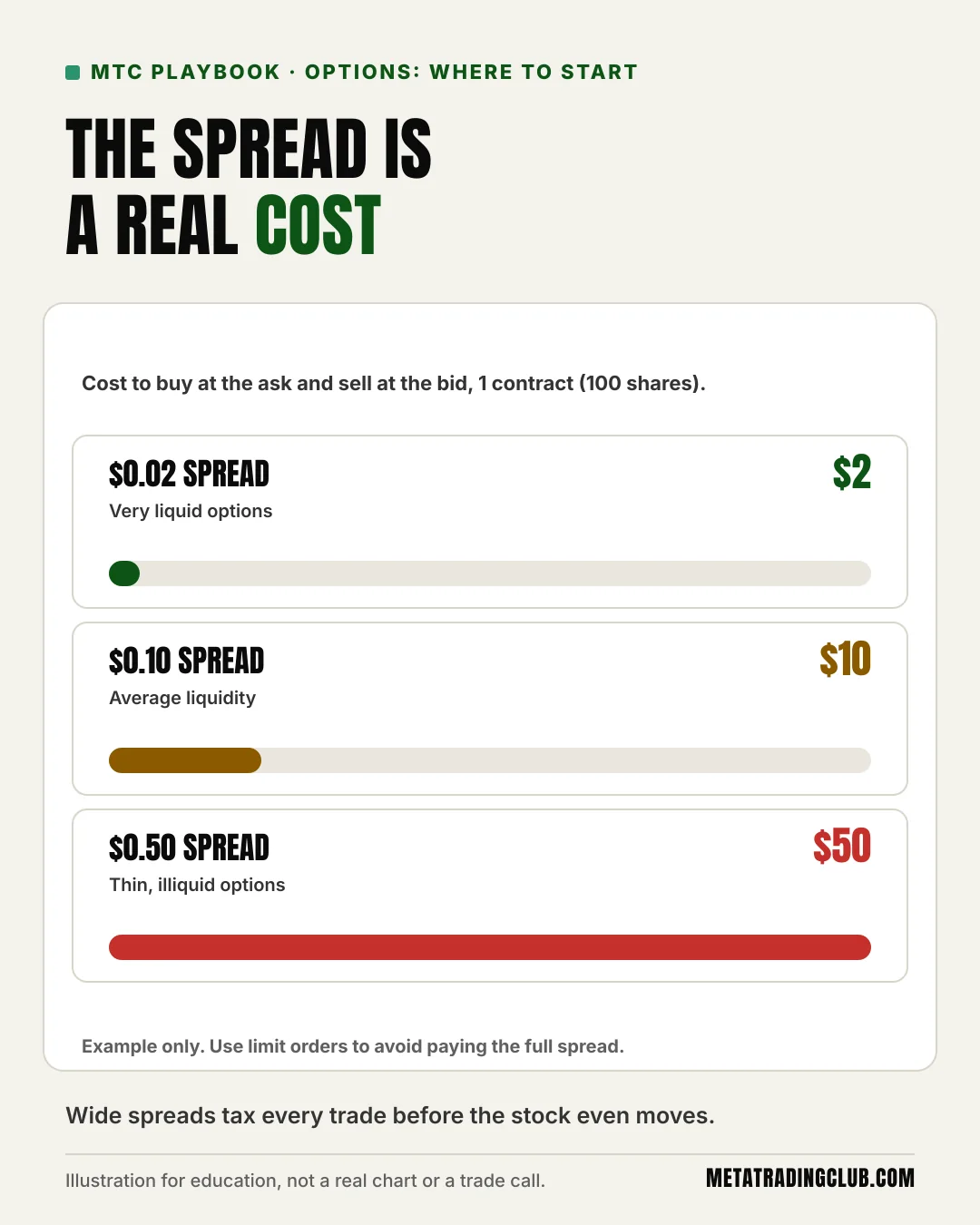
Before the list, understand what you’re actually screening for. Three things separate a beginner-friendly options underlying from a trap. First, liquidity — high options volume and open interest, so there’s always someone on the other side of your trade. Second, tight bid-ask spreads — on liquid names the spread might be a penny or two; on thin ones it can be 20% of the option’s price, a cost you pay every single trade. Third, a story you understand — you should be able to form a view on the stock without a PhD in its sector.
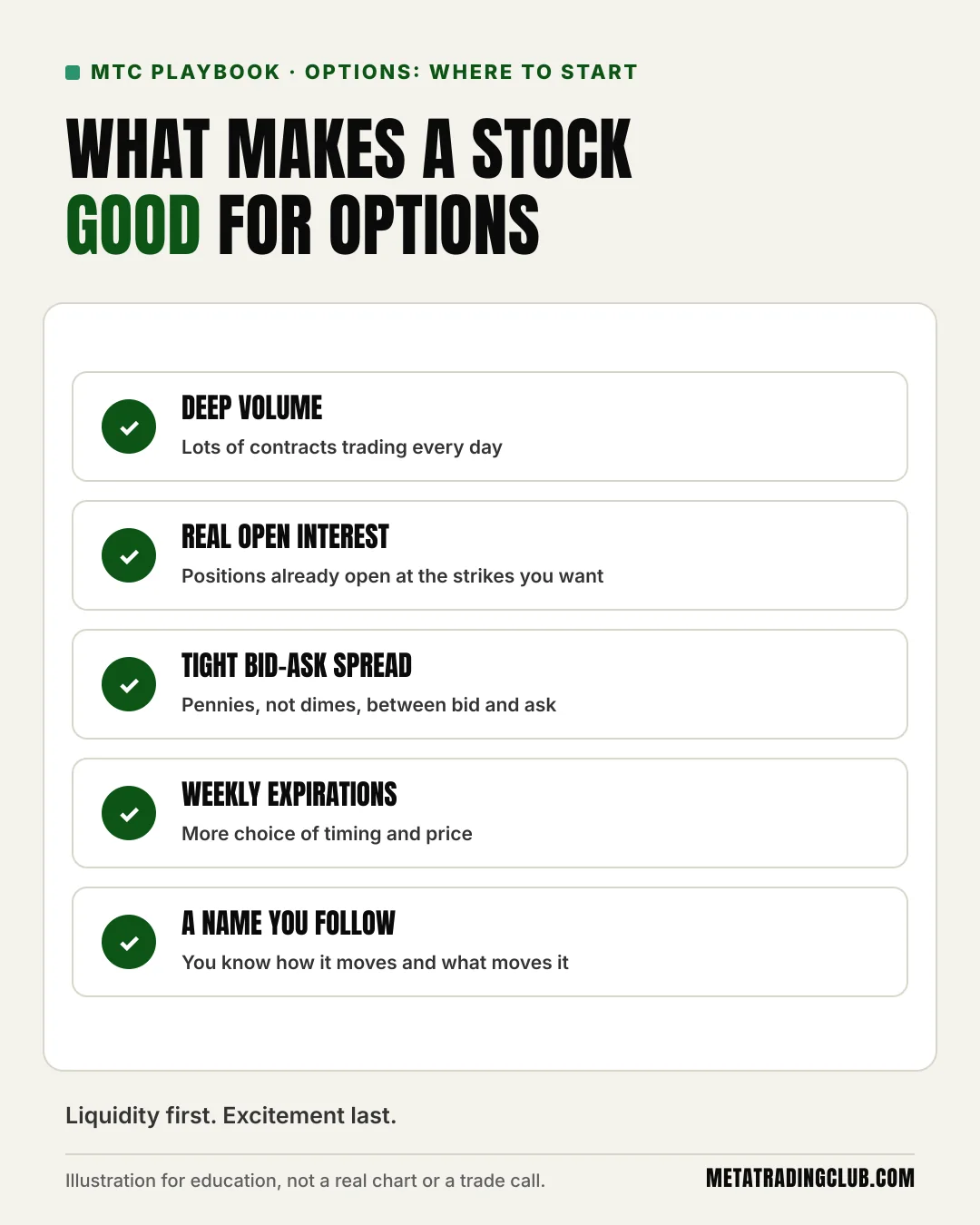
Notice what’s not on that list: big daily swings. Beginners confuse volatility with opportunity. Volatility without liquidity is just a faster way to lose money on bad fills. If you’re brand new, start with the mechanics on a name that behaves, then graduate. Our options-for-beginners guide walks through the risk-first order of operations before you ever click buy.
The Best Stocks to Start Trading Options
These five come up in nearly every credible beginner list for the same reason: they have the deepest options markets in the U.S. and they’re names you already have an opinion on. Two are index ETFs, three are mega-cap stocks.
| Ticker | What it is | Why beginners start here |
|---|---|---|
| SPY | S&P 500 ETF | The most liquid options in the world; moves with the whole market, not one headline. |
| QQQ | Nasdaq-100 ETF | Tech-heavy, slightly more movement than SPY, still deeply liquid. |
| AAPL | Apple | A single company you understand, with institutional-grade options liquidity. |
| MSFT | Microsoft | Lower volatility than most tech; good for learning without whiplash. |
| NVDA | Nvidia | Very liquid but much more volatile — start small here, it will test you. |
If you want the clearest first step, start with the index ETFs. We break down the trade-off between the two most popular in SPY vs QQQ options trading — which to trade first and why one suits beginners better. An index option takes single-stock surprise risk off the table while you learn the mechanics, which is exactly what a first trade should do.
MTC Analysis
Liquidity First, Volatility Later
A beginner on SPY with a plan beats a beginner on a hot small-cap every time — not because SPY is magic, but because the fills are fair and the surprises are smaller.
Why Not Just Trade the Cheap, Exciting Stocks?
Because the thing that makes them exciting — big, fast moves on thin volume — is the thing that punishes beginners. On an illiquid name, the bid-ask spread alone can cost you 10–20% the moment you enter. You can be right on direction and still lose, because you overpaid to get in and got shortchanged to get out. On SPY, that same round-trip might cost you pennies.
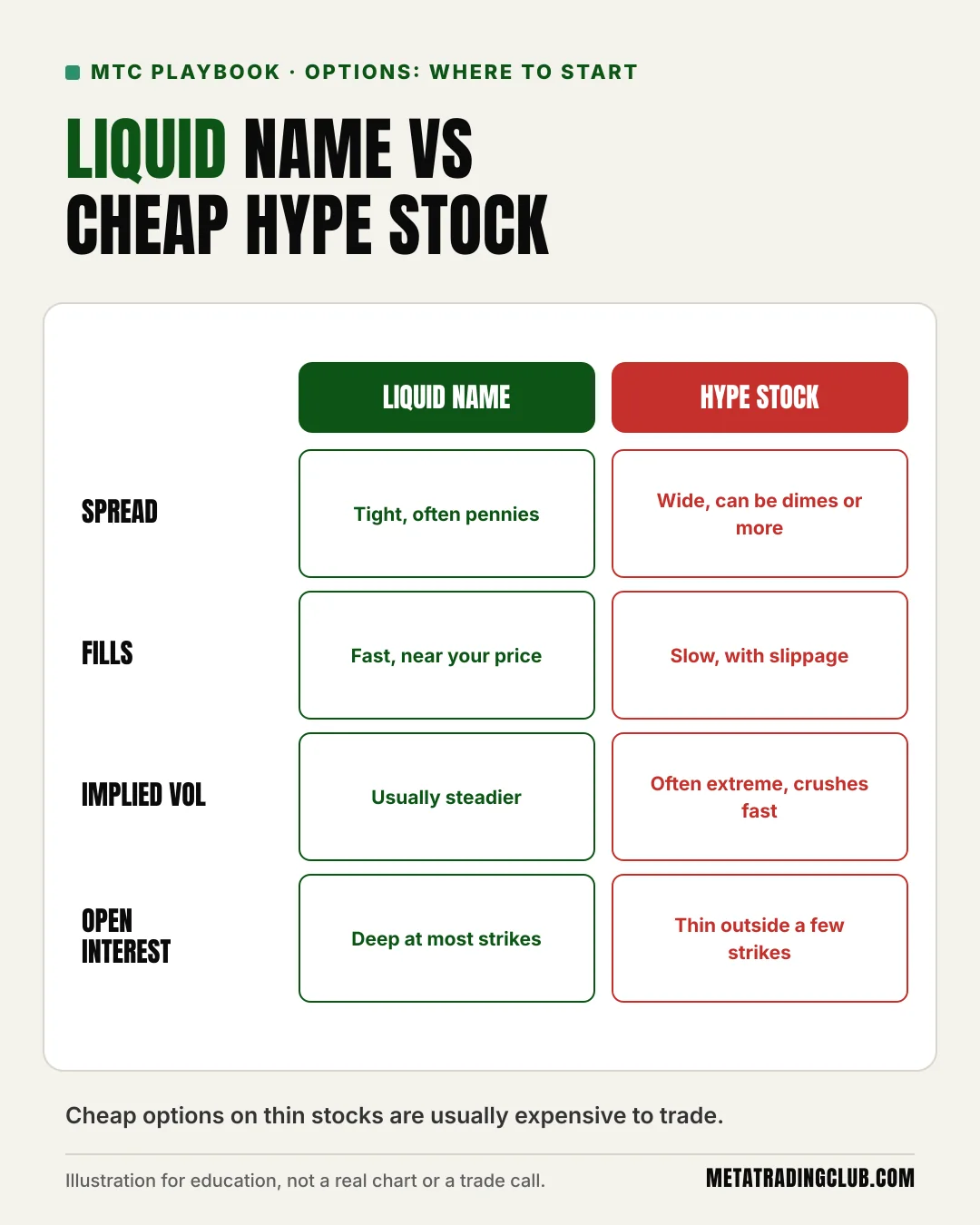
There’s also position-sizing math people skip. A single option already carries leverage; stacking that on a stock that can gap 30% overnight is how small accounts blow up on one trade. The fix isn’t to avoid risk — it’s to size every position so a single bad fill never ends your month. Liquid underlyings make that discipline easier, because the price you plan around is close to the price you actually get.
Some links on MTC are affiliate links — if you sign up through them, MTC may earn a commission at no extra cost to you. We only recommend tools we’d use ourselves. If you still need a brokerage to practise on, a low-cost options platform like moomoo lets you paper trade the chain before risking real money — which is exactly where a beginner should start.
How to Place Your First Options Trade With a Process
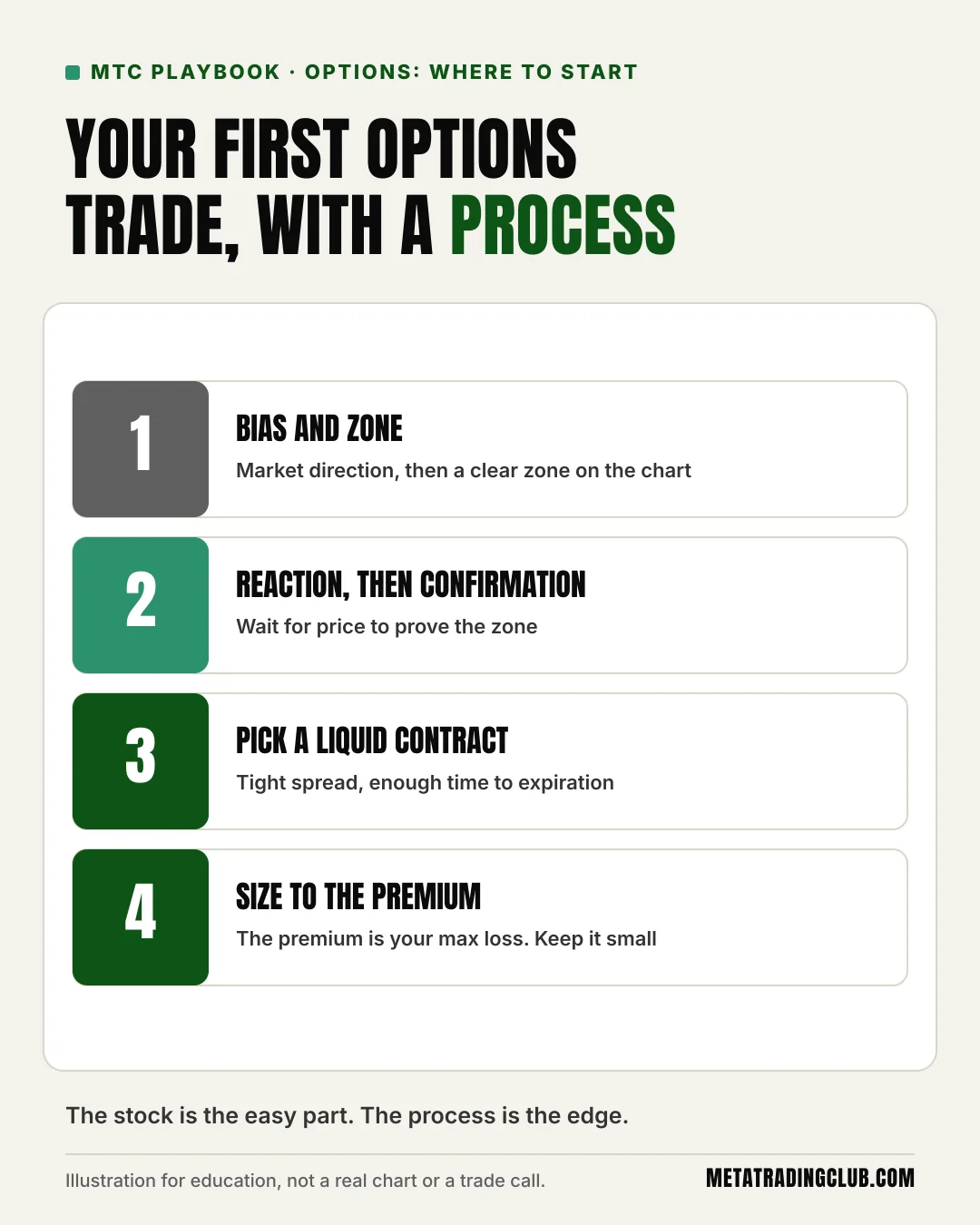
Picking the right stock is step one. Having a reason to be in the trade is the rest. The mistake beginners make isn’t the ticker — it’s clicking buy on a feeling. At MTC we run every trade through the same six-phase Alignment Engine so there’s a reason behind the entry and a line that proves you’re wrong. On a liquid name like SPY, that process actually works, because the price reacts to real levels instead of a thin order book.
MTC Analysis
Your First Trade, Run Through the Engine
The ticker is just the vehicle. A bias, a level, and an invalidation are what turn ‘I think it goes up’ into a trade you can actually manage.
Get the free first-options-trade checklist
DM us the keyword CHECKLIST on Instagram @metatradingclub and we’ll send it over free.
The Bottom Line on the Best Stocks to Start Trading Options
Start on the most liquid underlying you understand — SPY and QQQ first, then mega-caps like AAPL and MSFT, and NVDA only once you respect its volatility. The right first ticker doesn’t make you money on its own; it just removes the hidden costs and surprises that end most beginners before they’ve learned anything. Pair a liquid name with a real process and position sizing, and you’ve got a training ground that actually teaches you to trade. Canadian traders can start with our guide to trading options in Canada for broker and account specifics.
Educational content only. Nothing here is financial advice or a recommendation to buy or sell any security. Options involve risk and are not suitable for every investor.