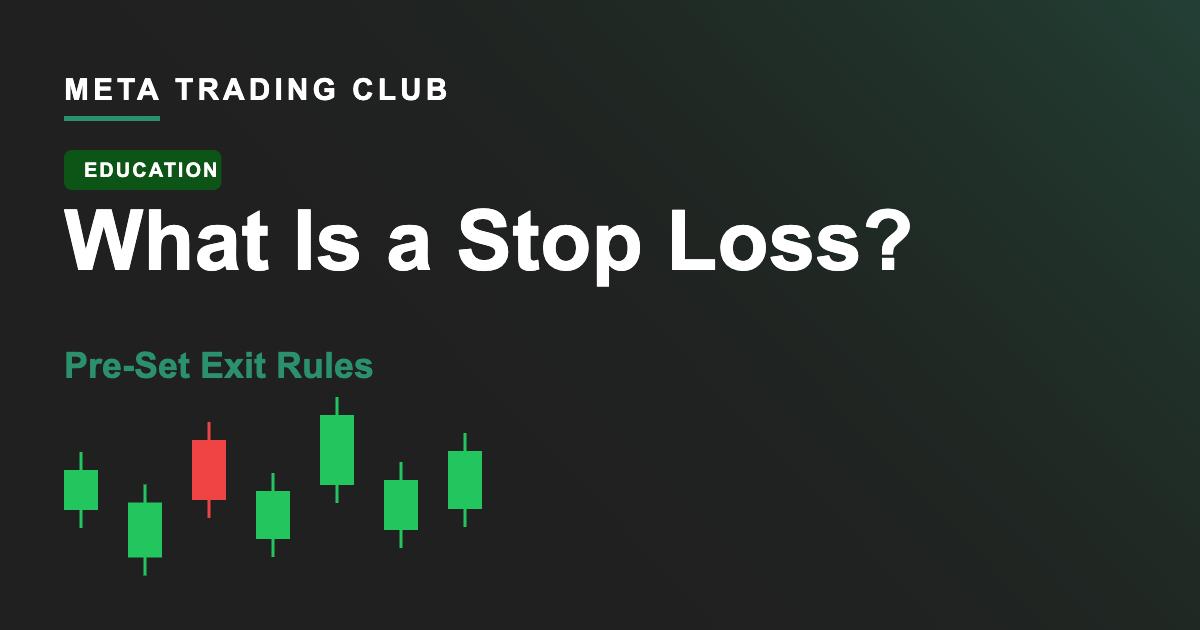
A stop loss is a pre-set price where you exit a losing trade automatically, capping your loss before it grows. It’s the single most important risk tool a trader has — the mechanism that turns “how much could I lose?” from an open question into a fixed, known number you decided in advance.
Traders don’t blow up because they’re wrong. They blow up because they don’t have — or don’t honor — a stop.
Why pre-set exit rules beat emotion
The moment you’re in a trade, your judgment gets compromised. A losing position triggers hope — “it’ll come back” — and hope is how a small loss becomes an account-ending one. Setting your stop before you enter, when you’re calm and objective, removes the in-the-moment decision. The rule protects you from the version of you that panics.
Where to place a stop loss
A good stop sits at a level where your trade idea is proven wrong — below support for a long, above resistance for a short — not at a random dollar amount. Then you size the position so that hitting the stop only costs your planned risk, usually 1–2% of the account. The level defines where you’re wrong; position size defines what being wrong costs.
| Stop Type | How It Works |
|---|---|
| Fixed stop | Set level, exit if hit |
| Trailing stop | Moves up with price to lock gains |
| Structure stop | Placed beyond a key level |
The MTC take: the exit is the trade
Everyone obsesses over entries. But your entry doesn’t control your outcome — your exit does. A pre-set stop is you making the hardest decision (when to admit you’re wrong) at the only time you can make it clearly: before money is on the line. Honor the stop every time, even when it stings, and no single trade can ever take you out of the game. That’s the whole edge.
Want a real exit framework?
Get our free lesson on setting stops and pre-planned exits so emotion never decides when you get out.
Frequently Asked Questions
What is a stop loss in trading?
A stop loss is a pre-set price at which you exit a losing trade automatically, limiting your loss to a known amount. You decide the level before entering, when you’re objective, so the trade closes at your planned risk instead of being left to an emotional in-the-moment decision.
Where should I place my stop loss?
Place your stop at the price where your trade idea is invalidated — below support for a long position, above resistance for a short — rather than at an arbitrary dollar figure. Then size the position so hitting that stop costs only your planned risk, typically 1–2% of your account.
Why do pre-set exit rules work better than deciding in the moment?
Once you’re in a trade, emotions like hope and fear cloud judgment, tempting you to hold losers too long. Setting exit rules beforehand, while calm and objective, removes that in-the-moment decision. You simply follow the plan, which keeps small losses small and prevents account-destroying mistakes.
Related reading
Ready to trade with a real system instead of guessing? Start your 7-day free trial →