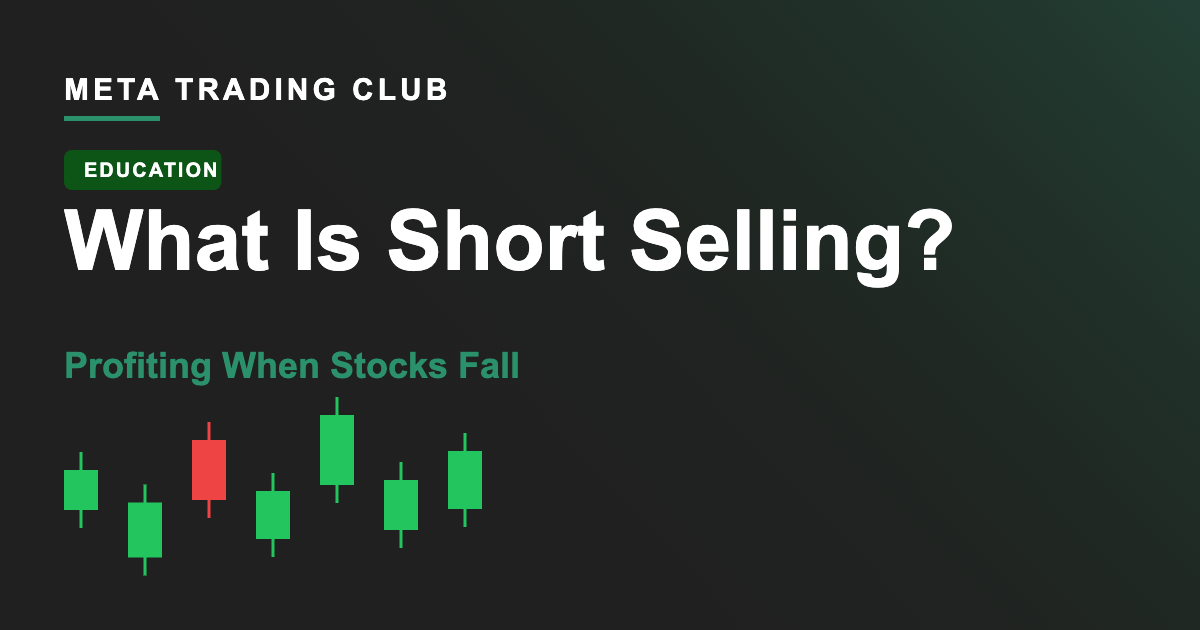
Short selling is a strategy where you profit from a falling stock. You borrow shares from your broker, sell them at the current price, then buy them back later — ideally cheaper — and return them, pocketing the difference. It’s how traders make money when they expect a price to drop.
It’s also one of the riskiest common strategies, because a stock can rise indefinitely — and your loss rises with it.
Why short selling is risky
When you buy a stock, the worst case is it goes to zero — you lose 100%. When you short, the worst case is the stock keeps rising, and there’s no ceiling. A stock that doubles costs a short seller 100%; one that triples costs 200%. Losses are theoretically unlimited, which is why shorting demands tight risk control and hard stops.
Short squeezes and borrowing costs
Two extra risks unique to shorting. A short squeeze happens when a rising price forces short sellers to buy back at once, driving the price even higher in a violent spiral. You also pay to borrow the shares — and hard-to-borrow stocks can cost a lot — plus you owe any dividends. Shorting isn’t just “buying in reverse”; it carries costs and dangers longs never face.
| Aspect | Short Selling |
|---|---|
| You profit when | Price falls |
| Max loss | Unlimited |
| Max gain | Capped (stock to $0) |
| Extra costs | Borrow fees, dividends owed |
The MTC take: shorting is a scalpel, not a hammer
Short selling can be highly profitable — markets fall faster than they rise — but the asymmetry is brutal. Capped upside, unlimited downside, and a squeeze that can gap against you overnight. That’s the opposite risk profile of a long. If you short, do it with a defined setup, a hard stop, and small size. Many traders get the same downside exposure with far less risk by buying puts instead.
Thinking about shorting?
Get our free lesson on spotting weakness and managing risk so you short into real breakdowns — with a plan for when you’re wrong.
Frequently Asked Questions
What is short selling?
Short selling is a strategy to profit from a falling stock. You borrow shares from your broker, sell them at the current price, and later buy them back — hopefully cheaper — to return to the lender. Your profit is the difference between the sell price and the lower buy-back price.
How much can you lose short selling?
Losses on a short sale are theoretically unlimited. Because a stock’s price can rise without any ceiling, and you must eventually buy the shares back to close the position, a rising stock keeps increasing your loss. This is why short sellers use hard stops and small position sizes.
What is a short squeeze?
A short squeeze occurs when a heavily shorted stock rises sharply, forcing short sellers to buy shares to cover their positions. That buying pushes the price even higher, triggering more covering in a feedback loop. Squeezes can cause explosive, rapid price spikes that inflict severe losses on short sellers.
Related reading
Ready to trade with a real system instead of guessing? Start your 7-day free trial →