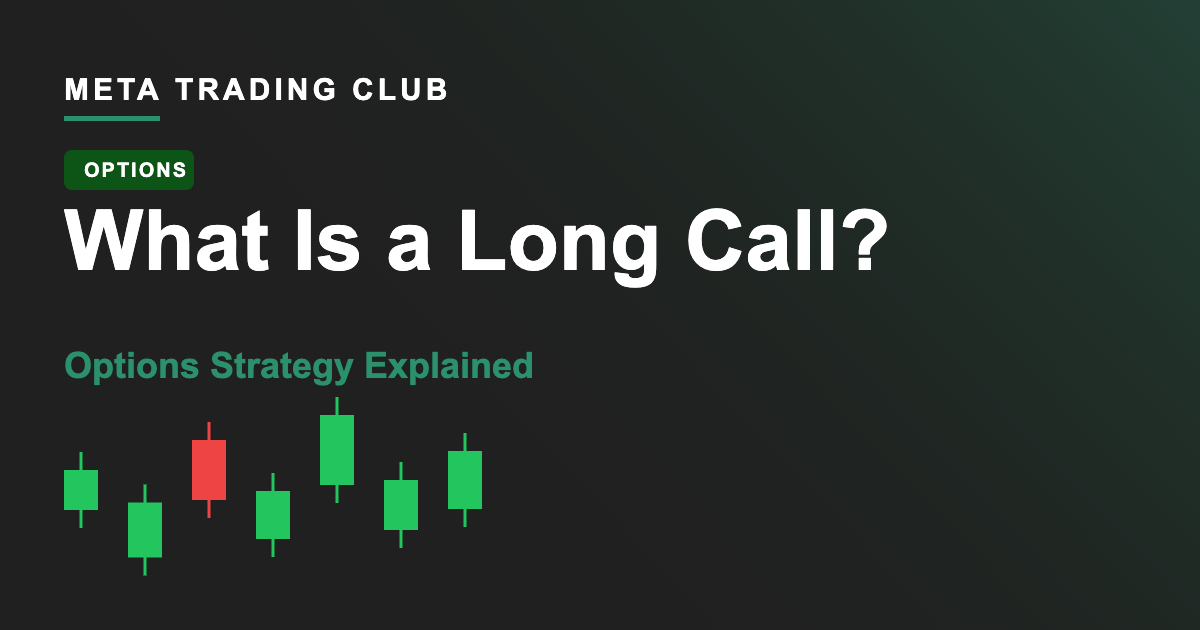
A long call is an options strategy where you buy a call option, giving you the right — but not the obligation — to buy a stock at a set strike price before expiration. You use it when you expect the stock to rise, and it lets you profit from that move while risking only the premium you paid.
It’s the most basic bullish options play, and the first one most traders learn. The appeal is simple: defined risk, unlimited upside.
How a long call makes money
You pay a premium up front. If the stock rises above your strike plus that premium — your breakeven — the call gains value and you profit. The higher it goes, the more you make, with no ceiling. If the stock stays flat or falls, the most you can lose is the premium you paid. That asymmetry is the entire appeal.
When to use a long call
Reach for a long call when you’re confident a stock will move up meaningfully before expiration. It gives you leverage — controlling 100 shares for a fraction of their cost — with a hard floor on your risk. The trade-off is time: options decay, so you need the move to happen before expiration, not eventually.
| Feature | Long Call |
|---|---|
| Market outlook | Bullish |
| Max loss | Premium paid |
| Max gain | Unlimited |
| Breakeven | Strike + premium |
The MTC take: options are leverage, and leverage cuts both ways
A long call feels like a lottery ticket — small cost, big potential. That’s exactly why traders overuse it. The defined risk is real, but “only losing the premium” still means losing 100% of what you put in, over and over, if your timing is off. Treat a long call as a precise tool for a specific bullish setup, sized so a string of expired calls can’t drain your account.
Want to trade options with a real edge?
Get our free lesson on reading setups so you buy calls when the odds favor the move — not on hope.
Frequently Asked Questions
What is a long call option?
A long call is when you buy a call option, giving you the right to purchase a stock at a fixed strike price before expiration. It’s a bullish strategy: you profit if the stock rises above your breakeven, and your maximum loss is limited to the premium you paid for the option.
What is the maximum loss on a long call?
The maximum loss on a long call is the premium you paid, and nothing more. Even if the stock drops to zero, you can never lose more than what the option cost. This defined risk is one of the main reasons traders use long calls instead of buying shares outright.
When should I buy a long call?
Buy a long call when you expect a stock to rise meaningfully before the option expires. It offers leverage and capped risk, but options lose value over time, so you need the move to happen within your timeframe. It works best paired with a clear, high-probability bullish setup.