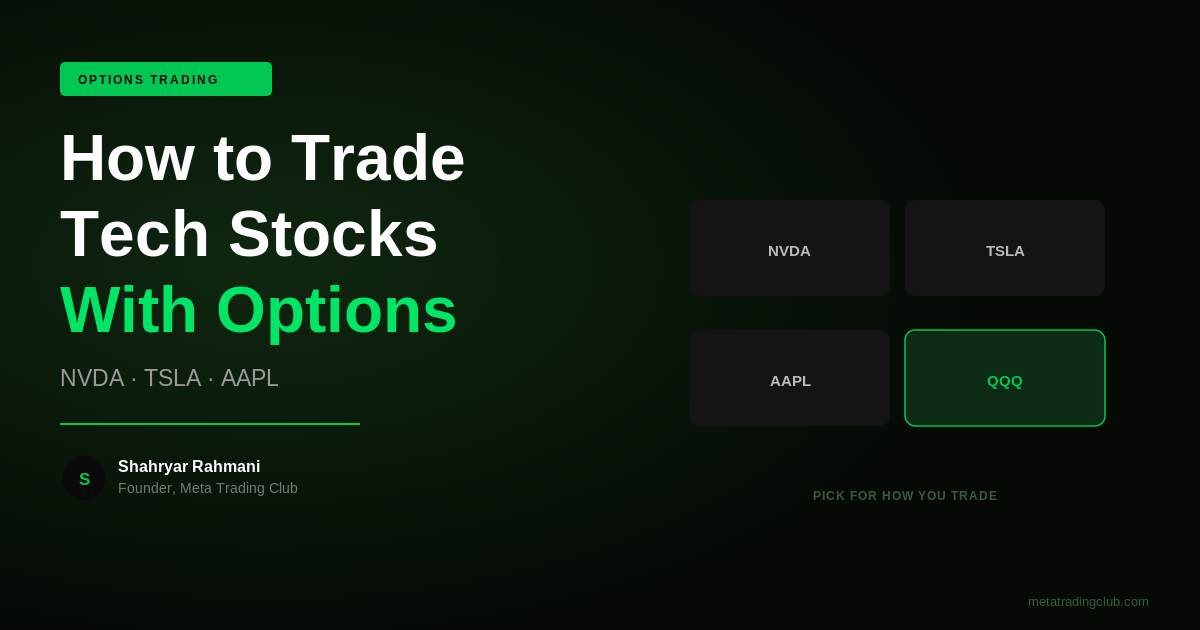
The big tech names — NVDA, TSLA, AAPL, and their peers — are where a huge amount of options activity lives, and for understandable reasons. They move, they trade massive volume, and their options are deep and liquid. They’re also where a lot of beginners get run over, because the same qualities that make them attractive — speed and volatility — punish careless trading harder than a slow stock ever would. Trading tech with options is a skill of respecting the volatility, not ignoring it.
The volatility cuts both ways
The same qualities that make NVDA and TSLA attractive — speed and liquidity — punish careless trading harder than a slow stock ever could. Respect the volatility.
Why Traders Love Tech Options
Three things draw options traders to mega-cap tech. First, liquidity: these names have some of the tightest options spreads and deepest open interest in the market, so you’re not paying a wide-spread tax to get in and out. Second, movement: they trend hard and react sharply to news, which gives directional traders something to work with. Third, weekly and even daily expirations on the biggest names, giving precise control over timing and strategy.
That combination is genuinely powerful. It’s also exactly why discipline matters more here, not less.
MTC Analysis
Trading Tech With Options
The qualities that make tech attractive are the same ones that make it unforgiving. Liquidity and movement are gifts; volatility and speed are taxes on carelessness.
The Catch: Volatility Cuts Both Ways
Tech stocks carry higher implied volatility than the average stock, which means their options are more expensive and their moves are larger and faster. A name like TSLA or NVDA can move several percent in a session on no specific news. That’s opportunity if you’re positioned right and a quick account dent if you’re not. The leverage of options multiplied by the volatility of tech is a combination that rewards precision and brutally punishes sloppiness.
The single biggest mistake beginners make with tech options is sizing them like they would a slow stock. A position that’s reasonable on a utility is reckless on NVDA, because the same percentage move produces a far bigger swing in your option’s value.
How to Actually Trade Them
A few adjustments make tech tradeable instead of dangerous.
1. Size Down for the Volatility
Because the moves are bigger, your position has to be smaller to keep your dollar risk constant. Apply the same 1–2% risk rule, but recognize that the wider stops these stocks demand mean fewer contracts. Sizing as if you’re trading a calm stock is how tech blows up accounts.
2. Mind Implied Volatility and Earnings
Tech IV spikes hard into earnings and major events (product launches, AI announcements, Fed-sensitive moves). Buying options when IV is inflated sets you up for IV crush. Check IV Rank, avoid holding long premium through binary events unless that’s the explicit plan, and consider spreads to reduce your exposure to expensive volatility.
3. Use Defined-Risk Structures
Given the speed, defined-risk spreads are often smarter than naked long options on these names. A debit spread caps your cost and reduces the IV you’re overpaying for, while still giving directional exposure. You give up some upside for a lot more control — a good trade on stocks that can reverse violently.
4. Trade With the Bias, Respect the Levels
Tech names trend powerfully but also have clear, heavily-watched levels. Trade in the direction of the prevailing trend and the broad market (these stocks largely drive and follow QQQ), and build trades around real levels with confirmation rather than chasing momentum after a move is already extended. Chasing extended tech moves is one of the fastest ways to buy the top.
The Discipline Tech Demands
Here’s the honest summary: the qualities that make tech options attractive are the same qualities that make them unforgiving. Liquidity and movement are gifts; volatility and speed are taxes on carelessness. The traders who do well with NVDA, TSLA, and AAPL aren’t braver than everyone else — they’re more disciplined: smaller size, defined risk, IV awareness, and trades built on structure instead of hype.
That’s exactly the process the MTC Alignment Engine enforces, and these are the names traded live at Meta Trading Club every market day — so members see how to respect the volatility and trade the biggest movers in the market with structure instead of getting run over by them.
Proprietary Framework
The MTC Alignment Engine™ — Applied Every Live Session
Every trade runs the same five checkpoints — consistency over gut reaction. Inside the MTC Incubator, members build their own system on top of this framework.
Frequently Asked Questions
Are tech stocks good for options trading?
Yes, in the sense that names like NVDA, TSLA, and AAPL have excellent options liquidity, tight spreads, strong movement, and weekly expirations. But their higher volatility makes them less forgiving — the same qualities that create opportunity also punish careless sizing and timing. They reward disciplined traders and hurt sloppy ones.
Why are tech stock options so expensive?
Because tech stocks carry higher implied volatility, which inflates option prices. Higher expected movement means more time value in the options. This is especially pronounced into earnings and major events, when IV spikes — making options costly to buy and exposing buyers to IV crush after the event resolves.
How should I size options positions on volatile tech stocks?
Smaller than you would on a calm stock. Apply the same 1–2% account risk per trade, but because tech stocks need wider stops for their larger moves, that translates into fewer contracts. The most common beginner mistake is sizing tech options like a slow stock, which turns a normal move into an outsized loss.
Should I trade options on tech stocks through earnings?
Generally avoid holding long options through tech earnings unless that’s specifically your plan, because IV spikes beforehand and collapses afterward (IV crush), and the moves are binary. Many traders prefer to trade the reaction after earnings, when volatility has reset and the direction is clearer.
What’s the safest way to trade tech options as a beginner?
Use defined-risk strategies like debit spreads rather than naked long options, size down significantly for the volatility, check IV Rank to avoid overpaying, and trade with the prevailing trend and key levels rather than chasing extended moves. Defined risk and disciplined sizing are essential on fast-moving names.
Do tech stocks follow QQQ?
Largely, yes — the biggest tech names are major components of the Nasdaq 100 (QQQ) and tend to both drive and follow it. Watching QQQ and the broader market helps establish bias for trading individual tech names, since they often move together, especially during broad risk-on or risk-off sessions.
Related reading
Meta Trading Club Community
Start Your 7-Day Free Trial
Daily live sessions. Real-time market prep — not signals. The MTC Alignment Engine™ applied in front of you. Trade alongside Shahryar from day one.
Cancel anytime. No contracts. Built for Canadian traders.
Already trading and want to build your own system?
The MTC Incubator is an application-based mentorship — 1-on-1 work building a personalized system on the Alignment Engine™.