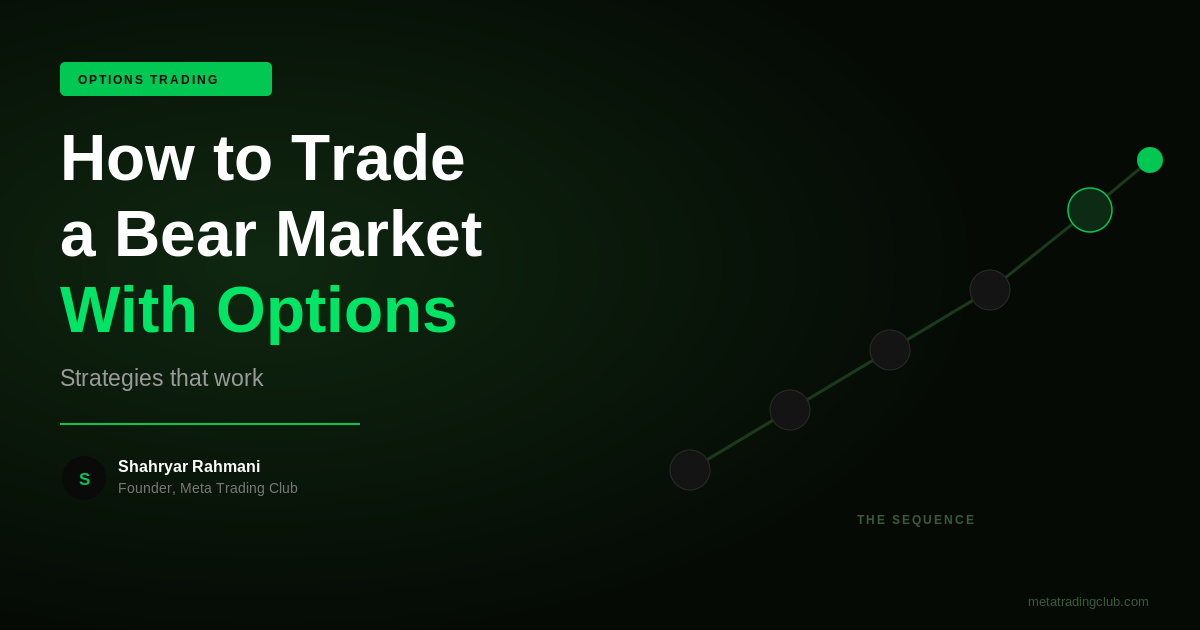
Most traders only know how to make money when the market goes up, which means a bear market either terrifies them or wipes them out. But falling markets aren’t a problem to survive — they’re an opportunity, if you have the tools. Options are exactly that tool. They let you profit from downside, hedge what you own, and do it with defined, controlled risk. Here’s how to actually trade a bear market with options, without taking on the unlimited risk that scares people away from shorting.
Falling markets aren’t the enemy
A bear market isn’t a problem to survive — it’s an opportunity, if you have the tools. Options let you profit from downside with defined, controlled risk.
First: What a Bear Market Changes
A bear market — broadly, a sustained decline of 20% or more — changes the environment in ways your strategy has to respect. Volatility is usually elevated, so options are more expensive (higher IV) and moves are bigger and faster. Rallies within downtrends are sharp and deceptive (‘bear market rallies’) and trap traders trying to call the bottom. The dominant bias flips: down is now the path of least resistance, and fighting it by reflexively buying dips is how a lot of accounts bleed out.
The first adjustment is mental: stop trying to be a hero who catches the bottom, and start trading in the direction the market is actually going.
MTC Analysis
Four Ways to Trade Downside
Whatever you trade, size down and respect the volatility. The traders who get hurt are usually right on direction but too large for a vicious bear-market rally.
Strategy 1: Long Puts (Defined-Risk Downside)
The most direct way to profit from a falling stock or index is buying a put — it gains value as the underlying drops, and your maximum loss is just the premium paid. Defined risk, direct downside exposure. The catch in a bear market is that elevated IV makes puts expensive, so you’re paying up. Use them for high-conviction directional moves with a clear level and confirmation, size them sensibly given the inflated premium, and don’t hold them blindly through every bear-market rally.
Strategy 2: Put Debit Spreads (Cheaper, Still Defined)
To cut the cost of expensive puts, buy a put and sell a further-out-of-the-money put against it — a bear put spread. This lowers your cost and your exposure to inflated IV, in exchange for a capped profit. In a high-volatility bear market, spreads are often the smarter way to express a downside view than buying puts outright, because they neutralize some of the volatility premium you’d otherwise overpay.
Strategy 3: Protective Puts (Hedging What You Own)
If you hold stock you don’t want to sell, a protective put is insurance — you own the shares and buy a put under them, capping your downside while keeping upside. You pay a premium, like any insurance, but it lets long-term holders sleep through a bear market without panic-selling at the bottom. This is one of the most practical, underused uses of options for ordinary investors.
Strategy 4: Selling Premium Into High IV (Advanced)
The elevated volatility that makes buying options expensive makes selling them attractive — for experienced, defined-risk traders. Strategies like bear call spreads (selling a call spread above the market) profit if the stock stays below a level, harvesting the rich premium. This is advanced and the risk is real in violent markets, so it’s strictly defined-risk territory and not a beginner move — but it’s why some traders welcome bear markets.
The Rule That Matters Most in a Bear Market
Whatever you trade, size down and respect the volatility. Bear markets move faster and more violently than uptrends, and the sharp counter-trend rallies are designed to shake out anyone positioned too big. The traders who get hurt aren’t the ones with the wrong direction — they’re often right on direction but too large, and a vicious bear rally stops them out before the decline resumes. Smaller size, defined risk, and trading with the bias — not against it — is the whole game.
A bear market is where disciplined traders separate from gamblers, because the cost of undisciplined risk goes up. At Meta Trading Club, members trade these conditions live with the MTC Alignment Engine — using bias, levels, and confirmation to trade downside with structure instead of fear, every market day.
Proprietary Framework
The MTC Alignment Engine™ — Applied Every Live Session
Every trade runs the same five checkpoints — consistency over gut reaction. Inside the MTC Incubator, members build their own system on top of this framework.
Frequently Asked Questions
Can you make money in a bear market with options?
Yes. Options let you profit from falling prices through strategies like long puts and bear put spreads, hedge existing stock with protective puts, and — for advanced traders — harvest elevated volatility by selling defined-risk premium. They allow you to trade downside with controlled, defined risk rather than the unlimited risk of shorting stock.
What is the safest way to trade a bear market with options?
Defined-risk strategies are safest: long puts (max loss is the premium) and put debit spreads (which also cap cost and reduce exposure to inflated volatility). Protective puts are a low-stress way to hedge stock you already own. The key is sizing down and respecting the higher, faster volatility of bear markets.
Why are options more expensive in a bear market?
Because implied volatility is usually elevated during market declines — fear drives up demand for protection, inflating option prices. This makes buying options costlier, which is why spreads (that partially offset the volatility premium) are often smarter, and why some experienced traders sell premium to take advantage of the rich pricing.
What is a protective put?
A protective put is buying a put option on stock you already own, acting like insurance. It caps your downside if the stock falls while keeping your upside if it rises, in exchange for the premium paid. It lets long-term holders ride out a bear market without panic-selling, making it one of the most practical uses of options.
Should beginners trade bear markets?
Beginners can, but with extra caution. Bear markets move faster and more violently than uptrends, with deceptive counter-trend rallies that trap traders. Beginners should stick to simple defined-risk strategies like long puts or protective puts, size down significantly, and trade with the downtrend rather than trying to call the bottom.
Why do traders lose money in bear markets even when they’re right on direction?
Usually because they’re sized too large. Bear markets feature sharp, violent counter-trend rallies designed to shake out overexposed traders. A trader can have the correct downside view but get stopped out by a vicious bounce before the decline resumes — simply because the position was too big. Smaller size and defined risk are essential.
Related reading
Meta Trading Club Community
Start Your 7-Day Free Trial
Daily live sessions. Real-time market prep — not signals. The MTC Alignment Engine™ applied in front of you. Trade alongside Shahryar from day one.
Cancel anytime. No contracts. Built for Canadian traders.
Already trading and want to build your own system?
The MTC Incubator is an application-based mentorship — 1-on-1 work building a personalized system on the Alignment Engine™.