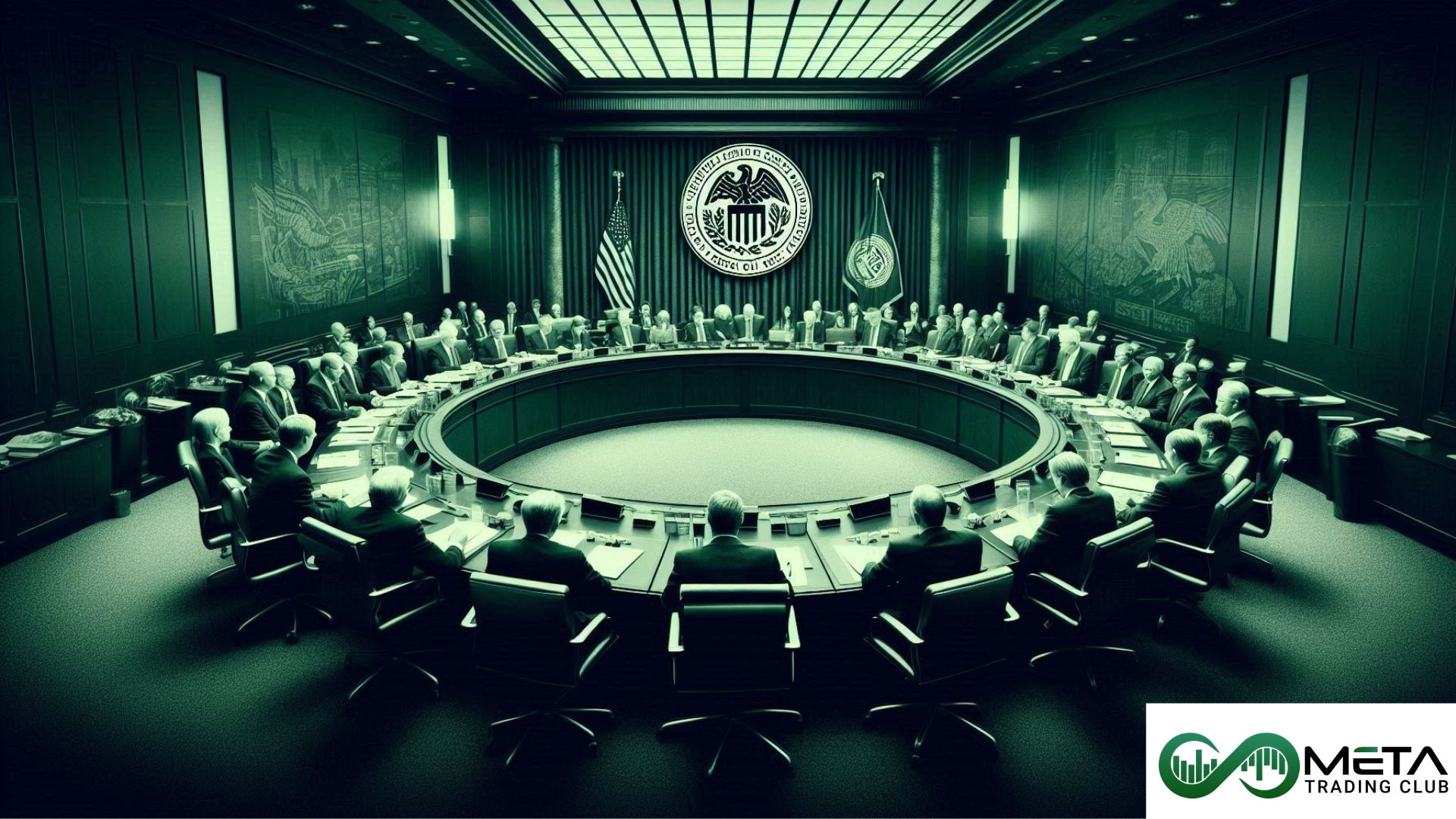
The Federal Open Market Committee (FOMC) is a branch of the Federal Reserve System responsible for overseeing the nation’s open market operations. This includes making key decisions about interest rates and the growth of the United States money supply. The FOMC meets several times a year to discuss and set monetary policy, aiming to achieve maximum employment, stable prices, and moderate long-term interest rates.
Summary of FOMC Meeting on June 18, 2025
The Federal Open Market Committee (FOMC) met on June 17–18, 2025, alongside the Board of Governors, to review its monetary policy framework. Discussions focused on labor market dynamics, the goal of maximum employment, and the relationship between employment and price stability. Participants supported the broad and evolving concept of maximum employment and considered revising language related to employment shortfalls.
Financial Market Overview
During this period, financial markets showed modest improvements. Treasury yields rose and equity prices increased amid easing trade tensions and anticipation of fiscal expansion. Market participants slightly lowered their perceived risks to growth and inflation.
Policy rate expectations shifted higher, with surveys and futures markets indicating two rate cuts this year. Inflation compensation for the near term declined, while longer-term measures remained stable. Treasury market liquidity improved, and auction performance held steady.
The dollar weakened, reflecting U.S. growth concerns relative to other economies. Money markets remained stable and reserves increased, though upcoming debt limit resolution could lead to liquidity tightening.
Fed’s Staff Review of the Economic Situation
Consumer price inflation remained somewhat elevated in May, with total and core PCE inflation at 2.3% and 2.6%, both lower than earlier in the year. Short-term inflation expectations were still high, and long-term expectations were steady.
Labor market conditions stayed strong. The unemployment rate held at 4.2%, job growth was solid, and wage gains were up 3.9% year-over-year. Participation rates dipped slightly but remained broadly stable.
Real GDP appeared to be growing in Q2 after a slight contraction in Q1, supported by strong consumer spending and moderate business investment. Trade flows were volatile due to tariff adjustments, with imports dropping in April and exports firming. A temporary U.S.–China tariff reduction spurred a rebound in trade.
Global growth rose early in the year, largely due to pre-tariff export surges, but slowed in Q2 amid lingering trade policy uncertainty. Inflation abroad stayed near central bank targets, though picked up in some regions like Mexico, while remaining subdued in China.
Fed’s Staff Review of the Financial Situation
Despite easing near-term inflation pressures, market expectations for interest rates rose, reflecting optimism in the economic outlook and improved trade relations. Inflation compensation for the short term declined and Treasury yields increased moderately.
Investor sentiment improved, driven by progress in U.S.–China trade relations. Equity prices climbed, and market volatility declined. The dollar slightly depreciated. The Israel–Iran conflict had limited impact outside energy markets.
Short-term U.S. funding markets were stable, and credit markets showed modest declines in borrowing costs, though rates remained elevated in many areas.
Household credit remained generally available, especially for high-credit-score borrowers, while access for lower-score borrowers stayed tight. Loan growth was solid across consumer segments.
Credit quality was steady for large firms and most mortgage types, but delinquencies were elevated in areas like small business loans, commercial real estate, and student loans, especially following resumed repayment requirements. Rising student loan defaults could increase broader debt stress later this year.
Fed’s Staff Economic Outlook
The staff raised their real GDP growth forecast for 2025–2027, citing reduced effective tariff rate assumptions. As a result, labor market conditions were expected to hold up better than previously projected, though the unemployment rate was still expected to rise modestly and remain slightly above its natural rate through 2027.
Inflation projections edged lower compared to the May outlook. While tariffs could lift inflation slightly this year and in 2026, it was projected to ease to 2 percent by 2027.
Uncertainty around the forecast remained high, largely due to unpredictable trade, fiscal, immigration, and regulatory policies. Inflation risks were tilted to the upside, with staff warning that this year’s inflation bump could prove more persistent than anticipated.
FOMC Members’ Views
Participants agreed that economic growth was solid and unemployment low, with inflation easing but still above the 2% target. Consumer and business sentiment remained weak, and while overall uncertainty had declined since April, and reduced downside risks to growth and employment and moderated upside risks to inflation.
Inflation pressures from tariffs were expected but uncertain in timing and magnitude. Effects could be delayed due to supply chain dynamics or firms holding off on price increases. If supply chains adjust quickly or trade deals are reached, tariff effects may be limited.
FOMC participants noted that longer-term inflation expectations remained stable but cautioned that elevated short-term expectations, possibly fueled by tariffs, could spill over into wage and price setting.
The labor market was considered solid and near full employment, though signs of softening were emerging. Hiring slowed amid uncertainty, immigration policies were limiting labor supply, and wage growth was moderating. Tariffs and policy uncertainty could further dampen labor demand.
Economic activity continued to grow, business investment remained cautious due to uncertainty. Participants noted emerging signs of weakness in manufacturing and agriculture.
Committee Policy Actions
The Committee agreed to hold the federal funds rate steady at 4.25–4.5% and continue balance sheet reduction. They judged policy appropriately restrictive but well positioned to adjust if conditions change. Most supported a rate cut later in the year, depending on inflation and economic data. Some favored maintaining rates, citing persistent inflation risks.
Also, the Fed will:
- Continue open market operations to hold the rate within its target range
- Conduct overnight repo and reverse repo operations with defined rate and volume parameters
- Maintain monthly runoff caps for Treasury and MBS holdings
- Reinvest excess principal payments in Treasury securities matching the maturity profile
Forward Guidance: The Committee is prepared to adjust policy if risks emerge. Rate cuts could be considered if inflation pressures ease and economic activity weakens. Conversely, a more restrictive stance may be appropriate if inflation proves more persistent.
Voting Outcome: All members, including Chair Jerome Powell and 11 other voting