
Last Week’s report
Economic Reports
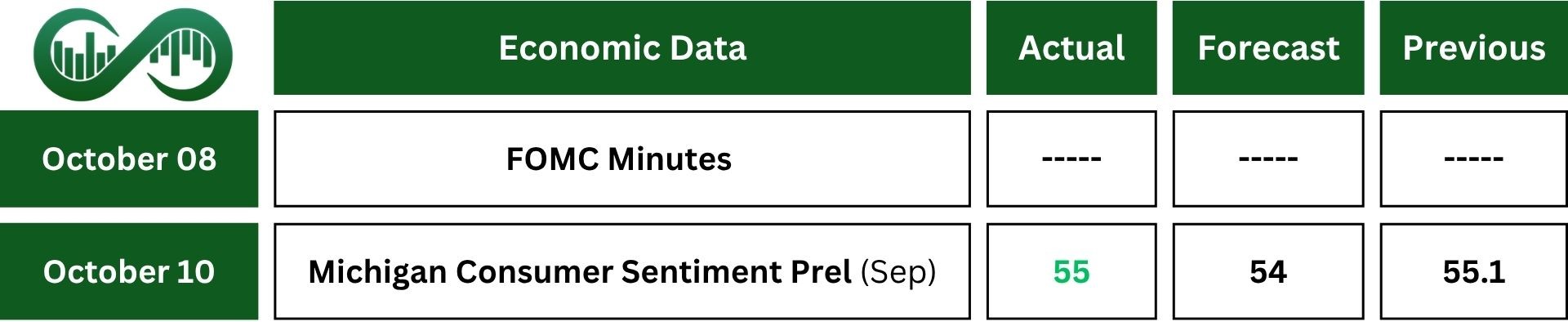
Major economic news wasn’t released last week due to the U.S. government shutdown, which temporarily halted key data publications. Agencies responsible for reporting indicators were unable to operate fully, leaving analysts and markets without fresh updates.
On Friday, the Bureau of Labor Statistics confirmed it will release September’s consumer inflation data on October 24 to help the Social Security Administration calculate the 2026 cost-of-living adjustment.
Michigan Consumer Sentiment remained nearly unchanged in October, at 55, compared to 55.1 in September. People felt better about their current financial situation and business conditions for the next year, but were less optimistic about their future personal finances and purchasing big items.
The index for current conditions rose slightly, while expectations dipped slightly. Overall, consumers saw little change in the economic outlook.
Inflation expectations for the next year fell slightly to 4.6%, and long-term expectations remained steady at 3.7%.
President Trump accused China of hostile trade actions and warned of major tariff hikes in response to China’s plan to restrict exports of rare earth elements, materials critical to global manufacturing. He canceled a planned meeting with China’s president and said the U.S. is ready to respond with broad economic measures.
Earnings Reports

PepsiCo
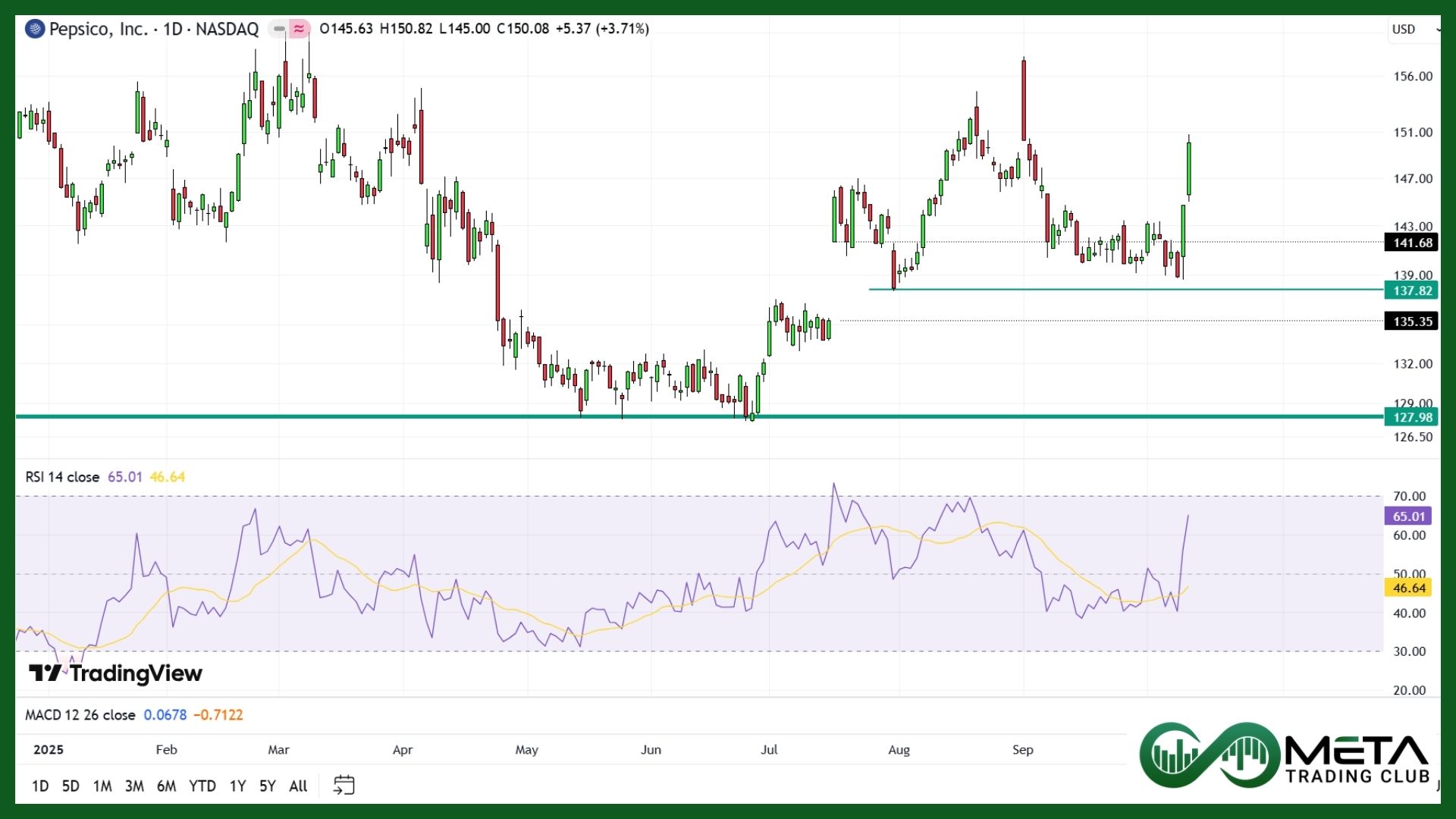
PepsiCo (PEP) reported a strong third quarter for 2025, beating expectations with $23.94 billion in revenue and earnings of $2.29 per share—both slightly above consensus forecasts.
Despite continued weakness in its U.S. snack division, the company saw a 2% rise in North American beverage revenue, driven by strong performance from flagship brands like Pepsi and Propel.
Growth was further supported by robust international sales, particularly in Latin America and Asia, and strategic changes to its product portfolio, including the acquisition of prebiotic soda brand Poppi.
Following the earnings release, PepsiCo’s stock rose over 5.5%, reflecting investor confidence in its global strategy and resilience amid shifting consumer trends and economic uncertainty.
Indices
Indices’ Weekly Performance:
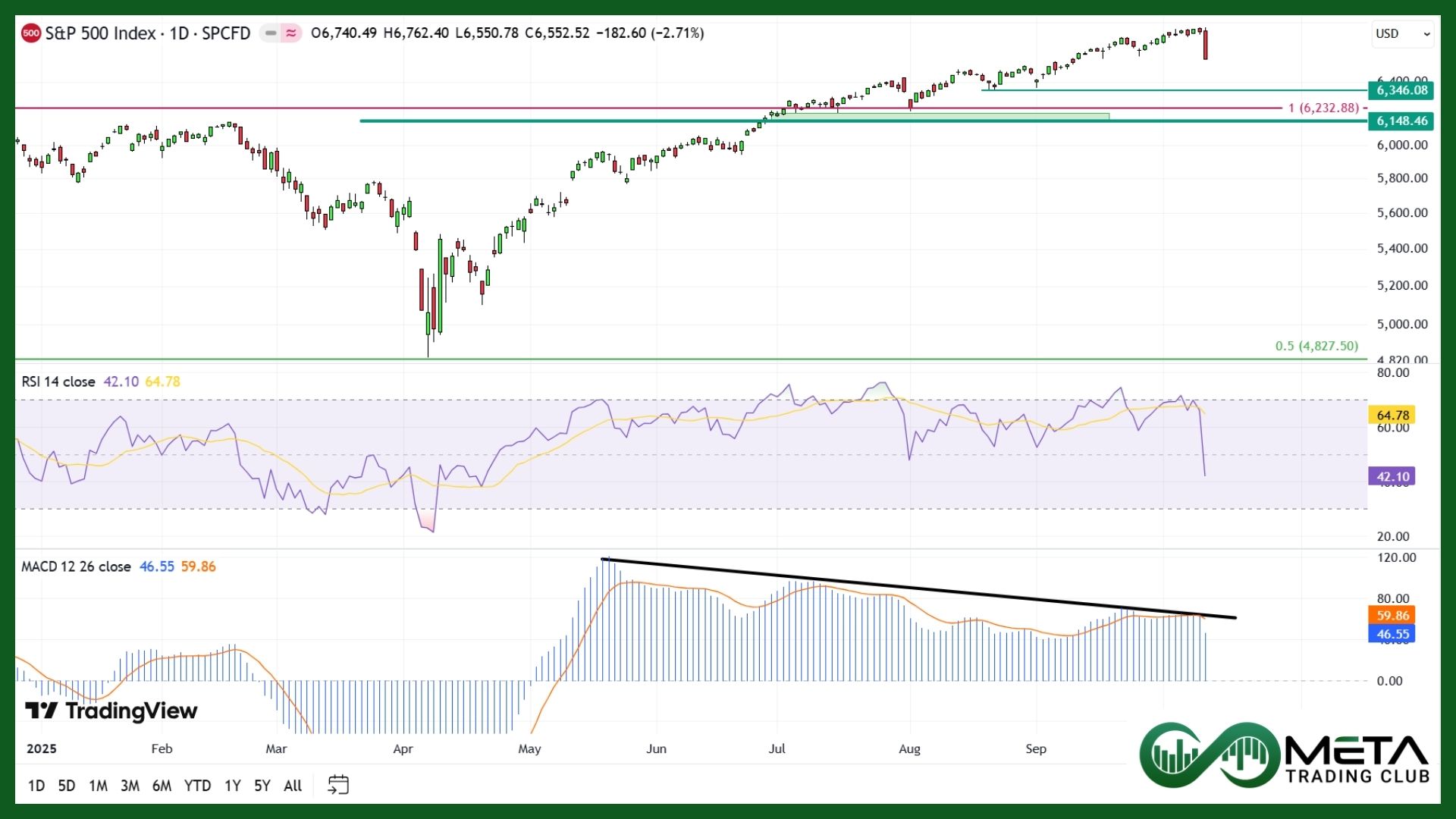
U.S. stocks dropped sharply at the end of the week after President Trump threatened higher tariffs on Chinese goods and suggested canceling a planned meeting with President Xi. This unexpected move shook markets already worried about high stock valuations and signs of a potential bubble.
The market downturn worsened as the U.S. government shutdown entered its tenth day, delaying key economic reports and adding to investor uncertainty.
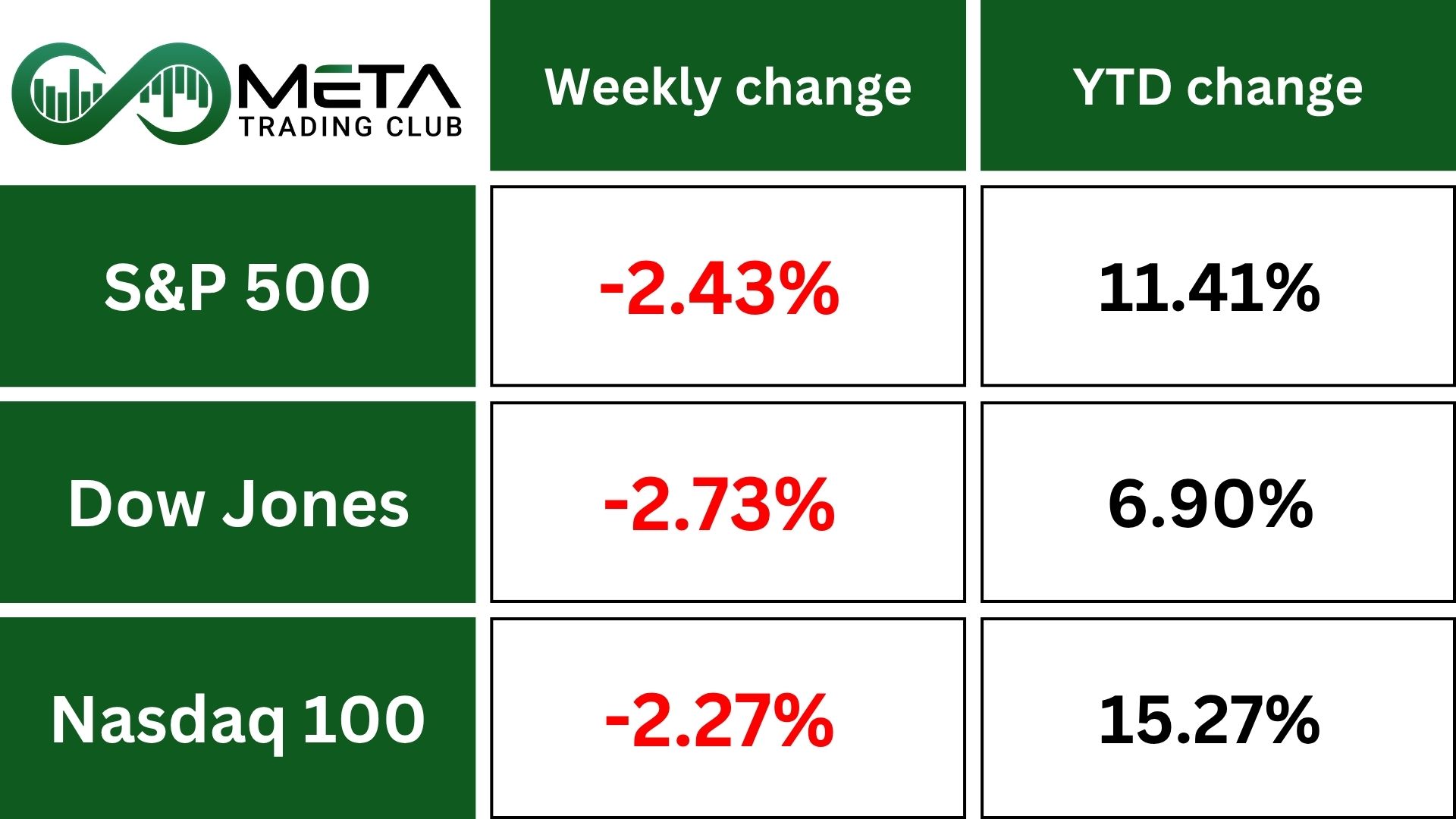
Investors reacted nervously, leading to the biggest weekly losses in months: the S&P 500 fell 2.43%, the Nasdaq dropped 2.27%, and the Dow slid 2.73%.
Stocks
Sector’s Weekly Performance:
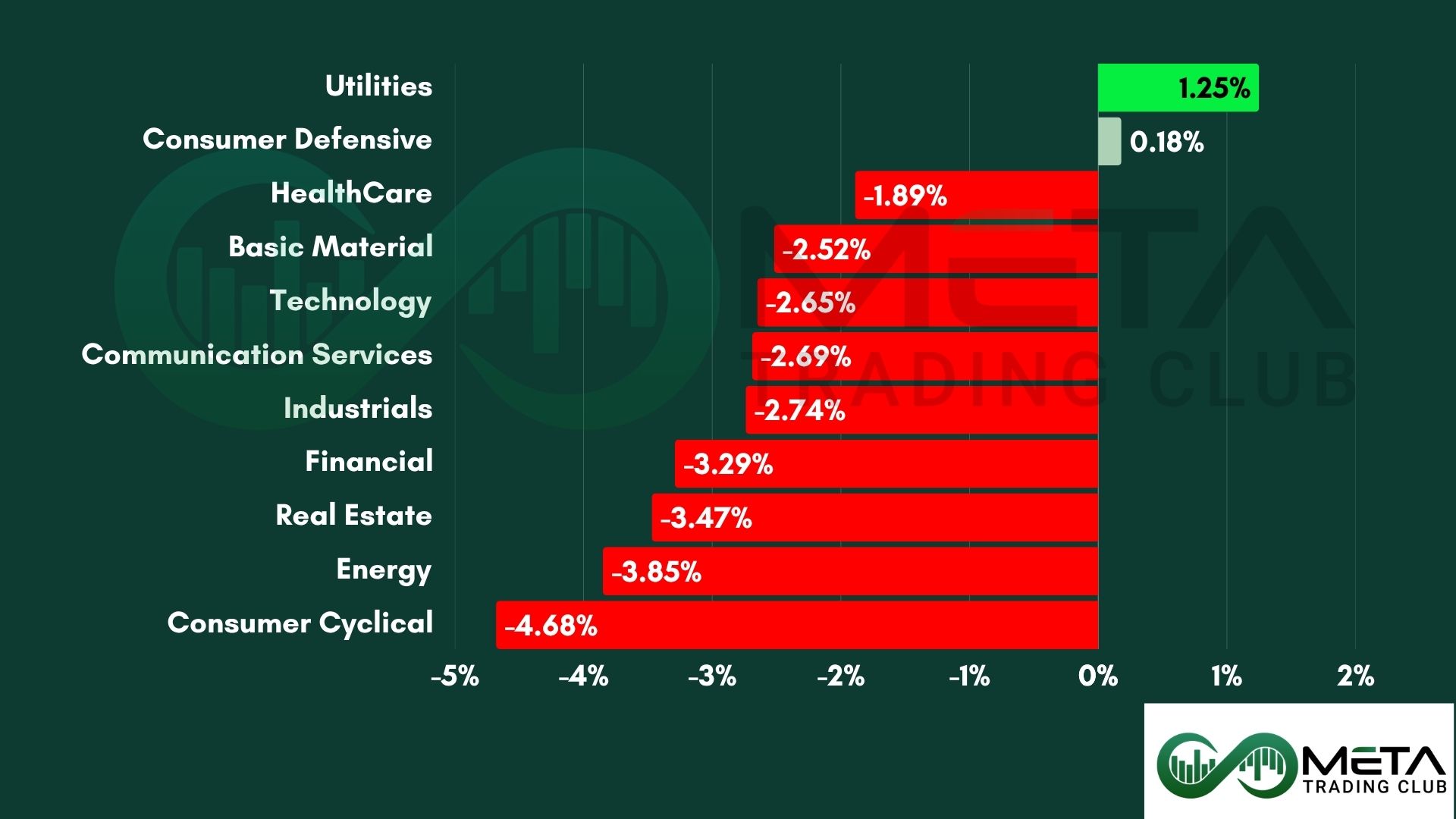
- Utilities rose 1.28% as investors rotated into defensive assets amid rising geopolitical risk and economic uncertainty.
- Basic Materials fell 2.52% as China’s move to restrict rare earth exports raised fears of supply shortages. Over 90% of the world’s processed rare earths come from China, impacting global manufacturing.
- Technology dropped 2.65%. The Semiconductor Index plunged 6.3% after Trump’s tariff threat. Qualcomm dropped following a Chinese antitrust probe into its Autotalks acquisition. Nvidia and other chipmakers sold off sharply due to rare earth dependency and trade war fears. Despite AMD gains beginning of the week.
- Communication Services fell 2.69% as U.S.-listed Chinese tech giants Alibaba, JD.com, and PDD Holdings fell 5.3%–8.5% amid escalating U.S.–China tensions and regulatory scrutiny.
- Industrials declined 2.74%. Trade war concerns threatened global logistics and manufacturing. Aircraft and EV supply chains, reliant on rare earth magnets, faced disruption risks.
- Financials dropped 3.29% amid rising volatility, and delayed economic data from the shutdown pressured banks and insurers. The VIX Index hit its highest close since June 19, signaling elevated market anxiety.
- Energy experienced a 3.85% drop as oil prices dipped on fears of slower global growth and inventory build-up. Trade uncertainty added pressure to commodity-linked equities.
- Consumer Cyclical plunged 4.68%. That was the worst-performing sector of the week. Tesla and other EV stocks dropped due to rare earth supply concerns and weak Chinese demand. Trade war escalation threatens discretionary spending and global auto production.
Top Performers
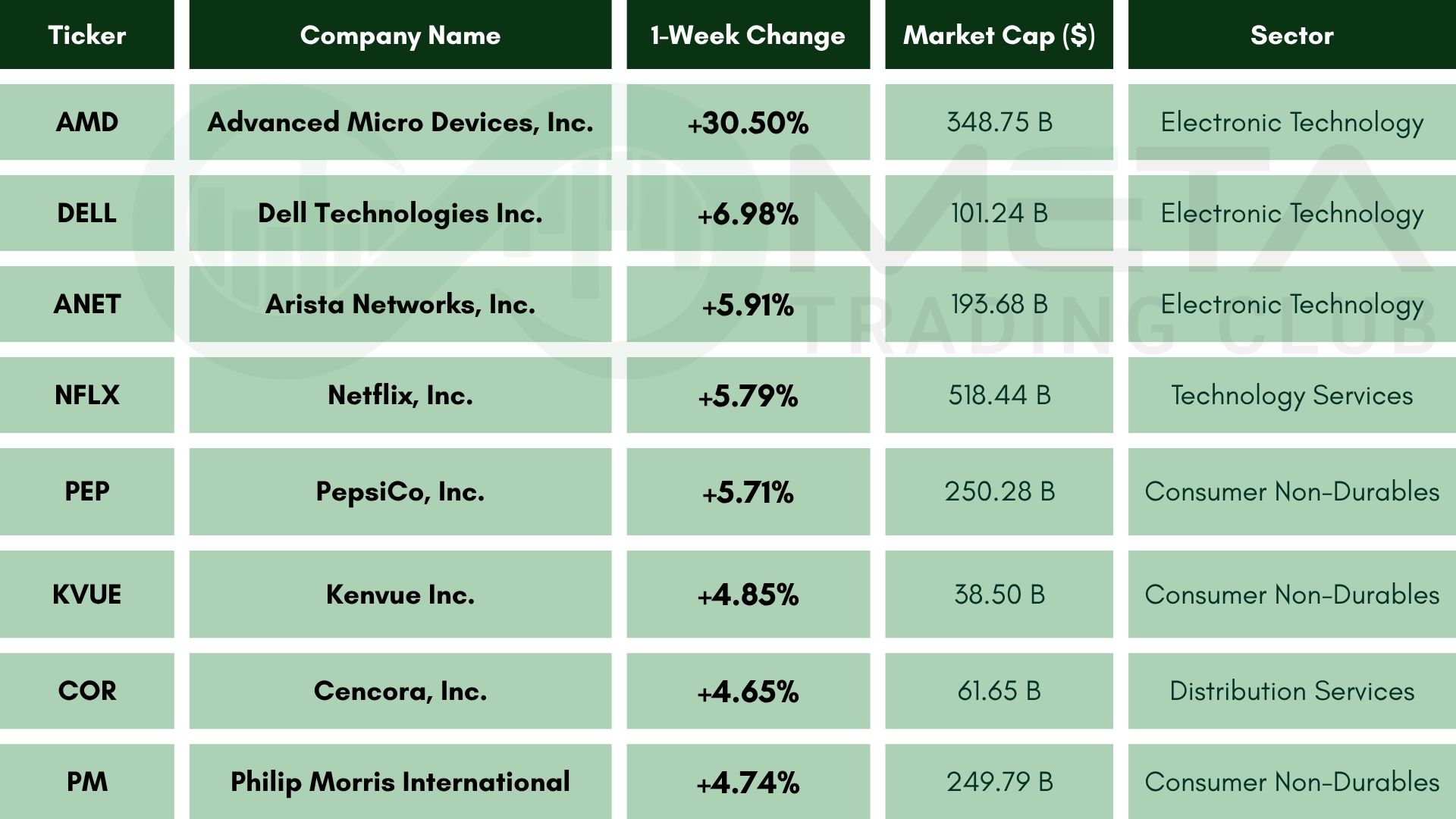
Last week saw a remarkable stock market performance, with several companies standing out as top gainers:
- Advanced Micro Devices (AMD): Surged 30.5% followed by a chip-supply deal with OpenAI, fueling AI market momentum.
- Dell Technologies (DELL): Gained 6.98% on strong enterprise demand and AI server expansion optimism.
- Arista Networks (ANET): Rose 5.91% due to increased cloud networking demand from hyperscalers Microsoft and Meta.
- Netflix (NFLX): Climbed 5.79% after reporting strong subscriber growth and better-than-expected ad-tier performance
- PepsiCo (PEP): Soared 5.71% benefited from a flight to consumer staples, as investors sought defensive plays during trade uncertainty. Solid earnings and stable demand supported the move.
- Kenvue (KVUE): Advanced 5.28% on renewed interest in health and wellness brands, with analysts citing strong retail channel performance and cost discipline.
- Cencora (COR): Gained 5% as healthcare saw inflows amid government shutdown delays in regulatory data, which favored stable supply-chain players.
- Philip Morris (PM): Rose 4.7% on strong international sales and dividend appeal.
Commodity
Weekly Performance of Gold, Silver, WTI, and Brent Oil:
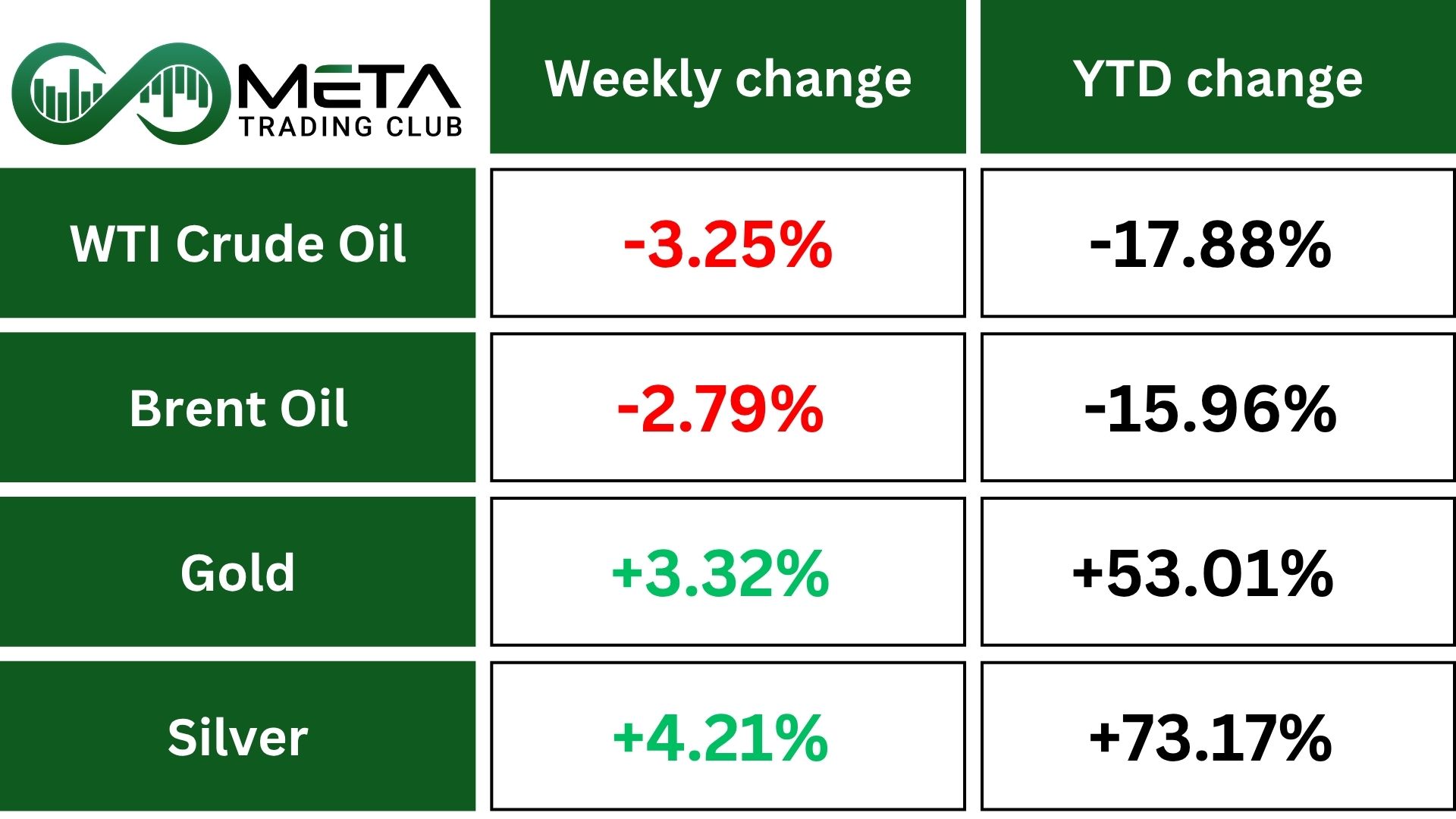
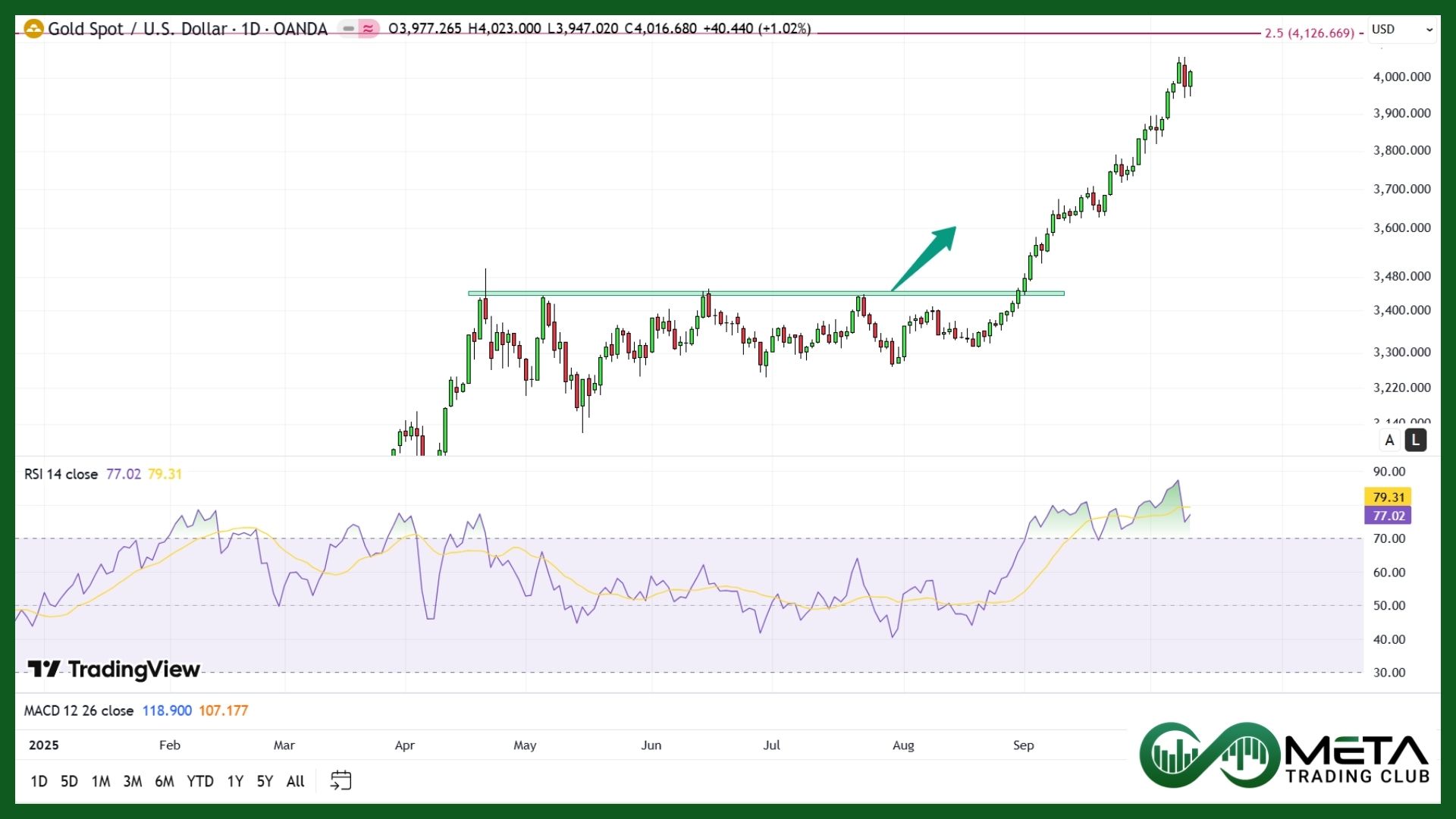
Gold is on track for its eighth consecutive weekly gain, fueled by a mix of geopolitical tensions, economic uncertainty, and expectations of U.S. interest rate cuts.
Earlier in the week, it hit a record high of $4,059 before briefly retreating as the U.S. dollar strengthened and investors took profits following news of a ceasefire agreement between Israel and Hamas.
At the end of the week, gold surged back above $4,000 after President Trump dismissed a planned meeting with China’s Xi Jinping and signaled potential tariff hikes, reigniting U.S.–China trade tensions.
Additional support came from delayed economic data due to the U.S. government shutdown, persistent inflation, slowing global growth, and diversification away from U.S. assets.
Also, the Fed is widely expected to implement 25bps rate cuts at each of its remaining meetings this year, further boosting bullion’s appeal.
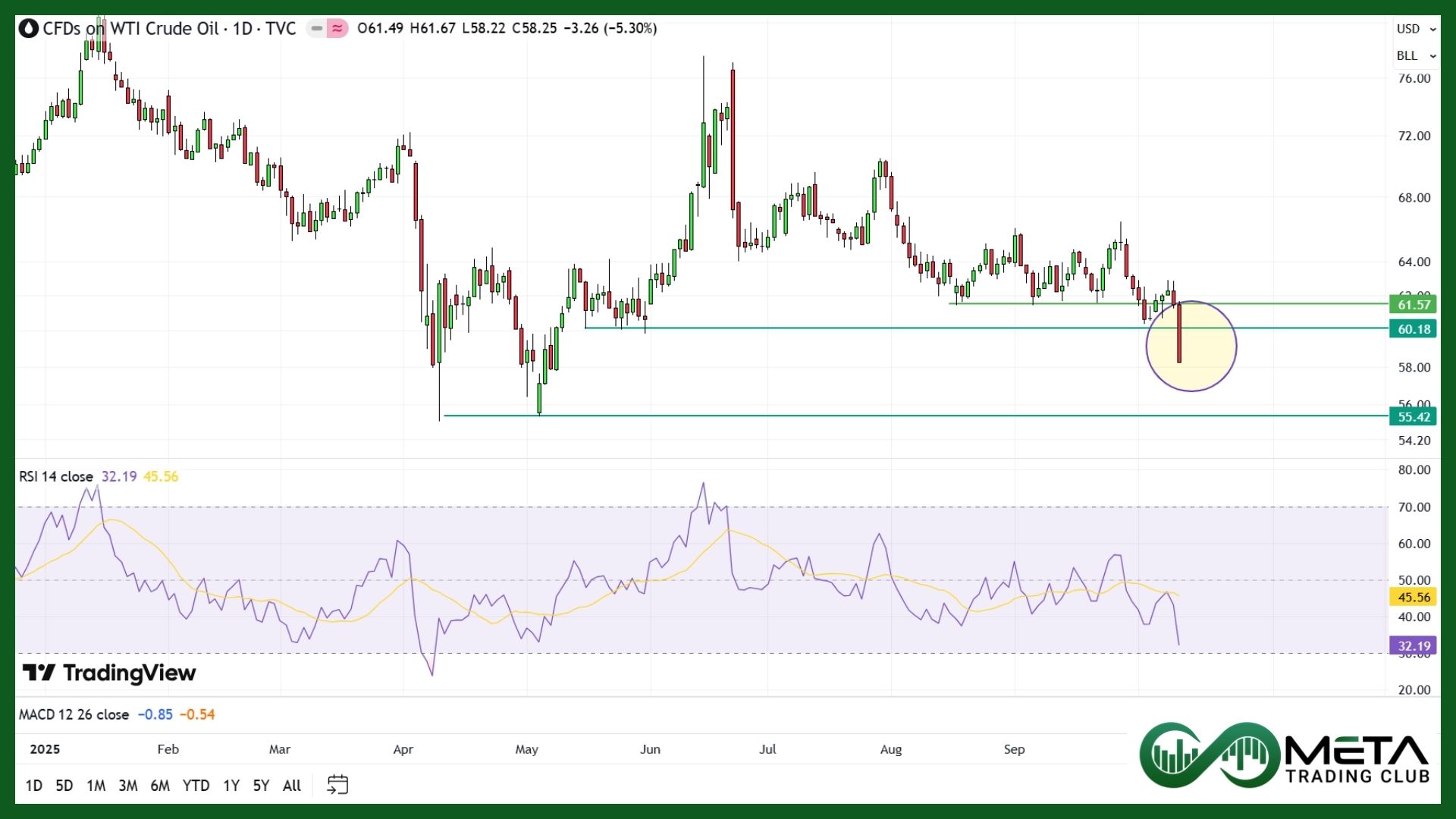
Crude oil fell over 4%, mainly due to renewed U.S.–China trade tensions. President Trump’s threat to raise tariffs and cancel a meeting with China’s leader raised fears of slower global growth and weaker oil demand.
Extra pressure came from rising oil supply worldwide and easing Middle East tensions, which reduced risk premiums.
Forex
Weekly Performance of Major Foreign Exchange Pairs:
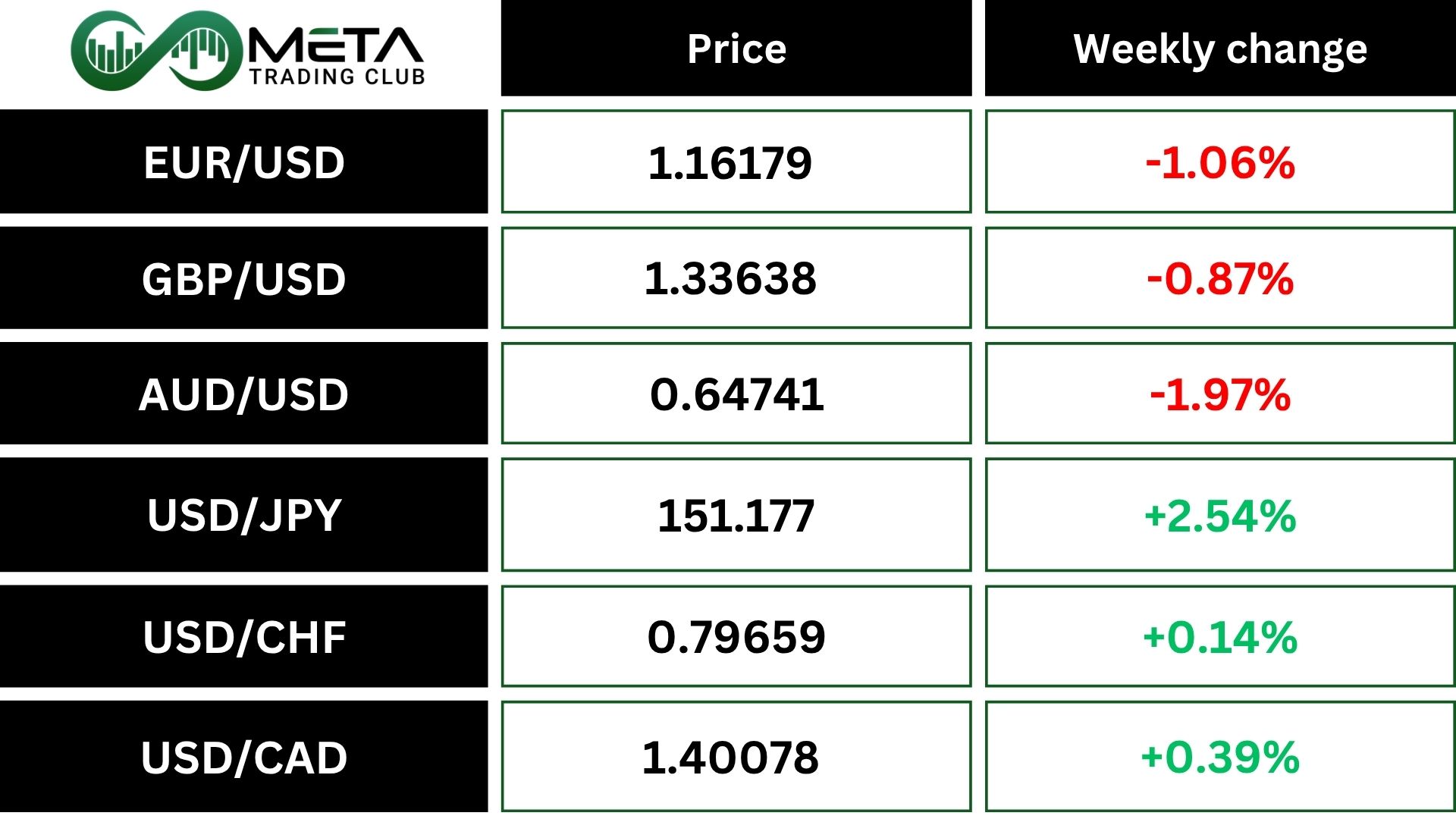
The U.S. dollar remained on course for a weekly gain. This strength came as the Japanese yen and euro weakened due to fiscal concerns in their respective regions.
The Japanese yen weakened sharply this week, as the U.S. dollar gained, its biggest weekly rise against the yen since September 2024.
Political uncertainty added pressure after Komeito withdrew support for Takaichi’s expected prime ministerial bid, delaying the planned October 15 vote. Takaichi emphasized she did not want to trigger excessive yen declines and noted that while the Bank of Japan sets policy, it must align with government objectives.
Crypto
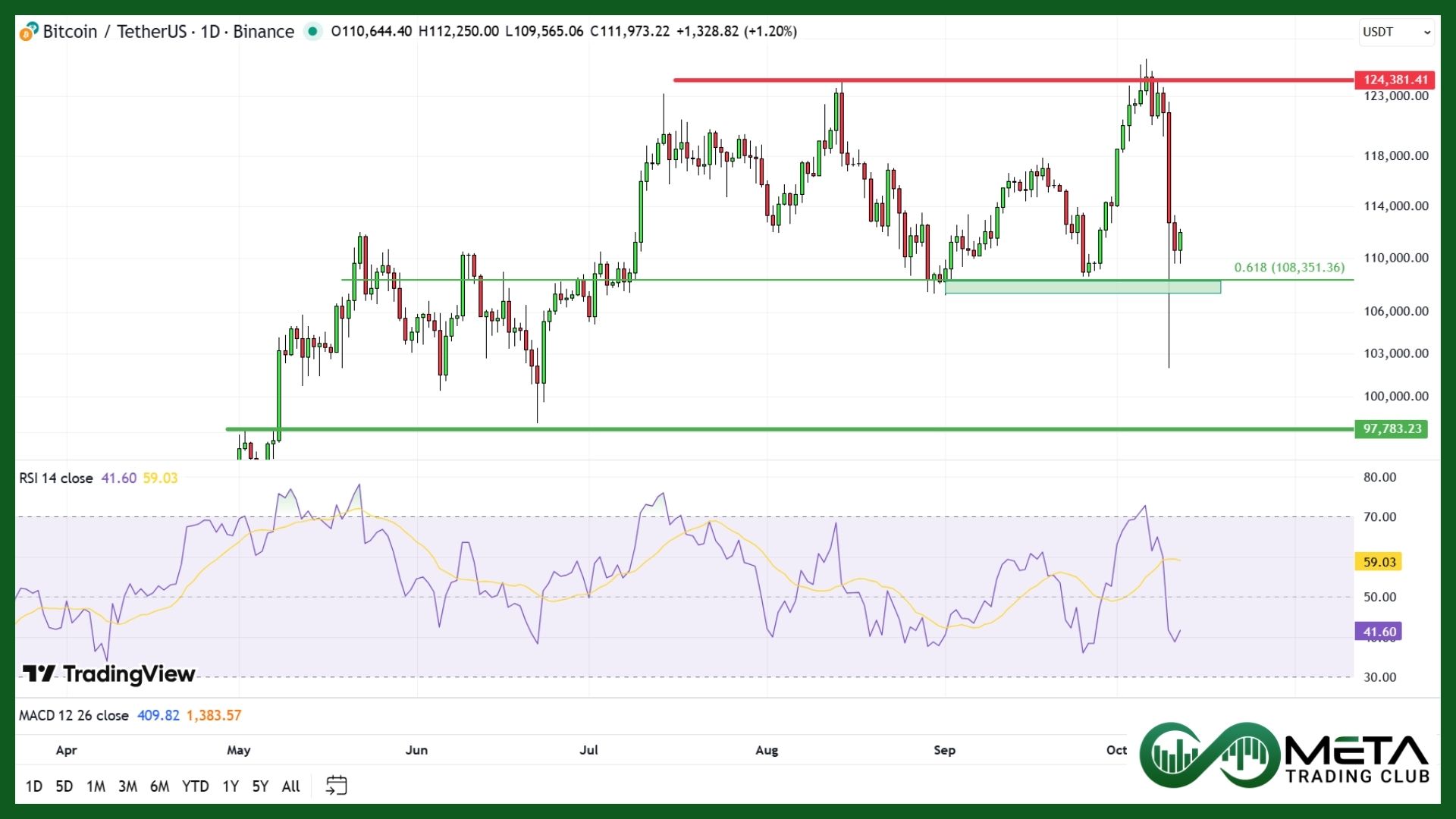
Bitcoin dropped 13.7% on Friday, falling $16,700 in just eight hours to $105,000. This happened as traders were using too much leverage, and when prices fell, it triggered automatic sell-offs worth $5 billion. Some trading systems couldn’t handle the stress, especially those using hard-to-sell assets as backup.
The market was also nervous because of low trading activity, rumors about financial trouble at some firms, and a U.S. holiday coming up that would partially close markets.
Next Week’s Outlook
Economic Events
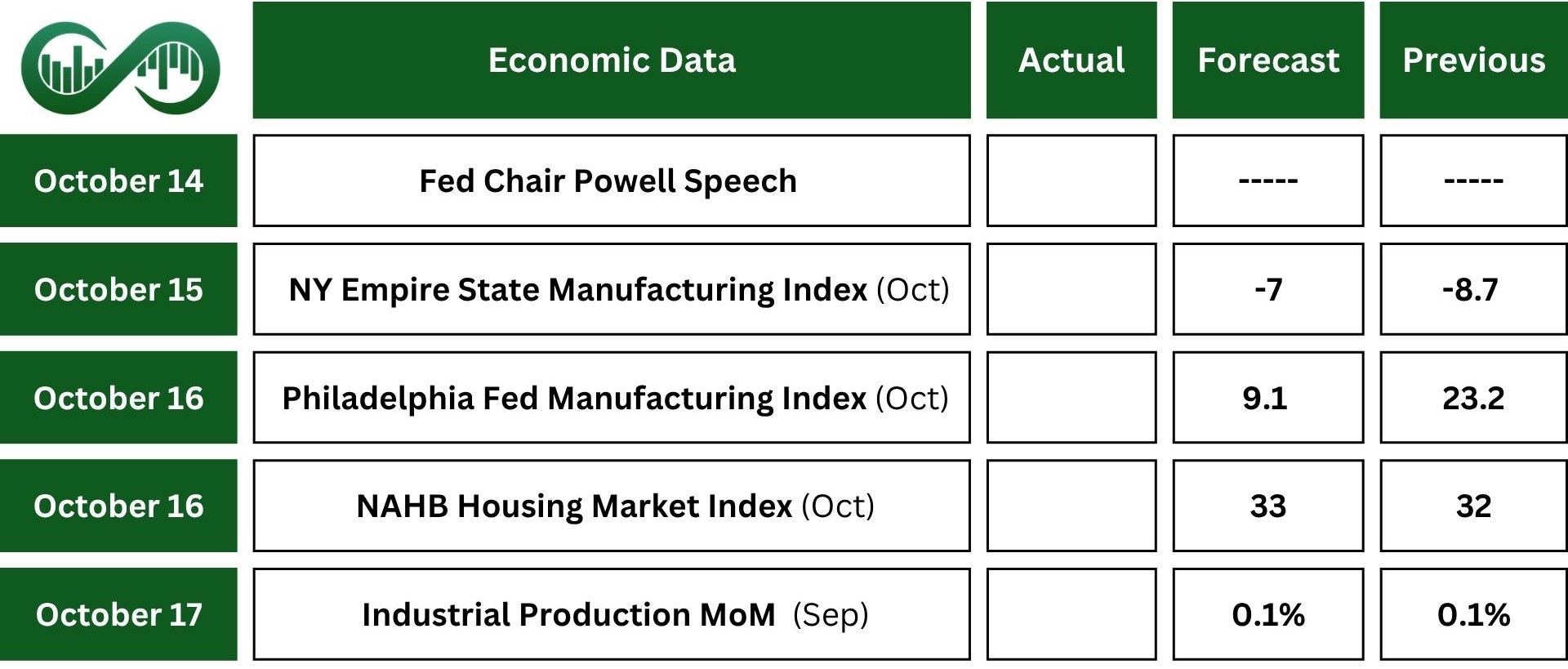
The U.S. government shutdown has now lasted three weeks, and important economic reports like inflation, retail sales, housing data, and trade prices will likely stay delayed.
However, we still expect updates from other sources, including industrial production, the NAHB housing market index, the Philadelphia Fed and New York Fed manufacturing surveys, and the NFIB Small Business Optimism Index.
Earnings Events
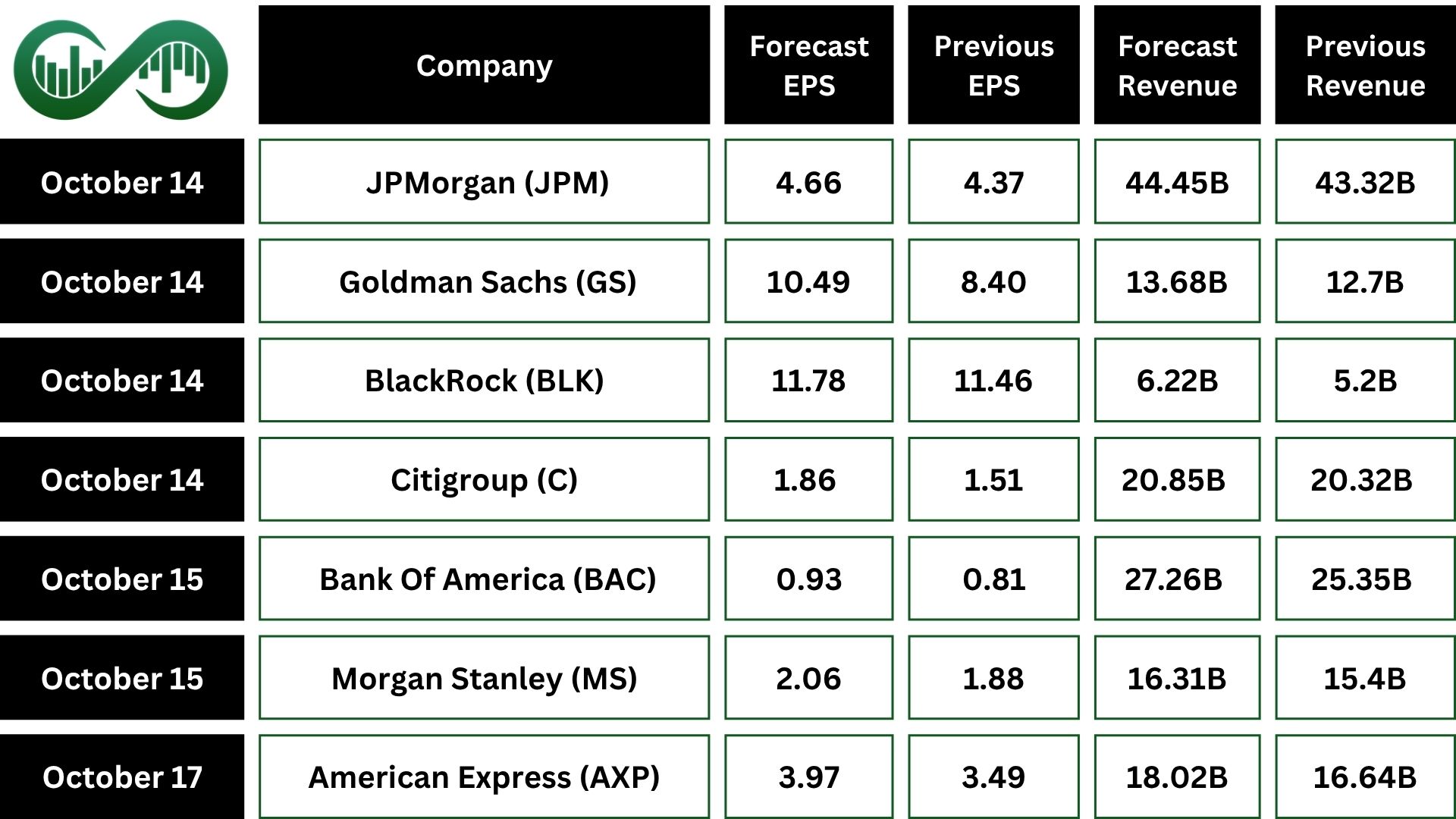
Earnings season is starting, with big banks like Citigroup (C), Goldman Sachs (GS), JPMorgan (JPM), Wells Fargo (WFC), Bank of America (BAC), and Morgan Stanley (MS) sharing their results.
Other major companies reporting include BlackRock (BLK), Johnson & Johnson (JNJ), American Express (AXP), Abbott (ABT), Progressive (PGR), and Charles Schwab (SCHW).