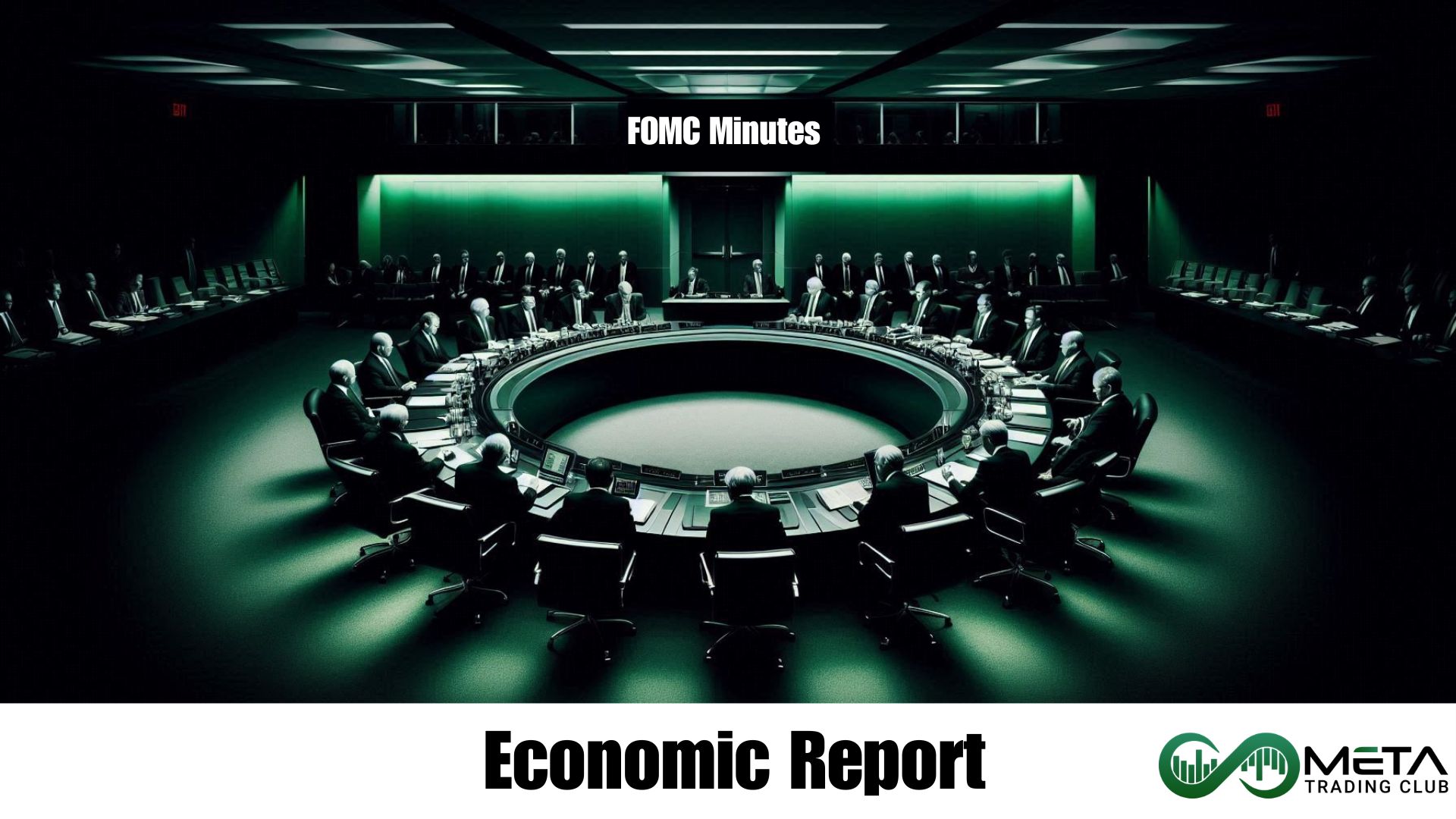
The Federal Open Market Committee (FOMC) is a branch of the Federal Reserve System responsible for overseeing the nation’s open market operations. This includes making key decisions about interest rates and the growth of the United States money supply. The FOMC meets several times a year to discuss and set monetary policy, aiming to achieve maximum employment, stable prices, and moderate long-term interest rates.
Summary of FOMC Meeting on Sep 16-17, 2025
The Federal Reserve held a two-day meeting to continue refining its long-term monetary policy strategy. During the intermeeting period, financial markets interpreted recent data releases and FOMC communications as signaling a stable baseline economic outlook, with increased downside risks to the labor market.
Financial Market Overview
Markets saw little change in the economic outlook but grew more concerned about job market risks after weak July and August data.
Expectations for PCE inflation and unemployment shifted only marginally, but weaker-than-expected employment reports for July and August heightened investor concern over labor market conditions.
Near-term policy rate expectations for the federal funds rate decreased in response to the release of labor market data. The Desk survey indicated that nearly all respondents anticipated a 25 basis point rate cut at the current meeting, with approximately half expecting an additional cut in October. Most respondents projected at least two rate cuts by year-end, and about half expected three. Longer-term expectations remained unchanged, suggesting a faster return to the longer-run rate.
Nominal Treasury yields declined by 20 to 40 basis points, primarily at the short end of the curve, resulting in a steeper yield curve. Staff models attributed this decline to reduced policy rate expectations. Market-based measures of inflation compensation
Equity prices continued to rise and approached record highs, supported by a benign macroeconomic outlook and strong earnings in technology and other sectors. Corporate bond spreads remained tight, indicating investor expectations of moderate credit losses.
The trade-weighted dollar index stabilized, with exchange rates returning to levels consistent with macroeconomic fundamentals. Data suggested continued resilience in foreign demand for U.S. assets.
The effective federal funds rate remained stable, while repo rates increased due to higher net Treasury bill issuance and ongoing balance sheet reductions. A sharp decline in reserves on September 15, driven by tax receipts and Treasury coupon issuance, led to upward pressure on repo rates and $1.5 billion in SRF usage. Federal funds market rates showed slight upward pressure but remained within target.
Fed’s Staff Review of the Economic Situation
Real GDP growth slowed in the first half of the year. While unemployment remained low, job gains weakened, and labor market conditions softened. Inflation stayed elevated, with total PCE inflation at 2.7% and core PCE at 2.9% in August.
Labor Market Trends
Unemployment rose slightly to 4.3% in August. Payroll growth was weak, and earlier job gains were revised down. Wage growth slowed, with compensation and earnings increasing less than the previous year.
Domestic Demand and Trade
Private domestic final purchases moderated, reflecting slower consumer and business investment. Imports rebounded in July, especially for capital goods, while exports declined slightly.
Global Economic Conditions
Foreign GDP growth weakened in Q2. Canada saw a sharp contraction due to falling exports. Mexico and parts of Asia benefited from strong tech demand.
Global Inflation and Policy
Headline inflation neared targets in most economies, but core inflation remained high in Brazil, Mexico, and the U.K. China’s inflation stayed low. Some central banks held rates steady, while others resumed rate cuts amid ongoing disinflation.
Fed’s Staff Review of the Financial Situation
Market expectations for interest rates shifted lower, with increased probability of policy easing by early 2026. Treasury yields declined, especially at shorter maturities, driven mainly by falling real yields.
Also, equity prices rose on strong earnings and rate cut expectations. Credit spreads stayed low. Global markets improved, supported by trade developments and lower U.S. rates, though political uncertainty caused bond yield volatility abroad.
U.S. funding markets remained stable. The federal funds rate stayed steady. Also, borrowing costs declined but remained above averages. Mortgage and corporate bond yields fell moderately. Credit card rates edged up. Financing remained accessible for larger firms, while credit was tighter for small businesses and lower-score households.
Credit quality was stable but weaker than pre-pandemic levels. Delinquency rates rose slightly for small business and FHA mortgages, while other mortgage types remained strong. Credit card and auto loan delinquencies stayed elevated but unchanged.
Fed’s Staff Economic Outlook
GDP growth was revised up through 2028 due to stronger spending and investment. Growth is expected to accelerate next year. Labor market softening is still anticipated, but unemployment projections were slightly improved.
However, inflation is expected to rise this year due to tariffs, then gradually decline to 2% by 2027 and remain stable in 2028.
Meanwhile, forecast uncertainty remains high due to policy changes. Labor market risks are tilted downward, while inflation risks are skewed upward, with potential for more persistent price pressures.
FOMC Members’ Views
FOMC participants submitted updated forecasts for GDP growth, unemployment, and inflation through 2028, based on their views of appropriate monetary policy. The Summary of Economic Projections was released publicly after the meeting.
Inflation remained above the 2% target. Tariff increases were seen as a key factor, though their impact appeared milder than expected. Some participants cited productivity gains as helping to ease inflation pressures. However, views varied: some believed inflation was near target, excluding tariffs, while others saw stalled progress.
Most participants expected inflation to stay elevated short term, then gradually return to 2%. Businesses were reportedly planning price hikes due to higher input costs. While long-term inflation expectations were stable.
Also, they expect job growth to slow, and unemployment edged up. Participants attributed this to a weaker labor supply, due to low immigration and participation, and softer labor demand from moderate growth and hiring uncertainty. Indicators like wage growth, quits rate, and job vacancy ratios showed no sharp deterioration, though some data revisions suggested earlier softening.
Participants expected labor conditions to remain stable or soften slightly. Monthly job gains needed to maintain a steady unemployment rate had declined, influenced by aging workers and low immigration. Downside risks to employment increased, supported by weak hiring/firing rates, sector-specific job growth, and rising unemployment among sensitive groups.
Growth slowed in the first half of the year, driven by weaker household consumption. Some signs of firmer spending emerged, but price sensitivity increased, especially among lower-income households. The housing market remained weak, with potential for further decline. High-tech investment was strong, and financial conditions were generally supportive. Agriculture faced challenges from low crop prices and high costs.
Most participants supported a 0.25% rate cut, citing increased employment risks and stable inflation pressures. A few preferred holding rates steady due to stalled inflation progress, while one participant favored a 0.5% cut. All agreed to continue reducing the Fed’s securities holdings.
Participants emphasized that policy was not on a fixed path and would respond to evolving data. Most expected further easing this year, though views varied on how restrictive the current policy was.
Upside inflation risks and downside employment risks were both elevated. Participants stressed the need for a balanced approach: easing too soon could unanchor inflation expectations, while keeping rates too high could harm employment and growth.
Balance sheet reduction was proceeding smoothly, with reserves still ample. Participants highlighted the need to monitor reserve levels and money market conditions.
Committee Policy Actions
Members agreed that economic growth had moderated in the first half of the year. Labor market conditions were no longer described as solid, with job gains slowing and the unemployment rate edging up but remaining low. Inflation was noted to have moved up and stayed somewhat elevated.
In response to shifting risks, nearly all members supported lowering the federal funds rate by 0.25 percentage point to a target range of 4 to 4.25 percent.
One member preferred a larger 0.5 percentage point cut. Members agreed to monitor incoming data and adjust policy as needed, reaffirming their commitment to maximum employment and 2% inflation.
Governor Stephen Miran voted against the 0.25 percentage point cut, favoring a 0.5 percentage point reduction due to perceived labor market softness and inflation closer to target. He also cited structural factors like increased tariff revenues and reduced immigration as reasons for a lower neutral interest rate.
Following the Committee’s decision, the Board of Governors lowered the interest rate on reserve balances to 4.15 percent and the primary credit rate to 4.25 percent, both effective September 18, 2025.