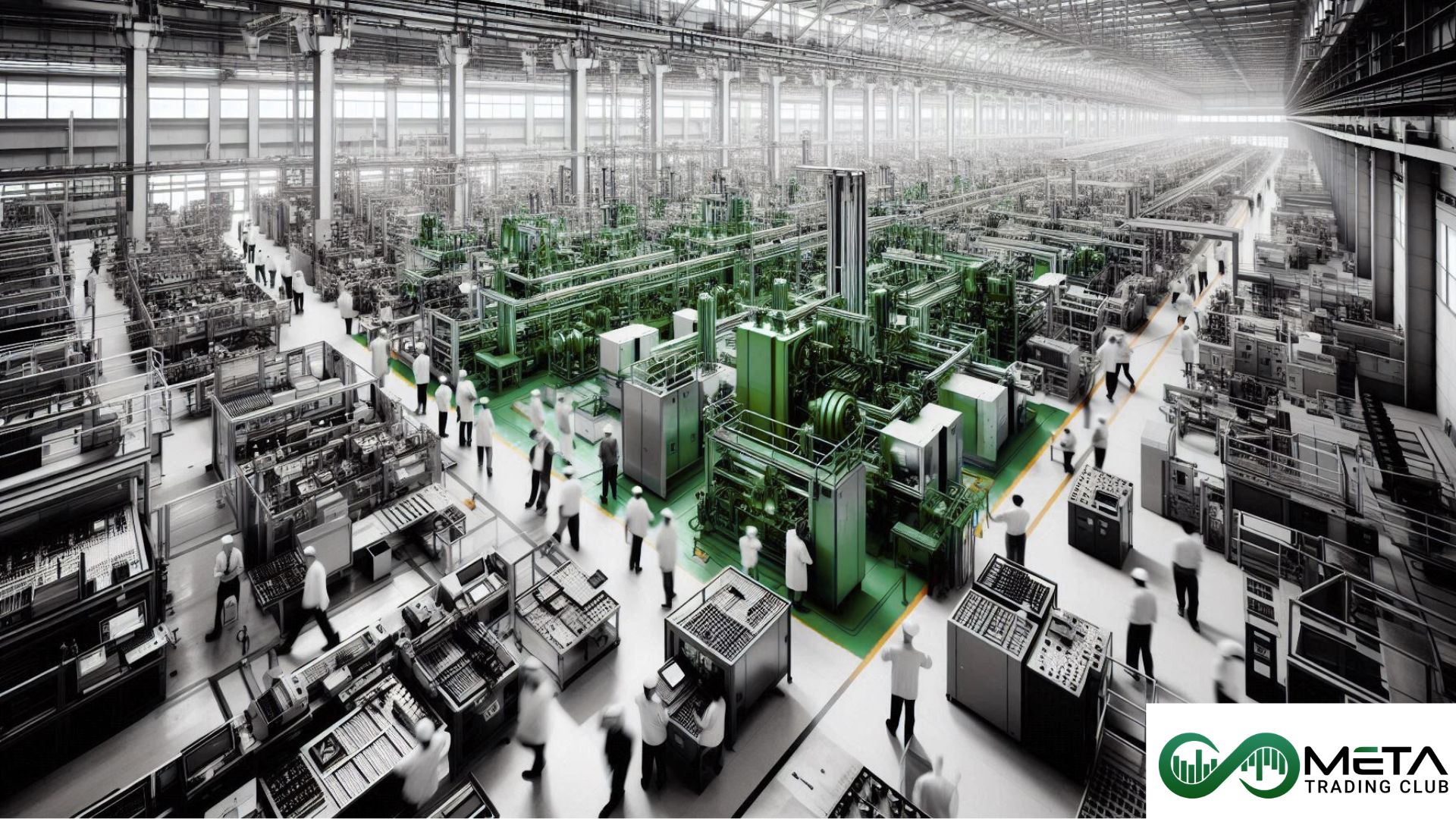
The Manufacturing PMI (Purchasing Managers’ Index) is an important economic measure from the Institute for Supply Management (ISM). It shows the health of the manufacturing sector by collecting data from purchasing managers at different manufacturing firms across the U.S. The PMI is a combined index that includes new orders, production, employment, supplier deliveries, and inventories.
The PMI has several important parts that provide insights into the manufacturing sector’s condition. These parts include new orders, which measure the number of new orders manufacturers receive, and production, which looks at the production output rate. Employment assesses changes in job levels within the sector. Supplier deliveries look at the speed of deliveries and any delays, while inventories track changes in stock levels.
Each of these parts is surveyed and weighted to calculate the overall PMI. A PMI above 50 means the manufacturing sector is growing, while a reading below 50 means it is shrinking.
June S&P Global Manufacturing PMI
In June 2025, the US manufacturing sector showed solid growth, with the S&P Global Manufacturing PMI rising to 52.9, its highest level in over three years. Output increased for the first time since February, driven by strong domestic and international demand. However, tariffs significantly impacted purchasing decisions and led to sharp cost inflation, especially for materials like steel. Manufacturers ramped up input buying and inventory buildup amid uncertainty, while output prices also rose markedly. Confidence in future conditions strengthened, fueling a surge in employment growth, the fastest pace since September 2022, as firms responded to increased workloads and higher optimism.
June ISM Manufacturing PMI
In June 2025, US manufacturing activity showed mild improvement as the Manufacturing PMI rose slightly to 49, up from 48.5 in May. While this still indicates contraction, gains in production and inventories helped slow the sector’s overall decline. New orders and backlogs fell more sharply, though an increase in exports and inventory levels offered some balance. Production moved into growth territory for the first time in several months, but employment continued to contract as companies remained cautious about hiring despite higher output.
On the supply side, delivery times slowed but showed signs of stabilization, and raw materials inventories continued to shrink. Price pressures remained elevated due to tariff-related cost increases, particularly in metals. Imports and exports both declined but showed improvement compared to May.
Impacts of Report on Stock Market
Market responded positively to the S&P Global Manufacturing PMI, which showed solid expansion at 52.9, indicating healthy expansion and resilience in the sector. Although the ISM Manufacturing PMI remained below the growth threshold at 49, it surpassed expectations and showed encouraging signs, such as rising production and improved supply chain conditions. Together, these reports helped uplift investor sentiment.
This rally reflects growing confidence in the economic outlook, especially as firms reported stronger output, improved inventories, and rising business optimism. The market’s reaction suggests that investors are betting on continued growth momentum.