The Personal Consumption Expenditures (PCE) Price Index is a key inflation gauge used by the Federal Reserve to assess the prices of goods and services consumed by households. Unlike the Consumer Price Index (CPI), the PCE adjusts for changing consumer behavior, reflecting how people shift spending as prices change.
Core PCE excludes food and energy prices. Policymakers closely monitor it to understand inflation trends. It is considered a comprehensive measure of inflation. This helps guide decisions on interest rates and monetary policy.
By focusing on core PCE, the Federal Reserve can assess economic stability and inflation risks more effectively.
December PCE Price Index
U.S. personal income continued to rise in December 2025, with total personal income increasing by $86.2 billion, or 0.3%, according to the latest estimates from the Bureau of Economic Analysis. Disposable personal income grew at the same 0.3% pace, increasing by $75.7 billion, while personal consumption expenditures advanced by $91.0 billion, reflecting a 0.4% monthly gain.
Income and Spending
Personal outlays increased by $90.2 billion in December, and households saved $830.8 billion, resulting in a personal saving rate of 3.6%. The rise in current‑dollar personal income mainly reflected higher transfer receipts and continued gains in employee compensation.
Consumer spending remained solid, with services spending increasing by $98.5 billion, while spending on goods declined by $7.5 billion.
Real consumer spending showed modest growth, with real PCE rising 0.1%. Inflation strengthened during the month, as the PCE price index increased 0.4%, and the core PCE index (excluding food and energy) also rose 0.4%.
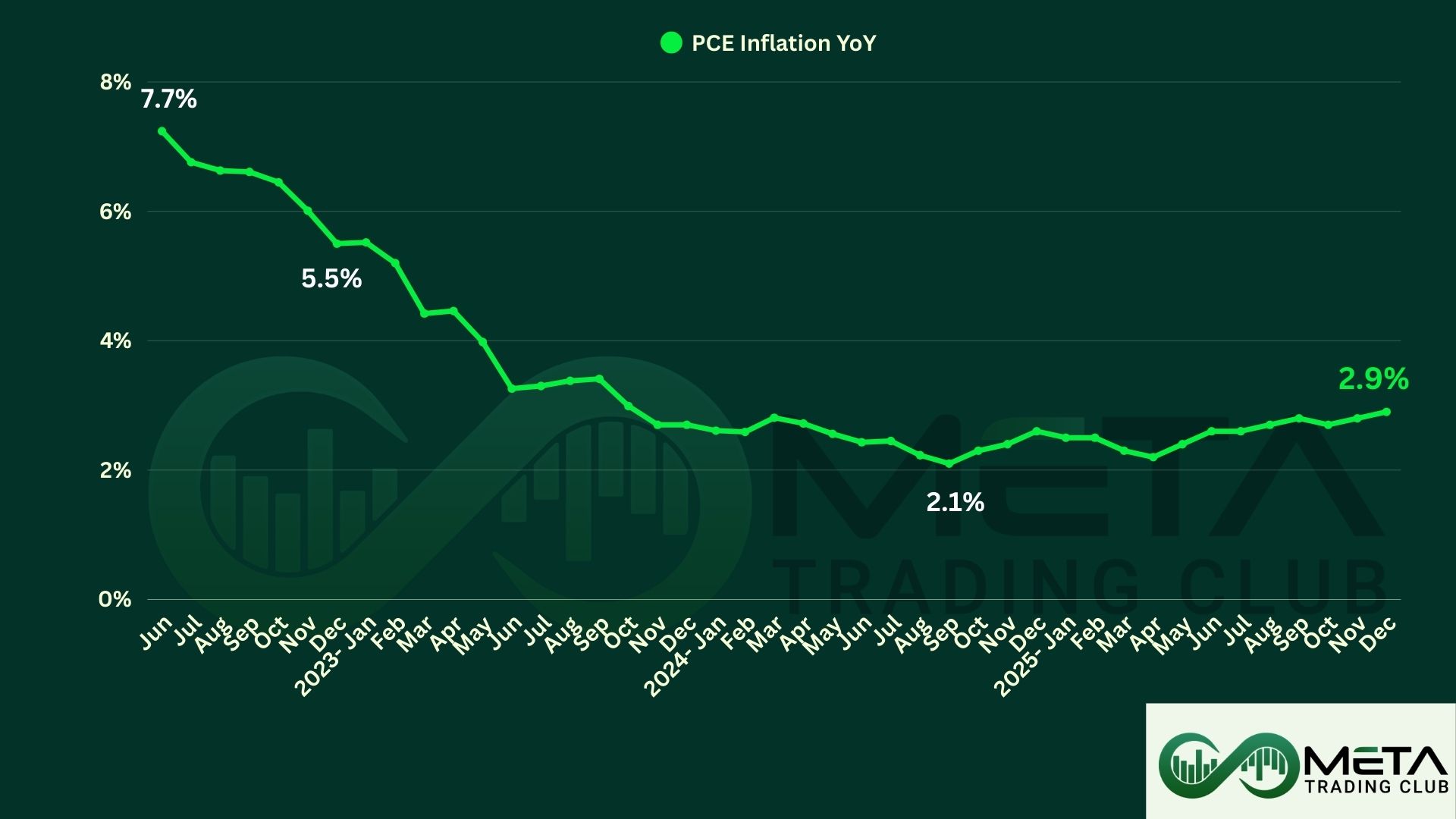
Compared with one year earlier, the PCE price index was up 2.9%, while the core index increased 3%, underscoring persistent inflation pressures at year‑end.
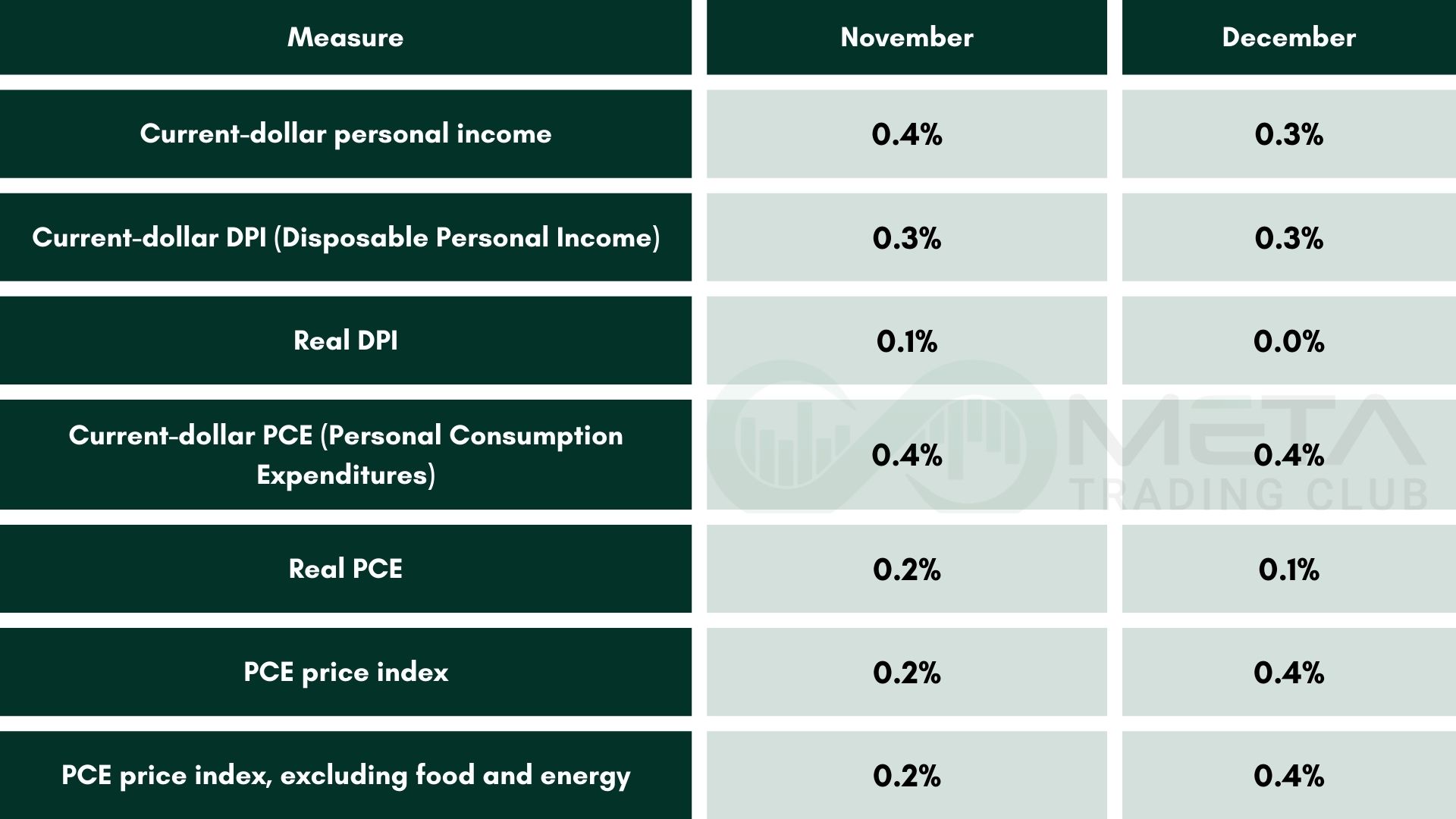
Monthly changes across key indicators show a mixed pattern. Current‑dollar personal income slowed from 0.4% in November to 0.3% in December, while DPI held steady at 0.3%.
Real DPI was flat after a 0.1% gain in November. Inflation accelerated, with both headline and core PCE rising 0.4% in December, compared with 0.2% in November.
Impacts of the December PCE Data
Overall, December’s report shows steady income growth, firm consumer spending, and rising inflation as the economy moved into 2026.
The December PCE data put renewed pressure on financial markets by signaling that inflation remained firmer than expected at the end of 2025. With both headline and core PCE rising 0.4% month‑over‑month and annual inflation accelerating to 2.9% for headline and 3% for core, investors reassessed the likelihood of near‑term Federal Reserve rate cuts.
The hotter‑than‑anticipated readings reinforced concerns that policy may need to stay restrictive for longer, weighing on rate‑sensitive sectors and high‑valuation technology stocks. The combination of steady consumer spending, soft real income growth, and rising inflation contributed to a more cautious market tone as traders adjusted expectations for the early‑2026 policy path.