
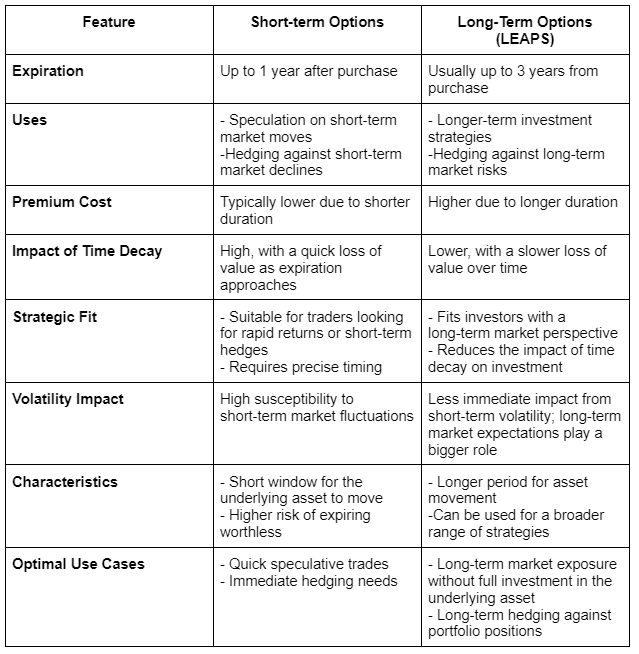
The duration of an option is another way to group them. Typically, options with a one-year expiration date are considered short-term. Long-term equity anticipation securities, or LEAPs, are defined as long-term options with expirations longer than a year. With the exception of their longer periods, LEAPs are exactly like standard options. Short-term and long-term options cater to different investment strategies, time horizons, and risk tolerances. Here’s a closer look at each and how they’re typically used in the market.
Short-term Options
Expiration: A year after the date of purchase is typically when these options expire. The majority of short-term options have weekly or monthly expiration dates.
Uses: Speculative traders frequently employ short-term options to profit from predicted market moves over a condensed time frame. They are also employed in hedging, offering a rapid and adaptable means of shielding other investments against transient market declines.
Features: These options are typically less expensive in terms of premium paid than their long-term equivalents because of their shorter duration to expiration. They do, however, also come with a reduced window of time for the desired movement of the underlying asset, which can raise the possibility of the option expiring worthless.
Impact on Volatility: Short-term options have the potential to be more profitable (or loss-inducing) in volatile markets since they are more susceptible to short-term changes in the price of the underlying asset.
Long-Term Options (LEAPS)
Expiration: The duration of Long-term Equity Anticipation Securities (LEAPS), often known as long-term options, is three years from the date of purchase. The underlying asset has more possibility to move favorably over this extended period of time.
Uses: Longer-term investing plans generally make use of LEAPS. They could be used by investors to get exposure to a stock’s upside potential without having to put up the whole amount needed to buy the shares altogether. Long-term hedging against portfolio positions is another application for them.
Characteristics: The premium for LEAPS is often higher due to the longer period till expiration. But because of their lengthy lifespan, they can be used for a wider variety of strategic purposes, such as being able to withstand brief market instability.
Impact of Volatility: Although volatility still has an effect, it can have a more subtle one on LEAPS. Compared to short-term options, short-term market fluctuations might have less of an effect on the option’s value, but long-term market expectations can have a big impact on the price.
Key Considerations
Time Decay: Time decay, or theta, is a key idea in options trading. It is the pace at which an option loses value as it gets closer to expiration. When trading short-term options, timing is crucial because they lose value more quickly than long-term options.
Strategic Fit: An investor’s or trader’s investment plan, risk tolerance, and market perspective should all be taken into consideration when deciding between short-term and long-term choices. If you need a hedge for a short time or are seeking for rapid, speculative returns, short-term options can be a good fit. On the other hand, those that have a longer-term perspective or aim to reduce the influence of time deterioration on their chosen tactics might find LEAPS more suitable.
Meta Trading Club is a leading educational platform dedicated to teaching individuals how to trade and invest independently. Through comprehensive educational programs, personalized mentorship, and a supportive community, Meta Trading Club empowers traders to navigate financial markets with confidence and expertise.