
The Producer Price Index (PPI) measures the average change over time in the prices that domestic producers receive for their goods and services. Also, it’s a key indicator of inflation at the wholesale level, reflecting price changes from the perspective of the seller rather than the consumer.
The Bureau of Labor Statistics (BLS) releases the Producer Price Index (PPI) report monthly, providing crucial insights into the average change over time in the selling prices received by domestic producers for their goods and services. The report is typically released around the 12th of each month at 8:30 AM Eastern Time. It includes data on various industry classifications, commodity classifications, and the Final Demand-Intermediate Demand system. These offer a comprehensive view of price changes across different sectors. This data is essential for economists, policymakers, and businesses to understand inflationary trends and make informed decisions.
January Producer Price Index
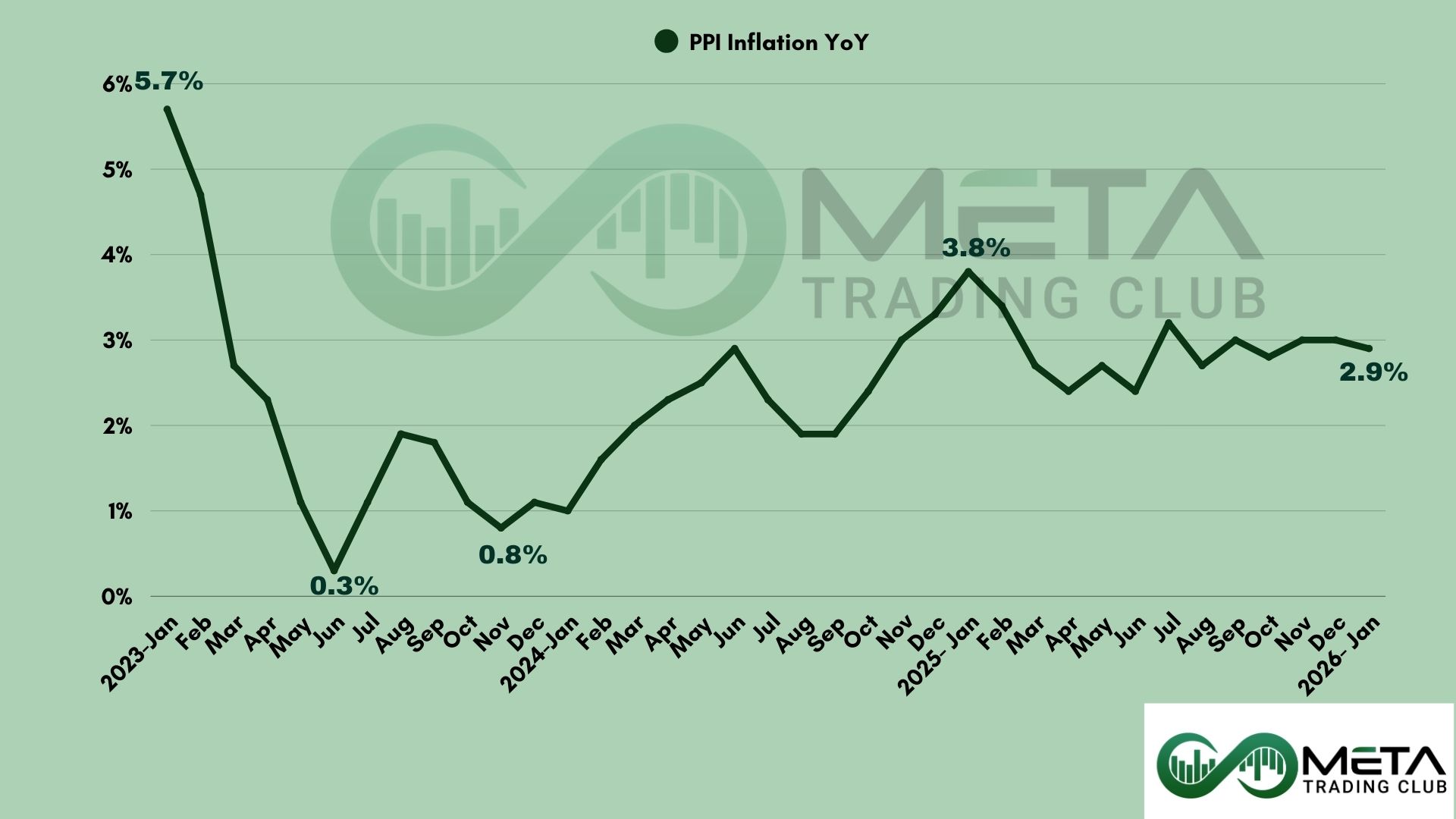
The Producer Price Index (PPI) for final demand rose 0.5% in January 2026, following increases of 0.4% in December and 0.2% in November. Over the past 12 months, final demand prices increased 2.9%.
The monthly gain was driven entirely by services, as final demand services increased 0.8%, the largest rise since July 2025, while final demand goods declined 0.3%.
Services
The January 2026 Producer Price Index shows that inflation picked up mainly because service prices rose, while goods prices moved lower.
Services were the main driver, rising 0.8%, the biggest jump since mid‑2025, helped by a 2.5% increase in trade service margins and a sharp 14.4% rise in professional and commercial equipment wholesaling.
Transportation and warehousing services were up 1%, and several retail categories also saw price increases, while system software publishing and guestroom rental declined.
Goods
Goods prices fell 0.3%, the largest drop since March 2025. Energy prices dropped 2.7%, food prices fell 1.5%, and gasoline alone fell 5.5%, accounting for most of the decline.
Goods excluding food and energy rose 0.7%, supported by increases in search and navigation systems, nonferrous metals, and pork.
Core PPI
Core PPI, which excludes food, energy, and trade services, rose 0.3% and is up 3.4% over the year.
Intermediate Demand
Processed goods were flat overall, as a 0.5% increase in processed materials excluding food and energy offset declines in processed energy and food.
Year‑over‑year, processed goods rose 2.6%. Unprocessed goods fell 0.5%, driven by a 3.5% decline in foodstuffs and feedstuffs. Raw milk dropped 9.8%, and other agricultural items also fell, while nonferrous scrap rose 8.5%.
Services for intermediate demand increased 0.3%, with trade margins up 1.6% and transportation/warehousing up 0.5%. Over the year, service prices rose 2.9%, the strongest pace since late 2024, while business loan prices fell 7.5%.
Impacts of January PPI Data on the Market
January 2026 PPI data show broad inflationary pressure in services, particularly trade margins and transportation. While goods prices weakened, largely due to falling energy and food costs. Core PPI continues to rise steadily, indicating persistent underlying inflation.
The report reduces fears of a goods‑driven inflation spike, which is positive for consumer spending and manufacturing. But persistent service inflation keeps pressure on the central bank, which can limit equity market rallies.
The massive beat in Core PPI pushes back expectations for a spring rate cut, as the Fed will be wary of the service sector.