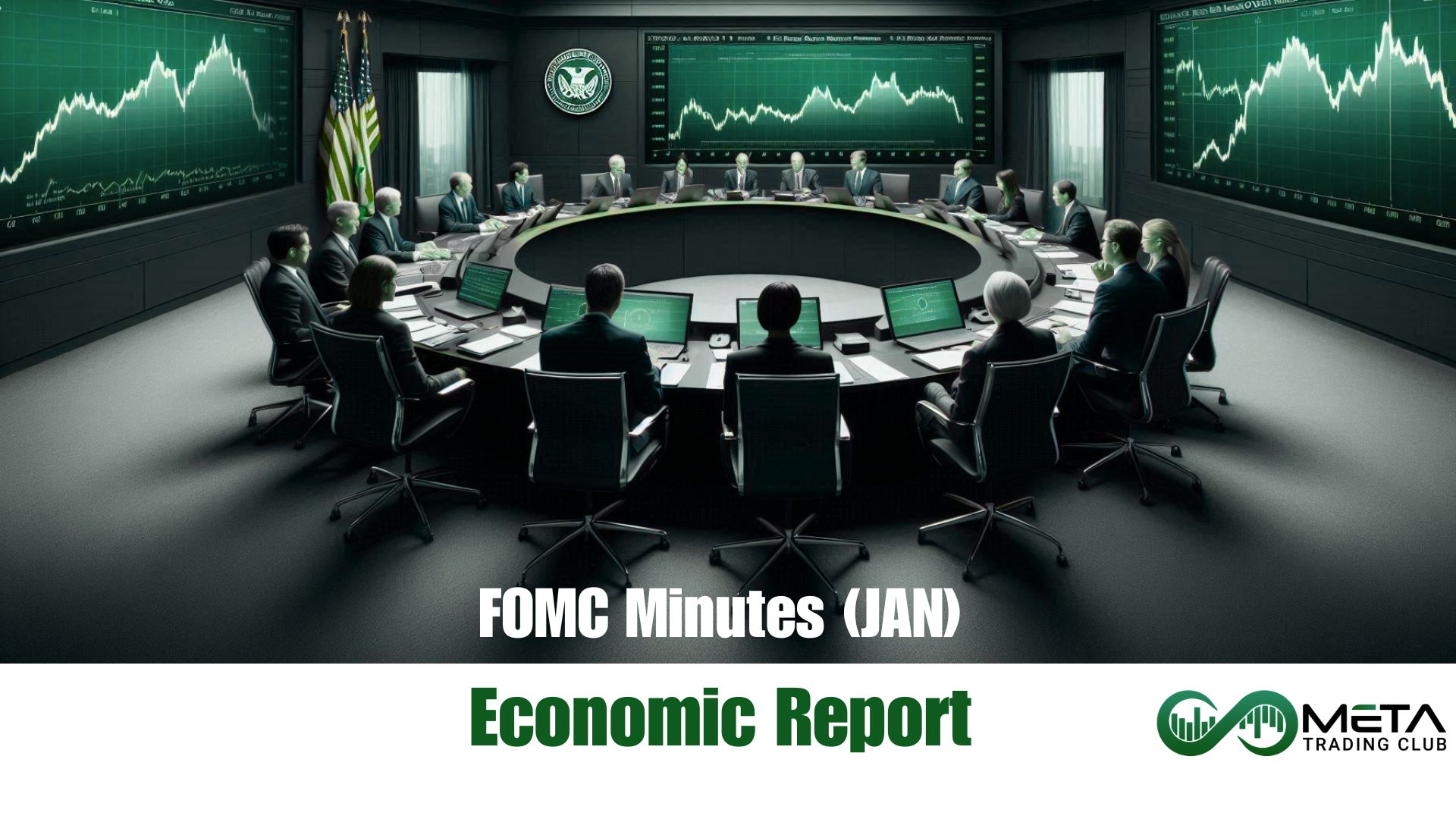
The Federal Open Market Committee (FOMC) is a branch of the Federal Reserve System responsible for overseeing the nation’s open market operations. This includes making key decisions about interest rates and the growth of the United States’ money supply. The FOMC meets several times a year to discuss and set monetary policy, aiming to achieve maximum employment, stable prices, and moderate long-term interest rates.
Summary of FOMC Meeting on Jan 27-28, 2026
The Federal Open Market Committee (FOMC) and the Board of Governors met on January 27–28, 2026, to complete their annual organizational tasks. They confirmed the election and oath-taking of new members and alternates from several Federal Reserve Banks, selected Jerome Powell as Chair and John Williams as Vice Chair, and appointed the Committee’s officers and economists for the year.
The Committee unanimously chose the Federal Reserve Bank of New York to manage the System Open Market Account (SOMA) and approved Roberto Perli and Julie Ann Remache as its manager and deputy manager. They also reaffirmed key policies on investment and trading, information security, and external communications, and renewed the Statement on Longer‑Run Goals and Monetary Policy Strategy without changes.
Financial Market Overview
Financial markets were mostly stable during the period. Investors still viewed the U.S. economy as strong and expected modest GDP growth in 2026, with little change in inflation or unemployment forecasts. Market expectations continued to point to one or two small interest rate cuts later in the year.
Treasury yields barely moved at the short end but rose slightly for longer maturities, causing a mild steepening of the yield curve. Inflation compensation declined because of softer CPI data, cheaper energy, and weaker-than-expected tariff pass‑through.
Mortgage‑backed securities yields fell after news that Fannie Mae and Freddie Mac might expand their mortgage portfolios, though this was unlikely to spark refinancing because current mortgage rates remain much higher than existing loans.
In equities, major tech companies lagged due to high valuations and heavy capital spending, while the broader market, especially cyclical and small‑cap stocks, performed better.
Internationally, expectations for U.S. rate cuts led many forecasters to predict a weaker dollar, though this view softened as U.S. growth prospects improved. A brief dollar drop occurred after the Desk requested rate‑check quotes on behalf of the U.S. Treasury.
The Federal Reserve’s balance sheet was expected to see reserves rise until early April, then fall sharply as tax payments increased the Treasury General Account. Reserves were projected to fluctuate around $3 trillion for most of the period.
The Committee unanimously approved all domestic market operations conducted during the period and noted that there were no foreign currency interventions.
Fed’s Staff Review of the Economic Situation
Economic data showed that U.S. growth continued in 2025 but at a slightly slower pace than in 2024. The labor market was stabilizing after a period of cooling, and inflation remained somewhat elevated.
Labor Market Trends
Unemployment held steady at 4.4%, and payrolls dipped in the fourth quarter, mainly because government workers left the payroll after a deferred‑resignation program ended. Wage growth slowed slightly to 3.8% over the year.
Inflation and Policy
Inflation remained in the high-2-percent range. Core services inflation eased, especially in housing, but core goods inflation rose due to higher tariffs. Some inflation readings were likely understated because of data issues during the government shutdown.
Economic Conditions
GDP grew solidly in the third quarter but slowed in the fourth, partly because the shutdown reduced growth by about 1 percentage point. Underlying private demand also softened but less sharply. The goods trade deficit narrowed as imports fell after earlier tariff‑related stockpiling.
Trade Policy
Abroad, foreign economies grew below trend. U.S. tariffs weighed on manufacturing in Canada and Mexico, while some Asian economies benefited from strong AI‑related tech exports. China saw stronger exports to non‑U.S. markets. Inflation abroad was generally near central bank targets, with mixed policy responses: some central banks cut rates, while the Bank of Japan raised its policy rate.
Fed’s Staff Review of the Financial Situation
Financial conditions were mostly steady over the period. Expectations for interest rates, Treasury yields, and inflation compensation barely moved. Stocks rose slightly, credit spreads stayed low, and market volatility remained moderate.
Abroad, geopolitical tensions caused brief market swings, but risk appetite recovered quickly. Foreign equities outperformed U.S. markets, Japanese bond yields rose on political concerns, and the dollar weakened overall. The yen strengthened late in the period amid speculation about possible intervention.
Short‑term funding markets were stable. Liquidity from reserve management purchases and Treasury bill paydowns helped ease rate pressures, and December’s rate cut passed smoothly into money markets.
Borrowing costs for businesses, households, and municipalities declined from 2023 highs but remained above post‑crisis norms. Credit availability was generally good, with strong issuance in corporate, private credit, and municipal markets, though conditions stayed tight for small businesses and lower‑credit borrowers.
Banks reported slightly easier lending standards, especially for commercial real estate and consumer loans, and overall standards were around their historical median. Credit performance was stable but weaker than before the pandemic: corporate defaults declined, but small‑business and CMBS delinquencies stayed elevated. Household mortgage delinquencies were low, while credit card and auto loan delinquencies remained above pre‑pandemic levels.
Asset valuations were high, especially in equities. Business and household debt risks were moderate, with corporate debt growing mainly among investment‑grade firms. Financial‑sector leverage remained elevated at hedge funds and insurers, though banks held strong regulatory capital. Funding risks were moderate, with stable short‑term funding levels and low uninsured‑deposit risks. Stablecoins grew rapidly but remained small relative to the broader system.
Fed’s Staff Economic Outlook
The staff raised their outlook for the economy compared with December. They now expect stronger GDP growth through 2028, helped by easier financial conditions, supportive fiscal policy, and fading tariff effects. With growth running above potential, the unemployment rate is projected to gradually fall below its natural rate and stay there for several years.
Inflation is expected to be slightly higher than previously forecast because the economy will be operating with tighter resource utilization and because import prices are projected to rise more. However, as the impact of tariffs fades around mid‑year, inflation is expected to resume its earlier downward trend.
Uncertainty around the forecast remains high due to geopolitical risks, policy changes, the evolving impact of AI, and recent data‑quality issues from delayed statistical releases. The staff sees downside risks to growth and employment, while inflation risks remain tilted to the upside, especially the possibility that inflation could stay more persistent than expected.
FOMC Members’ Views
Participants agreed that inflation had come down a lot since 2022 but was still above the 2 percent goal, mainly because tariffs were raising core goods prices. Services inflation, especially housing, continued to cool. Many expected inflation to keep easing as tariff effects faded and productivity improved, though some warned that strong demand and planned price increases could slow progress.
The labor market looked stable: unemployment was steady, layoffs were low, and hiring remained weak as businesses stayed cautious, partly due to uncertainty and automation. Most participants felt labor market risks had eased, though some indicators still pointed to softening, and a few warned that low hiring could make the market vulnerable if demand weakened.
Economic activity was expanding at a solid pace. Consumer spending remained strong overall, though higher‑income households were driving most of the gains. Business investment, especially in technology, was robust. Participants expected growth to stay solid in 2026, supported by financial conditions, fiscal policy, and productivity gains from AI.
Several participants raised financial stability concerns, including high asset valuations, narrow credit spreads, risks in the AI sector, private credit markets, and hedge fund leverage. Some also noted growing strain among lower‑ and middle‑income households and potential spillovers from global market volatility.
Committee Policy Actions
Almost all participants supported keeping the federal funds rate unchanged, viewing policy as roughly neutral after last year’s cuts. A couple preferred a rate cut, arguing that policy was still too restrictive.
Looking ahead, some participants expected further cuts if inflation continued to fall, while others wanted to wait for clearer evidence. A few said rate hikes could still be needed if inflation stayed high. Most agreed inflation risks remained more concerning than employment risks, though some warned that keeping policy too tight could harm the labor market.
The Committee ultimately voted to keep the federal funds rate at 3½ to 3¾ percent, with two dissents favoring a small cut. They reaffirmed their commitment to maximum employment and 2 percent inflation and emphasized that future decisions would depend on incoming data and evolving risks. The meeting ended with operational instructions for the New York Fed and plans to meet again in March 2026.