Federal Reserve Chair Jerome Powell addressed the Economic Club of Chicago to discuss the current state of the U.S. economy and monetary policy. He reaffirmed the Federal Reserve’s commitment to its dual mandate of achieving maximum employment and stable prices. Despite uncertainty and risks, Powell emphasized that the U.S. economy remains strong, with the labor market at or near full employment and inflation gradually easing, although slightly above the Fed’s 2% target.
Recent Economic Data
Powell noted that early data for the first quarter of 2025 indicate slower economic growth compared to last year. Consumer spending showed modest gains, supported by strong motor vehicle sales, while imports surged as businesses aimed to preempt new tariffs. These factors are expected to weigh on GDP growth. Surveys indicate declining sentiment and elevated uncertainty, particularly regarding trade policy, further contributing to expectations of slower but still positive growth throughout the year.
The labor market remains solid, with nonfarm payrolls adding an average of 150,000 jobs per month in the first quarter. While job growth has slowed, stable unemployment rates and moderated wage growth, which continues to outpace inflation, reflect a labor market in balance. The labor market is not currently a major driver of inflationary pressures.
Inflation and Policy Uncertainty
Inflation has eased substantially from its mid-2022 highs, with recent data showing total PCE inflation at 2.3% and core PCE inflation at 2.6% for the year ending March 2025. Powell highlighted the impact of evolving government policies such as tariffs, fiscal changes, and immigration measures on the economy. While these policies remain uncertain, their potential effects include higher inflation and slower growth. Near-term inflation expectations have risen, driven by concerns over tariffs, though long-term expectations remain stable.
Monetary Policy Outlook
Powell stressed the importance of managing inflation expectations to prevent temporary price increases from becoming a persistent problem. The Fed will continue balancing its mandates of maximum employment and stable prices, closely monitoring data and risks as it assesses potential policy adjustments. Powell acknowledged the challenges of aligning the dual-mandate goals when they are in tension and pledged to make informed decisions based on economic conditions and timelines for achieving these objectives.
Powell concluded with a lighthearted nod to Chicago’s own Ferris Bueller, emphasizing the importance of patience and clarity in navigating economic uncertainties. He reaffirmed the Fed’s commitment to addressing unemployment and inflation while working toward stable and sustainable growth for communities, families, and businesses across the nation.
Impacts of Report on Stock market
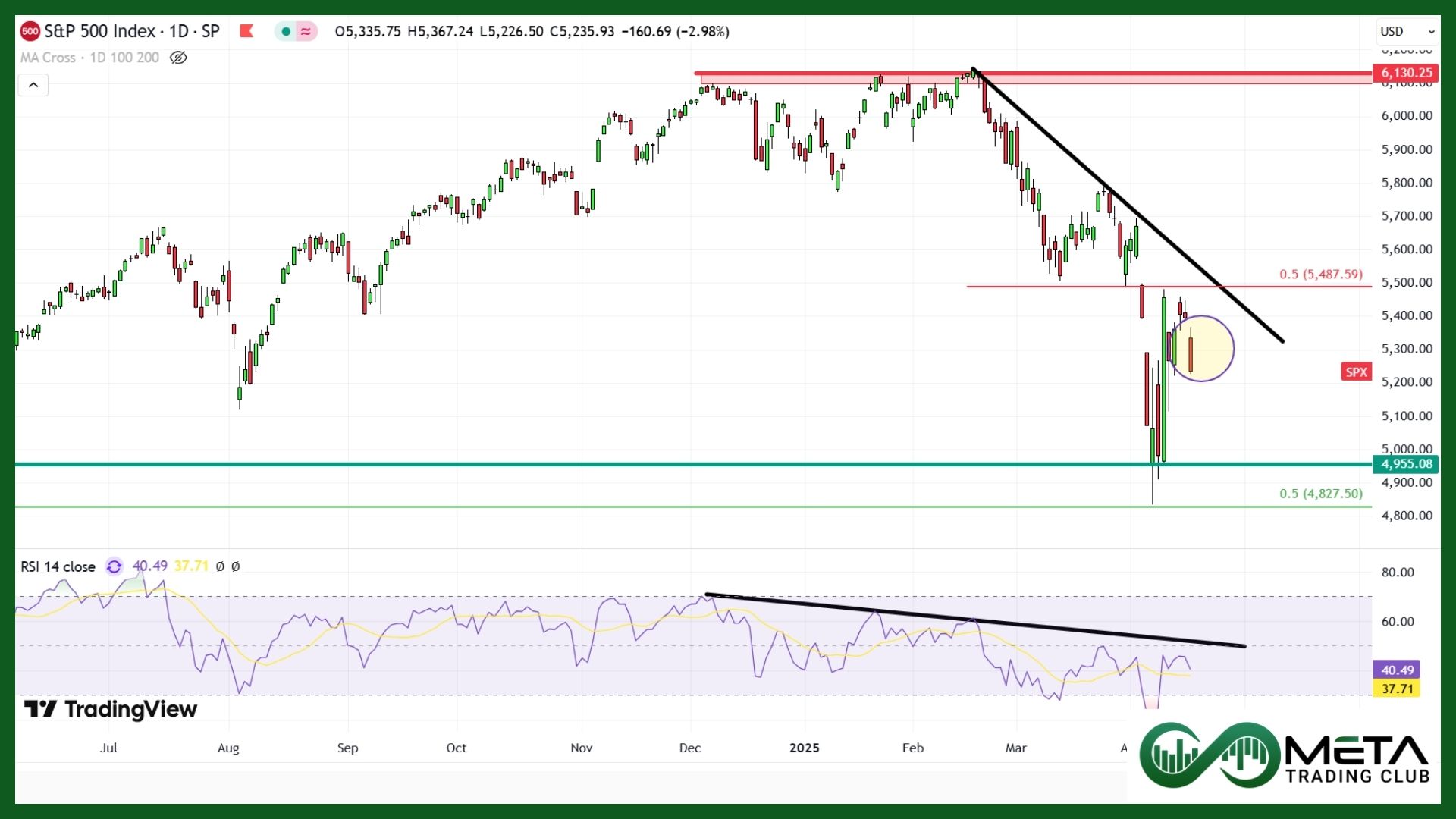
The market reacted negatively to Federal Reserve Chair Jerome Powell’s remarks, as the lack of immediate policy changes and the decision to hold off on rate cuts disappointed investors. This led to a decline in market sentiment, with stocks experiencing downward pressure. The absence of a clear direction on monetary policy added to uncertainty, leaving traders cautious about future economic conditions.
Overall, the report dampened optimism and highlighted the challenges of navigating inflation and growth concerns.