The Personal Consumption Expenditures (PCE) Price Index is a key inflation gauge used by the Federal Reserve to assess the prices of goods and services consumed by households. Unlike the Consumer Price Index (CPI), the PCE adjusts for changing consumer behavior, reflecting how people shift spending as prices change.
The core PCE, which excludes volatile food and energy prices, is especially watched by policymakers to understand underlying inflation trends. It’s considered a comprehensive measure of inflation and guides decisions on interest rates and monetary policy.
January PCE Price Index
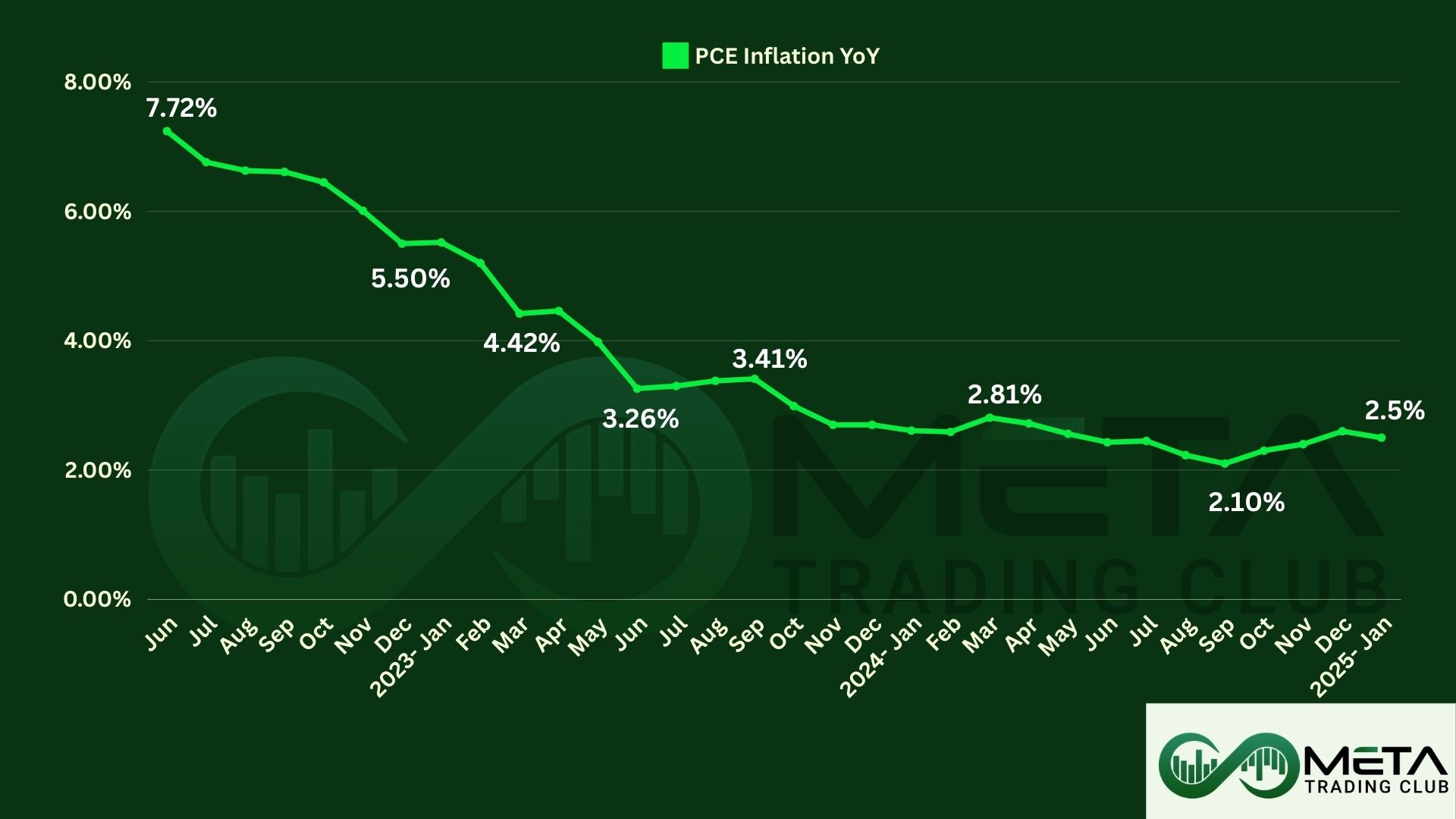
From December to January, the PCE price index rose by 0.3%. Excluding food and energy, the index also saw a 0.3% rise. Compared to January 2024, the PCE price index increased by 2.5%, and when excluding food and energy, it rose by 2.6%.
In January 2025, personal income in the United States increased by 0.9%. After taxes, disposable personal income (DPI) also rose by 0.9%. However, personal consumption expenditures dropped by 0.2%.
Personal Outlays and Savings
In January, personal outlays (which include PCE, interest payments, and current transfer payments) fell by $52.7 billion. Personal savings amounted to $1.01 trillion, with a savings rate of 4.6%.
The increase in personal income was mainly due to more transfer receipts, compensation, and income from assets. The $30.7 billion decline in PCE was caused by a significant $76.7 billion reduction in spending on goods, though there was a $46.0 billion increase in spending on services.
Impacts of January PCE Data
The PCE price index is a key measure of inflation. The January data showed a 0.3% monthly increase and a 2.5% annual increase, indicating that inflation remains above the Federal Reserve’s 2% target. This suggests that inflationary pressures are still present in the economy.
The decline in personal consumption expenditures (PCE) by 0.2% in January indicates a slowdown in consumer spending. This could signal potential challenges for economic growth, as consumer spending is a significant component of GDP.
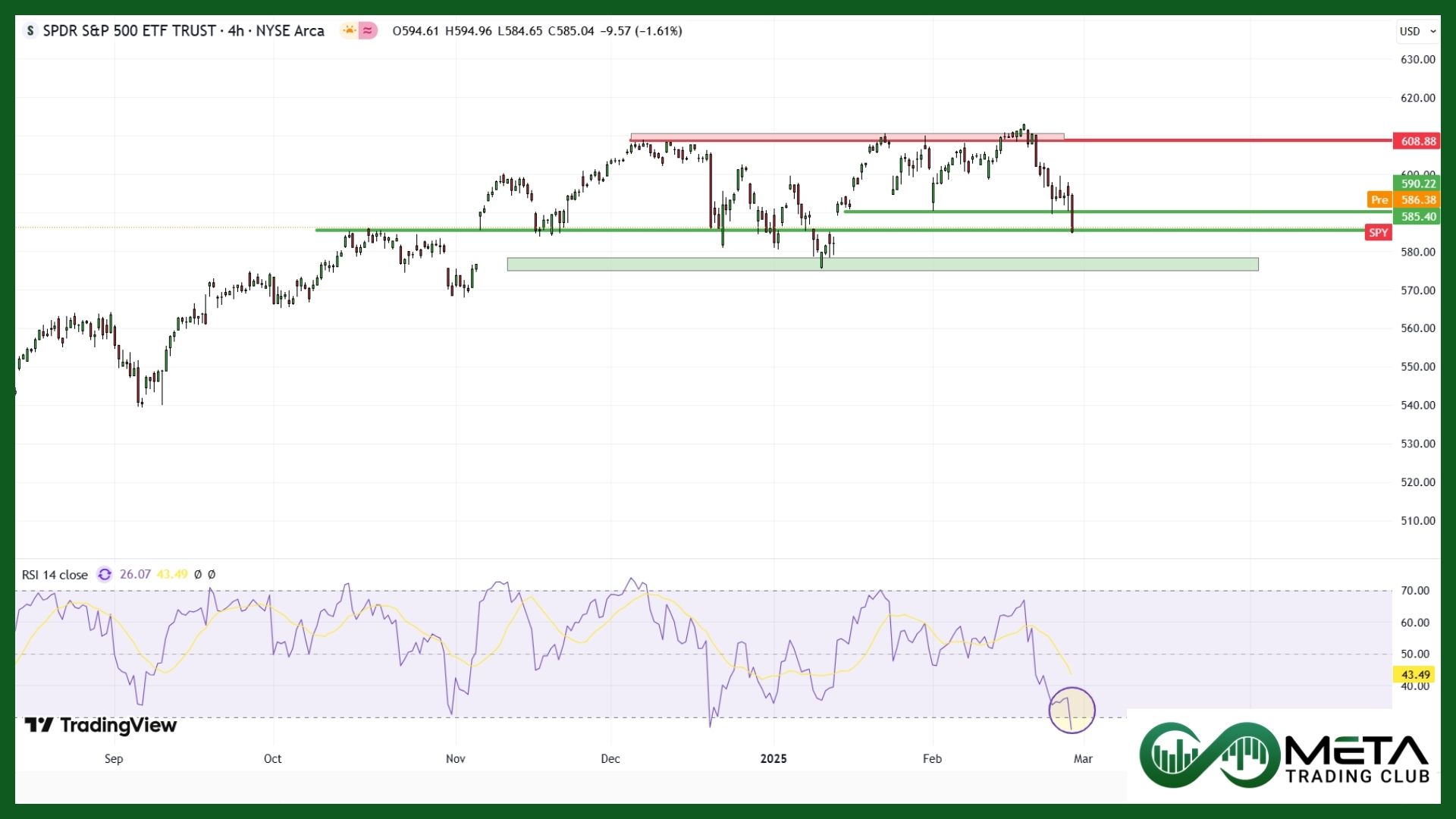
SPY has reached oversold territory and a minor support level at 585. This oversold condition could push the price up to 590. If the support of 585 breaks, further declines are anticipated till the 580 support zone.